Hello, this is Director Choi Seung-hyeop of Wink Plastic Surgery. Today’s topic is about the fat under the eyes. Even among younger people, there are often cases where there is little skin laxity, but the fat beneath the eyes protrudes.
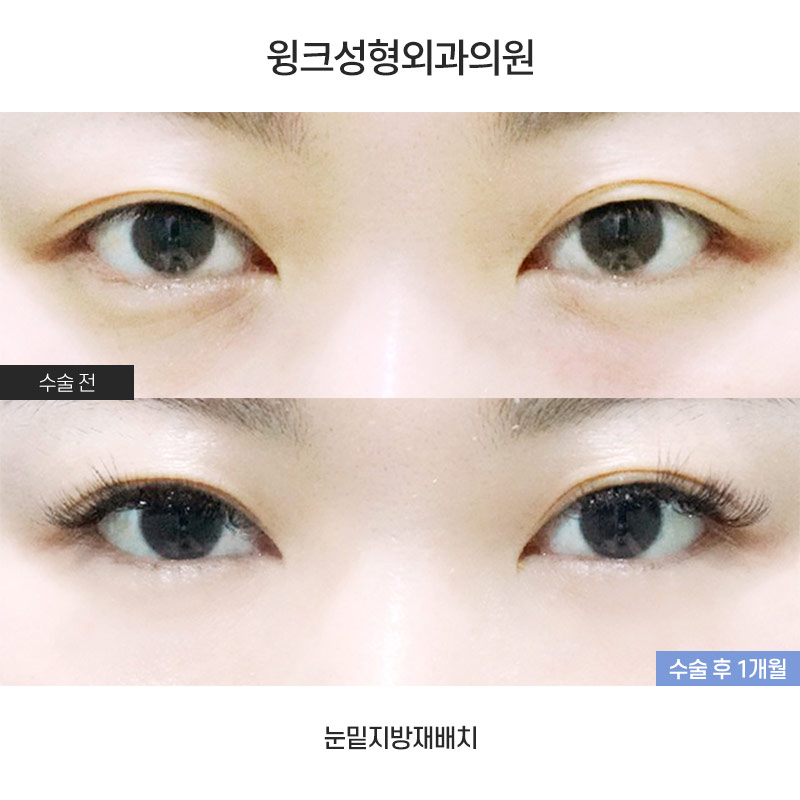
This can be addressed by reducing the lower eyelid fat. When the septum, which is the fat pocket under the eyes, is closely attached to the bone and there is relatively too much fat, it can protrude and create a sleepy or tired appearance.
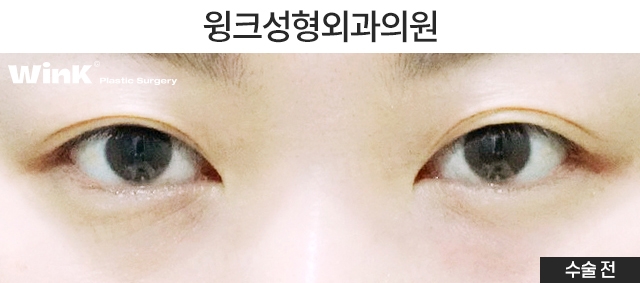
Lower eyelid fat repositioning | Before surgery
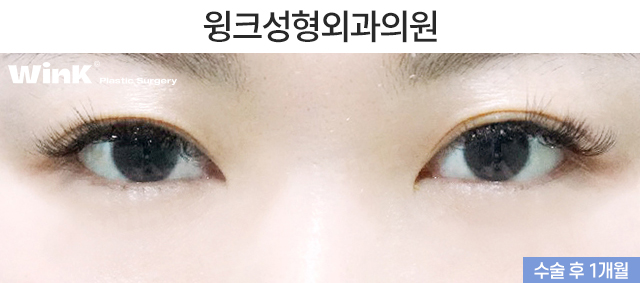
Lower eyelid fat repositioning | 1 month after surgery
In such cases, there are two main solutions: fat removal or repositioning. Removal is performed when there is excessive fat, but if too much is removed, the under-eye area can become hollow. In comparison, repositioning has a lower chance of hollowness, and by moving the excess fat toward the front cheek area, it may also slightly increase the volume of the front cheek.
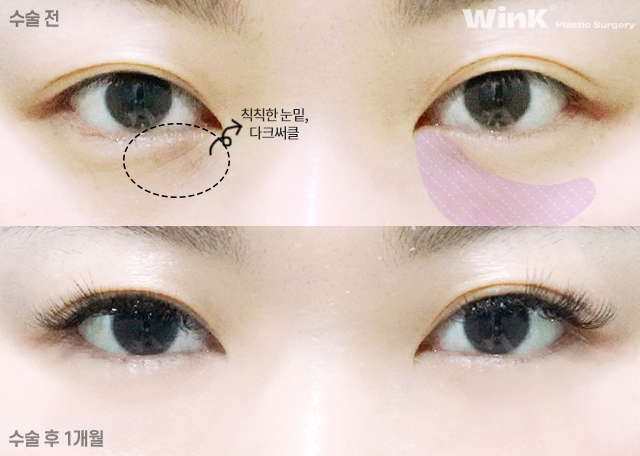
Lower eyelid fat repositioning | Before and after comparison
The approach is performed through a conjunctival incision (the red tissue on the inside of the eye), rather than a skin incision, which has an advantage in terms of scarring.
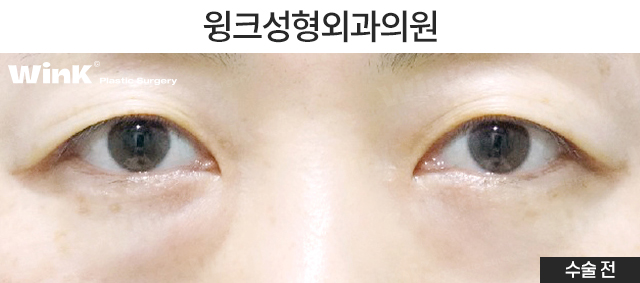
Upper blepharoplasty + lower eyelid fat repositioning | Before surgery
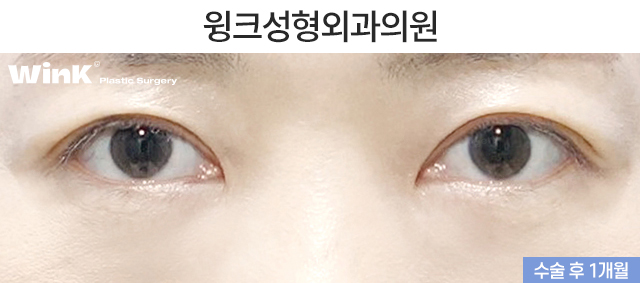
Upper blepharoplasty + lower eyelid fat repositioning | 1 month after surgery
Also, when dark circles under the eyes are present, fat repositioning can improve them to some extent. However, if the skin is thin or the skin pigmentation is severe, full improvement is difficult.
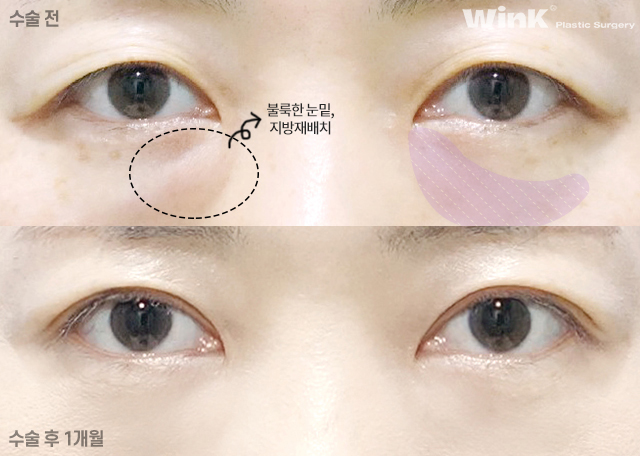
Upper blepharoplasty + lower eyelid fat repositioning | Before and after comparison
Fat repositioning does not cause severe swelling, and because there is no skin-incision scar, daily life can be resumed quickly after surgery.
That is all for our look at lower eyelid fat repositioning.
If you have any further questions, please contact us through the Kakao Channel, and we will respond promptly.
Wink Plastic Surgery complies with the Medical Service Act.
After plastic surgery, results may vary depending on the individual, and side effects such as bleeding, inflammation, and infection may occur. It is important to be sure to check the information about side effects and the surgery. All photos were taken with the patient’s prior consent and are images captured directly from the patient.