Hello, I’m Director Choi Seung-hyeop of Wink Plastic Surgery. Today, I’ll be taking a look at double-incision double eyelid revision surgery.
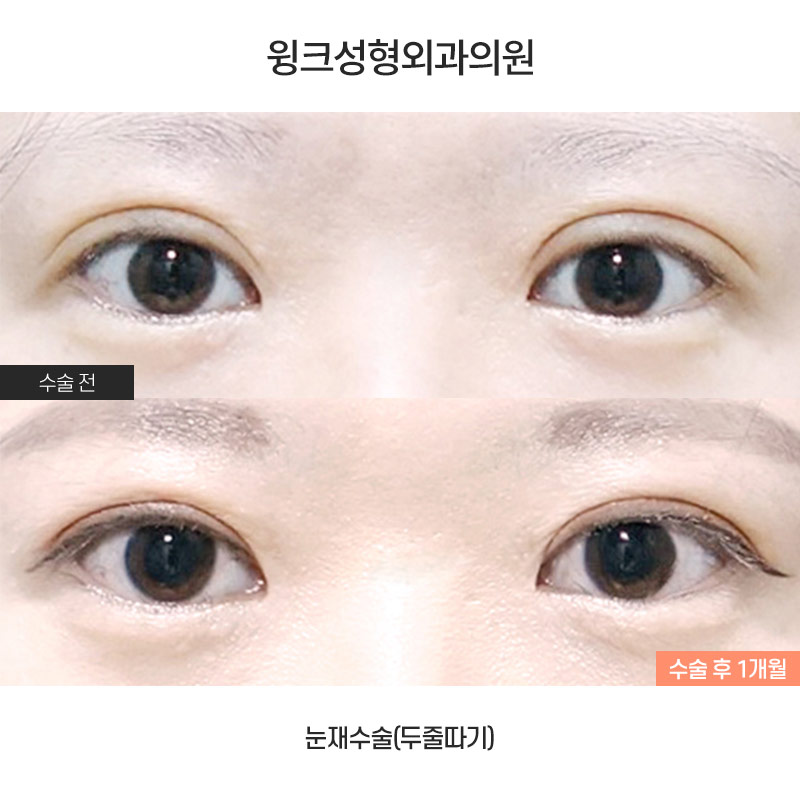
Some people want to improve after a previous double eyelid surgery because the crease is too thick and the front part forms an outer line.

Eyelid revision surgery (double-incision method) | Before surgery

Eyelid revision surgery (double-incision method) | 1 month after surgery
In general, a natural-looking double eyelid for East Asians has a thinner front portion, while the middle and back portions are thicker than the front.
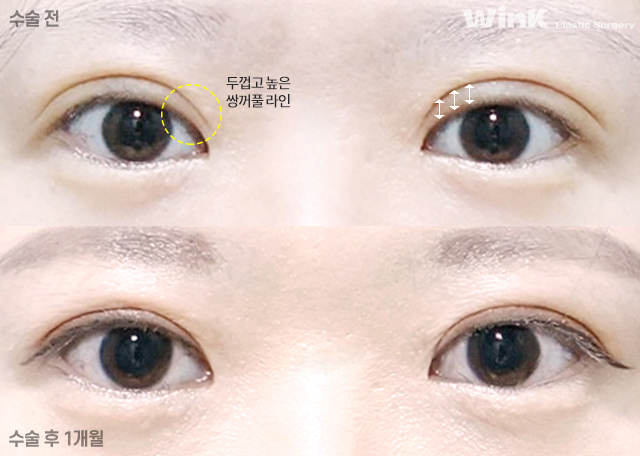
Eyelid revision surgery (double-incision method) | Before-and-after comparison
To make this change, the existing high crease must be lowered and a new line must be created below the original crease. For this, the skin is preserved without being removed, and an incision is made. Since a new incision is made below the existing line, this method is also called "double-incision".
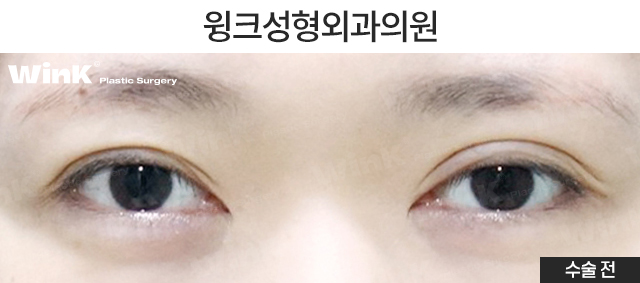
Eyelid revision surgery (double-incision method) | Before surgery

Eyelid revision surgery (double-incision method) | 5 months after surgery
So, what is different from a regular incisional double eyelid surgery? First, the difference is that it includes a careful surgical process to release the existing high crease.
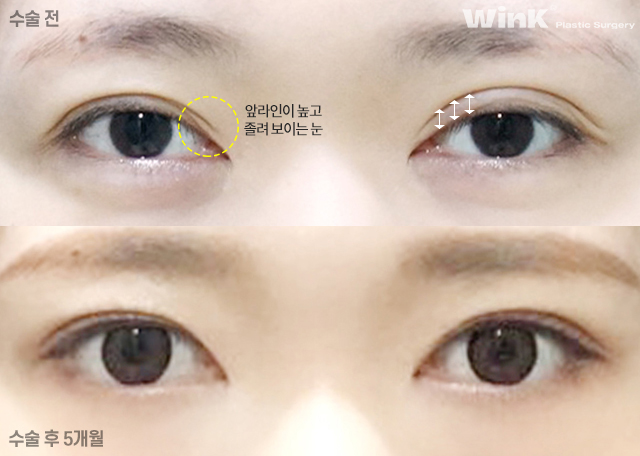
Eyelid revision surgery (double-incision method) | Before-and-after comparison
For those who felt burdened by thick and high double eyelids, a double-incision double eyelid surgery can create a beautiful double eyelid with an appropriate size.
That’s all for today’s look at double-incision double eyelid revision surgery.
If you have any further questions, please contact us through our Kakao Channel, and we will respond promptly.
Wink Plastic Surgery complies with the Medical Service Act.
After plastic surgery, results may vary from person to person, and side effects such as bleeding, inflammation, and infection may occur. It is important to be sure to check information about side effects and surgery. All photos were taken after obtaining prior consent directly from the patients.