Hello, I’m Director Choi Seung-hyeop of Wink Plastic Surgery. Today’s topic is upper blepharoplasty surgery.
When you get older, the skin of the eyelids can sag, making the eyes look smaller and blocking your field of vision. In severe cases, the covered skin can also cause the skin around the eyes to become irritated. In such cases, many people consider double eyelid surgery.
Double eyelid surgery performed to improve eyelid sagging in middle-aged patients is called upper blepharoplasty.
In what cases is upper blepharoplasty needed? It is needed when there is no double eyelid crease, when the crease is thin, or when there is loose, sagging skin. In these cases, a new crease is created or lifted, and the excess sagging skin is also removed.
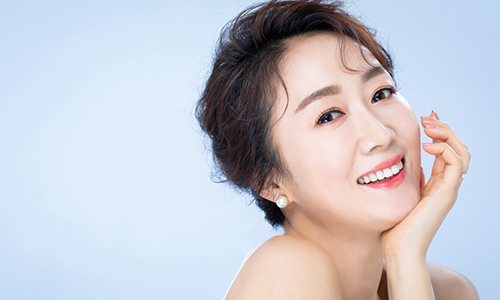
It is important for upper blepharoplasty to look natural.
So how is upper blepharoplasty performed? Upper blepharoplasty is similar to general double eyelid surgery.
A full incision is made along the eyelid, the sagging skin is removed, and a double eyelid crease is created to improve eyelid drooping. The surgery usually takes about one hour, the stitches are removed within a week, and the recovery period takes about 1 to 2 weeks. If ptosis is also present, eye-opening correction surgery may be performed at the same time.
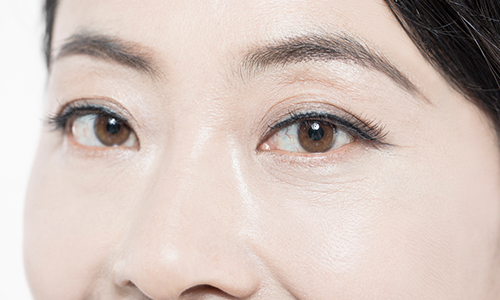
Eyelid sagging is improved through upper blepharoplasty.
Then, what causes upper blepharoplasty to look unnatural? This usually happens when the double eyelid fixation is too deep or becomes too thick.
If the double eyelid fixation is too deep, the fine wrinkles in the existing eyelid skin can disappear, creating disharmony with the surrounding skin, and symptoms such as eyelash lifting may occur.
Also, if the double eyelid becomes too thick, it may look unnatural and cause a large change in appearance. In severe cases, the eyes may look sleepy.

When upper blepharoplasty looks unnatural, it is usually because the double eyelid fixation is too deep or too thick.
Therefore, to achieve a natural result after upper blepharoplasty, the double eyelid fixation should not be too deep, and designing the crease to be excessively thick is not advisable.
If you end up with an unnatural, thick double eyelid after upper blepharoplasty, revision surgery can be considered. In such cases, it may be necessary to lower the existing high crease and make the double eyelid smaller again. This procedure is also called a double-line correction.
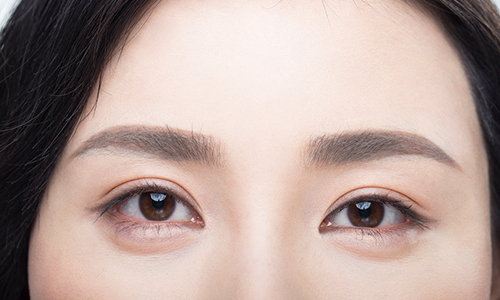
It is important to create a double eyelid that suits each individual through upper blepharoplasty.
In addition, if there is sagging of the forehead or eyebrows along with eyelid drooping, a forehead lift or brow lift may be needed in stages together with upper blepharoplasty. If there is hollowing above the eyes, fat grafting may also be performed at the same time.
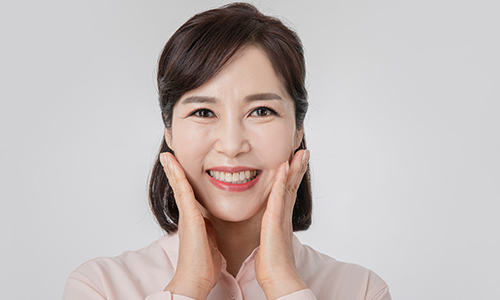
In some cases, eye-opening correction or fat grafting may be needed during upper blepharoplasty.
That concludes our look at how to make upper blepharoplasty look natural. With preoperative planning and design tailored to each individual’s characteristics, a natural result can be achieved even after upper blepharoplasty.