Hello, this is Woori Plastic Surgery.
Today, I’d like to talk about one of the facial concerns I hear about very often during consultations: the peanut-shaped face line. When viewed from the front, the facial contour can look uneven, and because the cheekbones and jawline appear prominent, the face may seem larger or more angular. In many cases, this facial shape is not simply due to fat, but rather a structural issue where both bony protrusion and hollowness are present at the same time. Today, let’s take a look at the face contouring surgery method for a peanut-shaped face.
What Is a Peanut-Shaped Face?
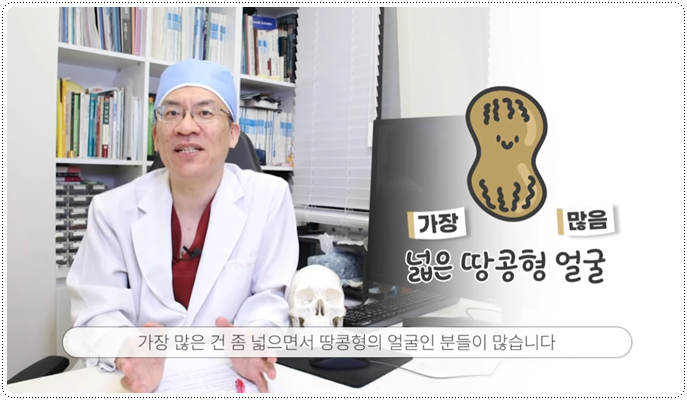
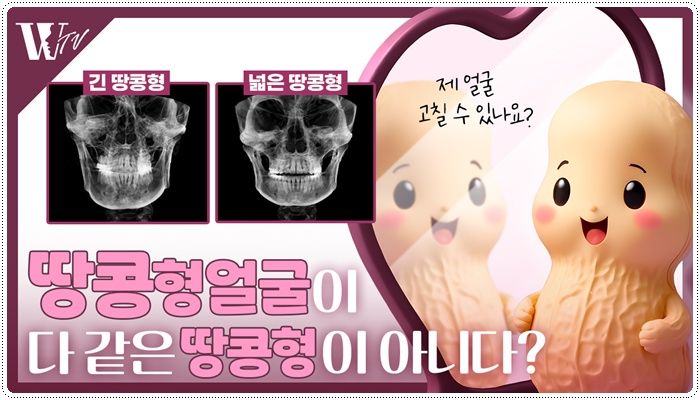
A peanut-shaped face can largely be divided into two types. First, let’s look at the wide and uneven type. In this case, the temples and the area below the cheekbones are hollow, while the side cheekbones and square jaw are more developed, making the facial contour look irregular. The second type is a long face with a protruding chin. Here, the square jaw is developed and appears wide, while the chin extends downward in a long, pointed shape. What these types have in common is that the contrast between developed bone and hollow areas makes the face look larger and gives a stronger impression.
Wide and Uneven Peanut Shape
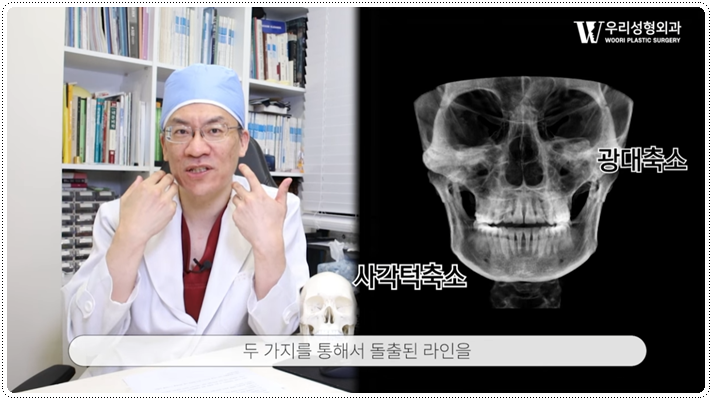
In this case, the face contouring surgery method improves the appearance by reducing the protruding areas through cheekbone reduction and square jaw reduction, then aligning the overall line with the hollow areas so that the contour flows smoothly and naturally. The key to the face contouring surgery method is not simply making the cheekbones smaller, but adjusting the angle and contour flow of the cheekbones to create a soft and natural facial line.
Long Face with a Protruding Chin
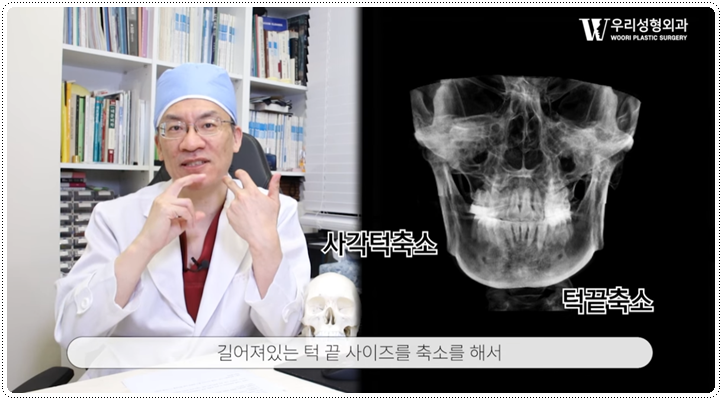
The square jaw is developed, making the side of the face look wide, while the chin extends downward, which can make the face look long and overly pointed overall. In this case, the overall facial proportion is adjusted by combining square jaw reduction and chin reduction. The procedure is carried out as a face contouring surgery method that shortens the length, refines the line, and creates a harmonious V-line.
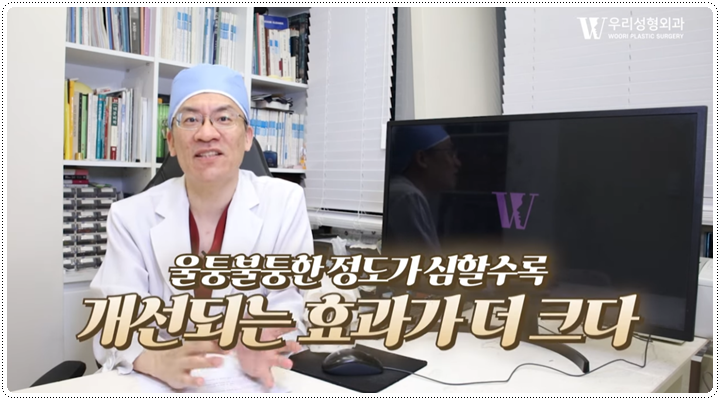
A peanut-shaped face is structurally created by the contrast between protruding and hollow areas. Because of this, it is not a problem that can be solved simply by losing weight or through massage. Instead, it requires a contour surgery approach that appropriately reduces overly developed bone and balances the proportions. In fact, the greater the unevenness, the larger the degree of change, and the higher the level of satisfaction after surgery tends to be.