Hello, this is Woori Plastic Surgery.
As people age, the cheek line is one of the first areas to show it. Marionette lines that run down beside the mouth deepen, and the jawline breaks down, making the face look saggy. In fact, 70–80% of people considering a facelift are concerned about this sagging in the cheeks. However, because sagging cheeks cannot be solved simply by pulling the skin tight, facelifts have recently developed into methods that precisely lift and secure each layer step by step. Today, let’s look at the key points for improving sagging cheeks to achieve facelift results.
Only refine what is necessary
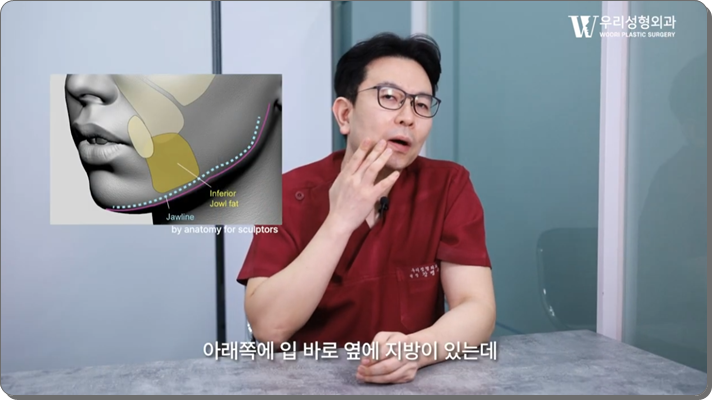
When there is a lot of thin fat just under the cheek, this area can make the jawline and mouth area look heavy. But if too much is removed, the face can look more hollow and appear older instead. So, for facelift results, it is important not to approach the surgery from the outside, but to delicately remove only the fat that is precisely needed from just under the chin. This allows the jawline to look clean while preventing the face from becoming overly gaunt.
What about descended deep cheek fat?
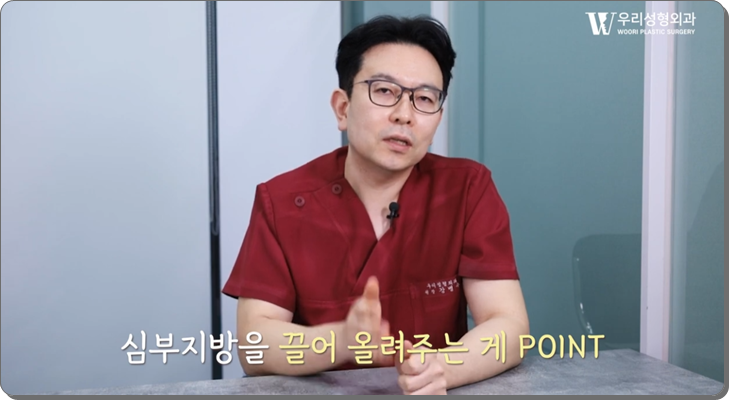
The heavy fat we often think of as cheek fat is actually deep fat located beneath the SMAS layer, not on the skin surface. As time passes, when this deep fat descends, the area under the cheeks becomes heavy and sags, creating a shadow line that makes the area below the cheekbones look hollow. What is important at this point is not to eliminate the fat, but to lift it back to its original position and firmly fix it there. When this procedure is done well, the face’s three-dimensional structure is preserved and facelift results can be expected.
The SMAS layer is important
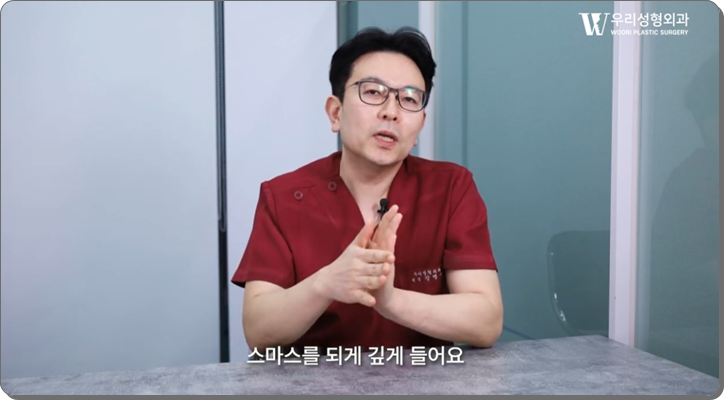
The real key to facelift results is how the SMAS layer is lifted. If the SMAS is handled too thinly, it can collapse quickly and the lifted effect will not last. When the SMAS is lifted as a thick, sturdy layer and secured with strong support, the improvement in sagging is greater and the longevity is much better.
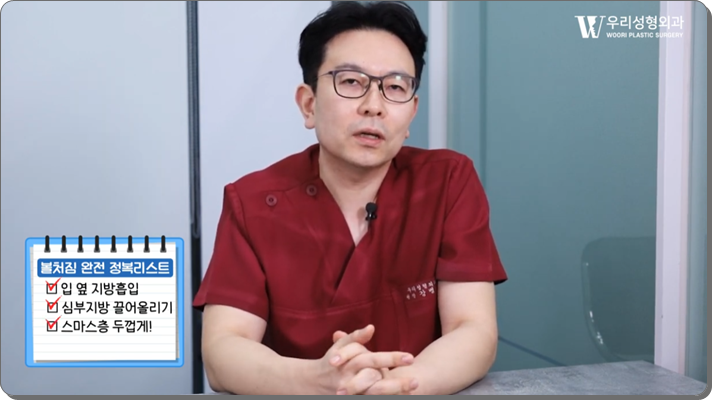
To achieve facelift results, the surgery should not simply smooth wrinkles, but restore the face’s collapsed structure back to its proper place. That is why who performs the procedure is truly more important than where it is done.