Hello. This is Woori Plastic Surgery.
One of the questions many people considering liposuction ask is about bio-bond. Today, let’s look at how to manage bio-bond after liposuction.
What is bio-bond?
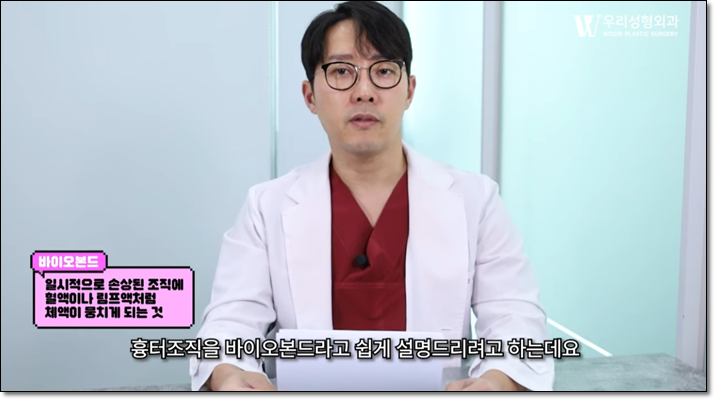
Bio-bond refers to the temporary clumping of bodily fluids such as blood or lymph fluid in damaged tissue. Because it is an unfamiliar term, it may feel like a side effect, but it is tissue that is essential for the normal recovery process. This tissue forms and then naturally loosens over time, allowing the skin to settle back into place, so there is no need to worry too much!
What causes bio-bond?
During liposuction, a space is created where fat has been removed, and bio-bond helps the skin adhere properly again in that area. Bio-bond after liposuction plays a role in firmly holding the skin in place and helping loose skin settle smoothly. So when bio-bond forms appropriately, it can be seen as a positive sign of recovery.
When it forms excessively
Bio-bond is not a problem within the normal range, but in very rare cases, it may remain too firm for too long, or feel lumpy when touched. Causes of bio-bond after liposuction can include excessive bruising, swelling, or insufficient early care. It may also appear when scar tissue formed during recovery becomes too hard, or when there is a large difference between the glandular tissue and fat boundary during the procedure. However, in most cases it naturally loosens after 2–3 months, so there is no need to worry too much.
Initial care tips
📌 Avoid excessive massage
For the first 2–3 weeks, this is the period when bio-bond is forming normally, so massaging strongly or trying to force it to loosen can make things worse.
📌 Light stretching is okay
Gentle movement can help circulation and recovery.
📌 Radiofrequency and care programs recommended
These can help reduce swelling, bruising, and scar tissue, so receiving them consistently at the clinic can greatly speed up recovery.
What if bio-bond lasts a long time?
Although rare, if bio-bond after liposuction remains too firm or the unevenness persists for a long time, it can be managed in the following ways. It may be eased through injection treatment that helps loosen scar tissue or through radiofrequency laser care. In very severe cases, adhesions can be surgically released, but in most cases non-surgical management is enough, so there is no need to worry too much.
Bio-bond after liposuction is not a side effect, but a normal part of recovery. When it forms within an appropriate range, it actually helps the skin adhere properly, so in the early stage, just avoid excessive care and manage it while getting regular checkups at the clinic.