Hello, this is Woori Plastic Surgery.
When consulting about a facelift, there is one question many people always ask. Today, I’d like to explain clearly about the “knife-edge ear” issue that many people worry about during a facelift.
What is a knife-edge ear?
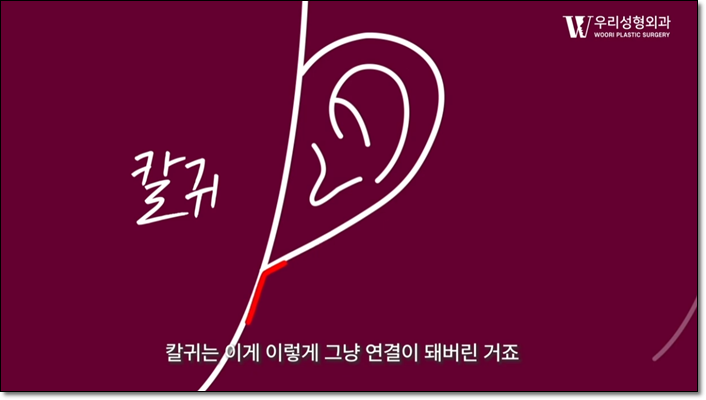
A normal ear has the earlobe naturally forming a rounded shape toward the bottom. However, a knife-edge ear refers to a condition where the area below the ear looks as if it has been pulled straight down and attached. Because it can look as though the ear is tightly stuck to the skin, it may make the facelift look obvious, and it is also the change most patients dislike.
Does a facelift cause knife-edge ears?
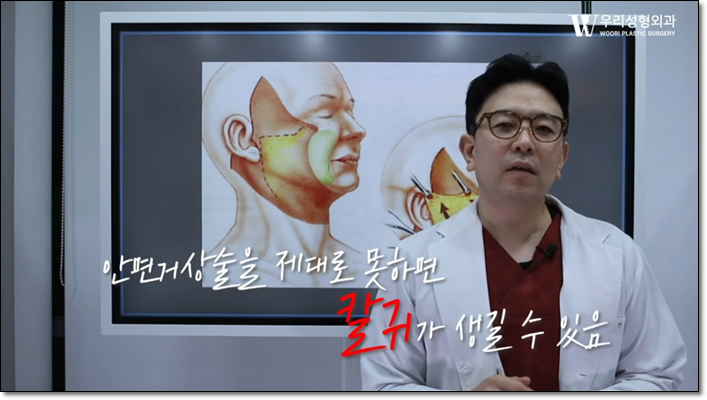
Does a facelift cause knife-edge ears? To answer first: a facelift itself does not cause knife-edge ears. It is closer to a result that occurs when the facelift is performed using the wrong method. In other words, it is a problem with the surgical technique, not a side effect of the facelift procedure itself.
The real reason knife-edge ears occur
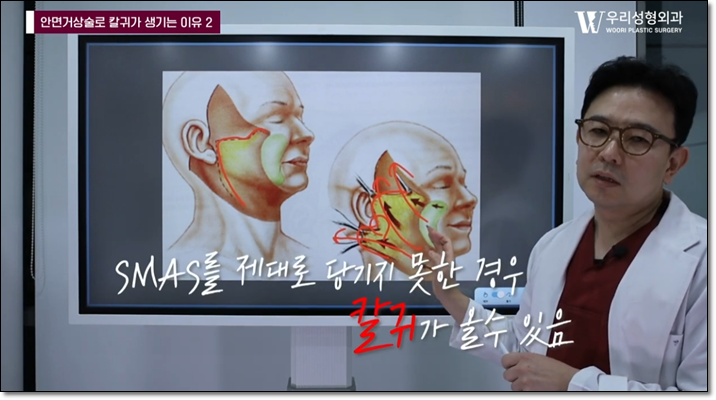
✔️ When the skin is pulled too tightly
When performing a facelift, if the SMAS layer is not properly lifted and only the outer skin is pulled up excessively, the skin around the ear becomes tight and the earlobe is pulled downward.
✔️ When unnecessary skin is overly removed
Experienced surgeons rarely remove much skin around the ear. That is because the difference in effect is not very large, and it only increases the risk of a knife-edge ear.
✔️ When the SMAS is not sufficiently secured
What actually needs to be lifted is not the skin, but the SMAS layer. If the SMAS is pulled too weakly, the skin below the ear may be pulled down relatively more. If the SMAS is properly lifted and the skin removal is minimized, knife-edge ears are almost never created.
Can knife-edge ears be corrected?
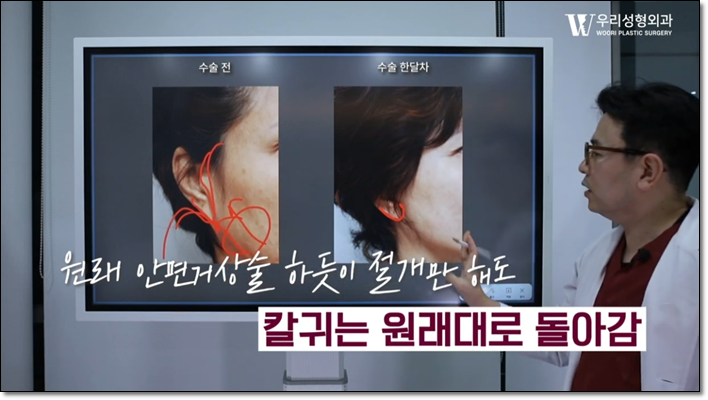
If knife-edge ears occur after a facelift, they can usually be corrected very easily with a revision lift. Even just reopening the incision in a revision surgery can naturally return the ear to its original position, and if the SMAS is properly pulled and secured, it will not drop again. However, if the person’s naturally born ear shape is already close to a knife-edge ear type, an individualized approach is needed after diagnosis.
To avoid knife-edge ears during a facelift, it is important to check whether the SMAS layer is properly lifted, whether skin removal around the ear is minimized, and whether the medical team has sufficient experience. Please remember that knife-edge ears are a result that can vary depending on the technical details of the medical team.