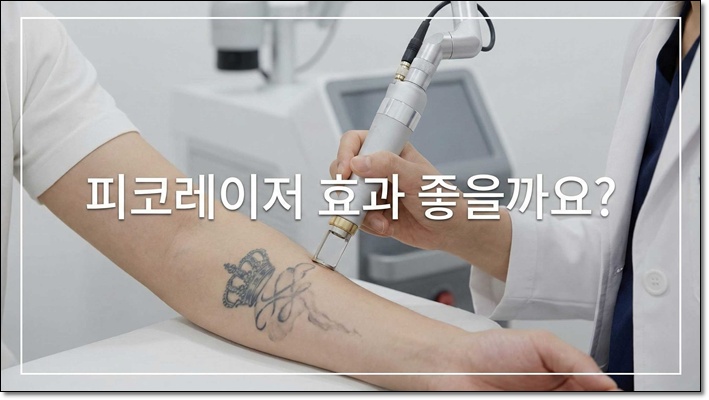
Hello, this is Woori Plastic Surgery.
These days, among people who are interested in skin procedures or tattoo removal, more and more are searching for tattoo removal reviews and asking about pico lasers. Many have heard the name often, but there are also不少 people who are unsure how it actually works and when it is used. Today, we’ll calmly organize what a pico laser is and why it is widely used in pigment treatment and tattoo removal.
What Is a Pico Laser?
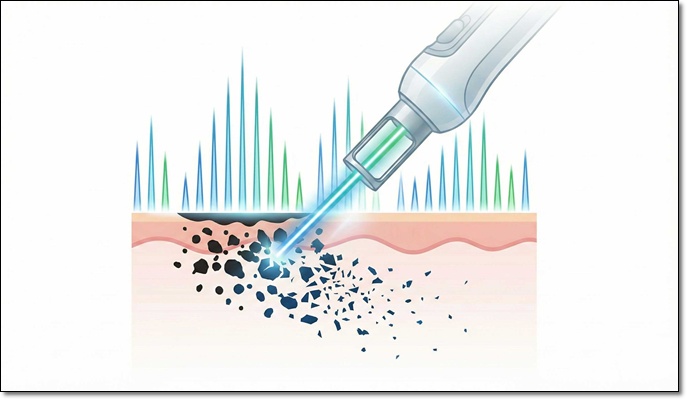
A pico laser is a laser that delivers energy in picoseconds, an extremely short unit of time (one trillionth of a second). Because it delivers strong energy in a much shorter time than ordinary lasers, it has the advantage of breaking down the targeted pigment finely while minimizing heat damage to the surrounding tissue. Looking at actual tattoo removal reviews, it is often noted that it can break pigment into finer particles than conventional nanosecond lasers, allowing treatment with a reduced risk of pigmentation changes or scarring.
‘Wavelength’ and ‘Pulse’

When understanding skin lasers, the important concepts are wavelength and pulse duration. Wavelength determines how deep the laser can reach, while pulse duration refers to how quickly and strongly the energy is delivered. Because pico lasers have a very short pulse duration, they can act more precisely on pigment even when delivering the same amount of energy, which is advantageous for effectively breaking down specific targets such as melanin or tattoo ink. Thanks to these characteristics, they are often described in tattoo removal reviews as allowing relatively precise treatment.
Suitable Reasons for Removal
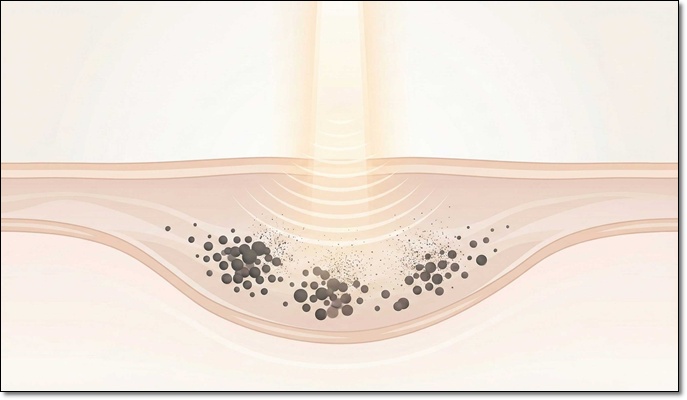
Tattoo removal is the process of breaking up ink pigment located in the deeper layers of the skin so that it can be eliminated from the body. When a pico laser is applied to the tattooed area, the pigment is broken down into microscopic particles, after which immune cells absorb it and it is eliminated through the lymphatic system and other routes. Since smaller pigment particles are easier to remove, pico lasers are known as effective devices for tattoo removal. In actual tattoo removal reviews, the relatively low damage to the surrounding skin and the reduced risk of pigmentation changes or scarring are often mentioned as advantages.
Will All Tattoos Be Removed Easily?

It is true that pico lasers are effective for tattoo removal, but not all tattoos are removed equally. The difficulty of removal can vary depending on the location of the tattoo, its color, the amount and depth of ink, skin type, and whether there is existing scarring. In particular, tattoos on darker skin, on distal areas such as the hands and feet, or those with multiple colors or deep ink may require more treatment sessions. This is also something that is often mentioned as an individual difference in tattoo removal reviews.
Semi-permanent tattoos such as eyebrow or eyeliner tattoos often have pigment placed in layers closer to the skin surface than ordinary tattoos. Because of this, they are relatively quicker to remove, but in most cases, several treatment sessions are still necessary. To reduce skin damage, it is important to proceed in a planned manner with appropriate intervals.
Pain and Post-Treatment Care

Pain during tattoo removal can be felt differently depending on the area and the individual. In general, some people feel that it is more painful than getting a tattoo, and to take this into account, numbing cream, local anesthesia, and in some cases sleep anesthesia may be used together. After the procedure, cold compresses and consistently applying the ointment prescribed by the clinic for a certain period can help minimize blisters, inflammation, and scarring. Also, it is often noted in tattoo removal reviews that the procedure is commonly performed at intervals of about 8 weeks, considering the cycle by which pigment is eliminated from the body.
Pico lasers are used not only for tattoo removal but also across the broader field of pigment treatment, including melasma and blemishes, and their strengths are a short pulse duration and high precision. However, the number of treatment sessions and the method needed can vary depending on the condition of the tattoo or pigment, so it is most important to establish a treatment plan that suits you through sufficient consultation. If you are considering tattoo removal with a pico laser, we recommend proceeding safely with a step-by-step approach rather than having unrealistic expectations.