Hello, this is Woori Plastic Surgery.
When providing consultations for facelift surgery, we often hear people say that terms like facelift, full facelift, and mini facelift are very confusing. If you come in for a consultation without a clear understanding of facelift terminology, it is often difficult to judge which surgery you actually need.
So today, we would like to calmly organize the terms that are commonly used in facelift surgery. Even knowing just this much can make the consultation process much easier, so let’s take a look together.
What Is a Facelift?
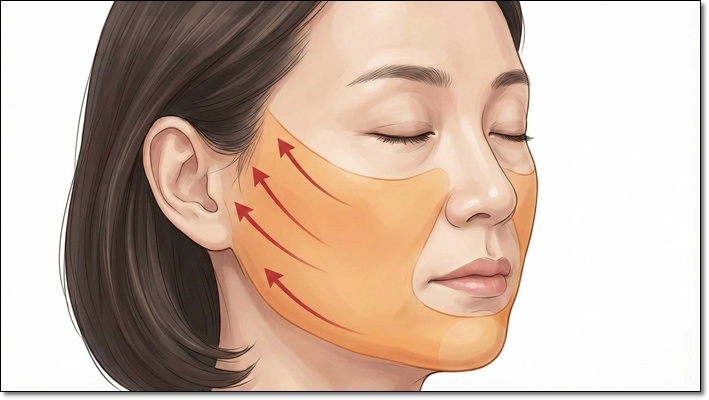
A facelift is a surgery that lifts sagging tissue, mainly in the mid and lower face. One of the most common misunderstandings during consultations is the scope of the surgery: a facelift does not include a forehead lift or under-eye correction.
The area above the outer corners of the eyes, the eyebrows and forehead, and the under-eye area are not part of the facelift surgical scope. If improvement is needed in these areas, a separate procedure should be considered. A facelift should be understood as a surgery that refines the facial line from below the cheekbones to the cheeks and jawline.
Full Facelift Surgery
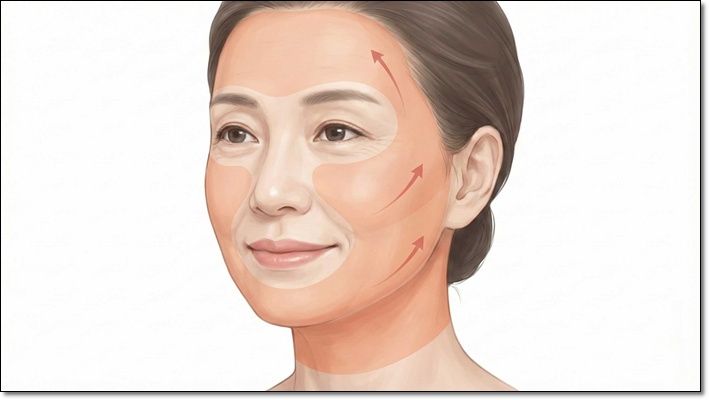
Full facelift surgery is a concept that includes a broader range than a facelift. It is a method of correcting sagging throughout the face, from the upper face to the lower face and neck, by performing a forehead lift, facelift, and neck lift together.
When sagging of the face and neck has progressed together, this kind of comprehensive approach is often necessary.
When Is Neck Lift Surgery Needed?

Neck lift surgery is a procedure that tightens the area from below the jawline to the neck wrinkles. A facelift alone can still provide some improvement along the jawline, but if the neck wrinkles are severely loosened, there may be limitations.
In particular, in people in their late 60s or older, or in cases where sagging has significantly progressed from under the chin to the neck, a facelift and neck lift are often planned together. It is uncommon to perform a neck lift by itself; most of the time, it is done in combination with a facelift.
What Is a Mini Facelift?
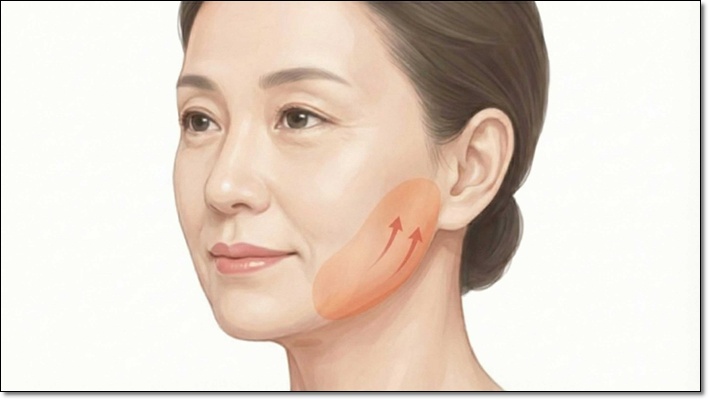
A mini facelift is not an official term with a fixed surgical scope. Because each hospital has its own 기준 for what is called a mini facelift, it is a term that can easily cause confusion.
In general, it can be understood as a surgery with a smaller scope than a facelift and a more limited degree of tightening. It may be considered for people in their early 40s with relatively thin skin and not much sagging, but once you move into your 50s, there are many cases where the effect is limited. At that stage, a facelift is often the more appropriate choice.
How Should You Choose a Facelift Procedure?

When choosing facelift surgery, it is important to base the decision on the current range and cause of sagging rather than the name or trend. After accurately checking which areas of the face have sagged and by how much, whether there is sagging in the neck as well, and the condition of the skin thickness and elasticity, the surgical scope should be determined.
If you go into a consultation with some understanding of facelift terminology, it can also help when comparing the surgical scope and plan explained by different hospitals.
Facelift terminology may feel complicated when you first encounter it, but once each term is organized, it is simpler than it seems. A facelift should be understood as focusing on the center of the face, a full facelift as covering the entire face and neck, and a mini facelift as a facelift with a limited scope. Even knowing the basic concepts can be a great help in determining how much surgery may be needed for you during a consultation. We recommend deciding on the appropriate surgical scope for your current condition through 충분한 consultation.