Hello, this is Woori Plastic Surgery.
When consulting for rhinoplasty, many people look up nose surgery reviews and carefully compare materials first. Because the nose is a structure located at the center of the face, it is very important not only that it looks higher, but also how stability and support are maintained after surgery. Today, I’d like to organize information about autologous costal cartilage, one of the materials often mentioned in actual nose surgery reviews.
Why material selection matters

In conventional nose surgery, various materials have been used, such as ear cartilage, septal cartilage, donated costal cartilage, and artificial implants. Each material has clear advantages and limitations, so it is important to know which nose condition it will be applied to. In particular, when the nose needs to be lengthened significantly or the nasal tip requires strong support, or when there is not enough existing cartilage due to revision surgery, the amount and strength of cartilage are often mentioned as important factors in nose surgery reviews.
What is autologous costal cartilage?
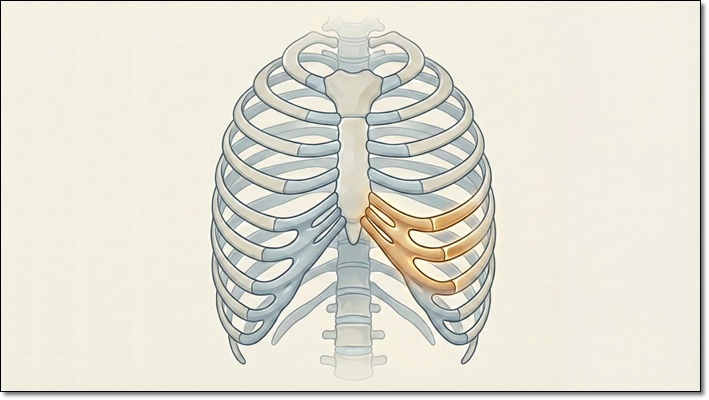
Autologous costal cartilage is a method that uses cartilage harvested from the end of the rib, and its defining feature is that it uses the patient’s own tissue. It provides a sufficient amount of firm cartilage that can stably support the nasal structure, and because it causes little foreign-body reaction, it is mentioned as a material with relatively high satisfaction in nose surgery reviews. In addition, because the absorption rate is low, the nose shape does not change much over time, allowing for long-term stability.
Cases where autologous costal cartilage is a good fit

✔️ When the nose is short and structural lengthening is needed
✔️ When the nasal tip needs to be defined more clearly
✔️ When the septal cartilage has already been used in revision surgery
✔️ When maintaining the postoperative shape is important
Recently, when looking at nose surgery reviews, there is also a trend showing that more people value a soft line and stability that harmonize with the face rather than a nose that is simply high and dramatic.
Concerns about autologous costal cartilage
- Burden of scarring
Autologous costal cartilage is harvested through an incision of about 2 cm near the lower chest. Some people feel burdened by the fact that a chest scar is left while also undergoing nose surgery. However, because the incision range is minimized and access is made along the natural wrinkle lines, the scar often becomes gradually less noticeable over time.
- Warping phenomenon
Due to the nature of cartilage, it may have a tendency to bend after harvest, which is called warping. To reduce this, the cartilage is harvested and then sufficiently observed for reaction, and only the most stable pieces and directions of cartilage are selected and used. This process is also often mentioned in nose surgery reviews as a difference in stability.
Autologous costal cartilage is not a material that is absolutely necessary for all rhinoplasty procedures. However, when nasal tip support is important or long-term stability needs to be prioritized, it can be a meaningful option.
Rhinoplasty is not simply a surgery to make the nose higher; it is a process of designing the balance and structure of the entire face together. While it is useful to refer to actual nose surgery reviews, it is most important to receive an accurate diagnosis of your current nose condition and the direction of change you want, and then choose the method that suits you best.