
Hello, this is Woori Plastic Surgery.
When providing liposuction consultations, many people worry most about scars as they consider surgery while looking into weight loss methods. Because liposuction removes fat by inserting a thin instrument called a cannula under the skin, a small incision is necessary. Today, among the various weight loss methods, I will calmly explain how the incision site is determined when you choose liposuction, and what factors are considered to reduce scarring.
How large is the incision?
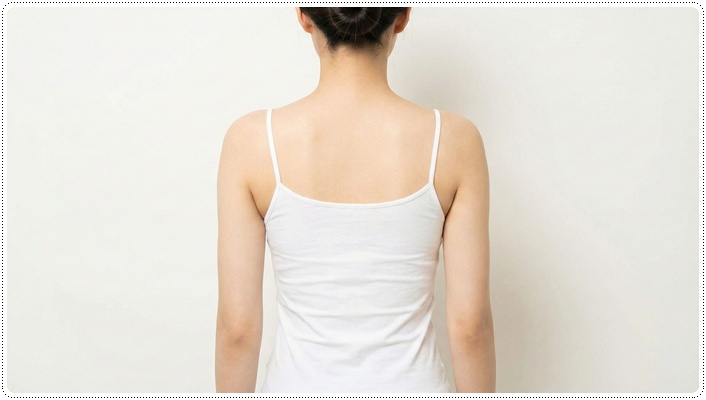
To remove fat, a passage for the cannula is needed, and the incision size is often planned at around 5 mm. As long as the skin is incised, it is impossible for there to be no scar at all. So the important point is not to eliminate the scar entirely, but to place it in a less visible area and manage it properly.
The incision site also varies depending on the area where liposuction is performed.
✔️ Arms: underarm crease, inner elbow
✔️ Abdomen: inside the navel, underwear line
✔️ Thighs: groin crease, around the knee
✔️ Buttocks: gluteal fold line
In general, the plan is to use areas such as skin folds or regions covered by clothing. These are also factors to consider when choosing a weight loss method.
Why incision sites differ by clinic
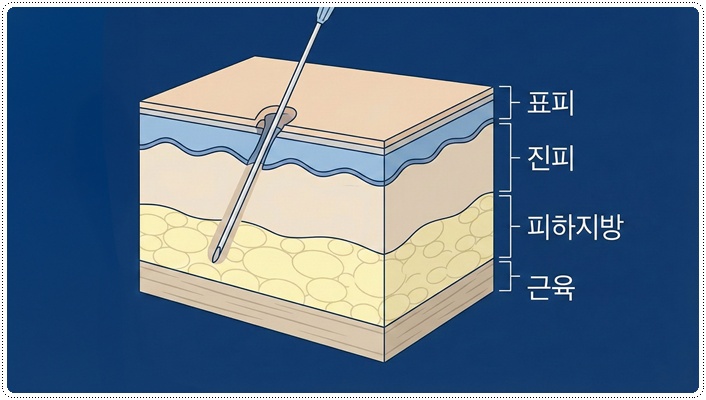
Even in the same area, the incision site may differ slightly depending on the clinic or medical staff. This is influenced by several factors.
The first is the surgical position.
Even for arm liposuction alone, the angle of approach can differ depending on whether the patient is lying face down, on their back, or on their side, so the incision site may also change.
The second is the direction of the fat distribution.
Fat, like muscle, has a certain flow, so a position that makes removal easier along that flow is often selected.
The third is the structure of the instrument.
Because the cannula is straight, there can be areas that are difficult to access depending on the incision site. Taking this into account, a point is chosen that allows the fat to be removed more efficiently.
So rather than saying that one location is always better, it is important for the surgeon to plan by comprehensively considering the anatomical structure and surgical method. If you are considering an active weight loss method rather than simple dieting, this is also something you should be sure to check.
Process for minimizing scars

To reduce liposuction scars, the basic principle is not to make the incision longer than necessary. In addition, several methods are used together to reduce friction that may occur as the cannula repeatedly passes through the incision during surgery.
For example, detailed measures such as using skin protection devices, applying lubricants to reduce friction, and adjusting the insertion angle to lessen skin damage are used to lower the chance of noticeable scars. However, the degree of scarring varies greatly depending on individual skin characteristics, so if you are constitutionally prone to scarring, more careful management is needed during recovery.
Postoperative care
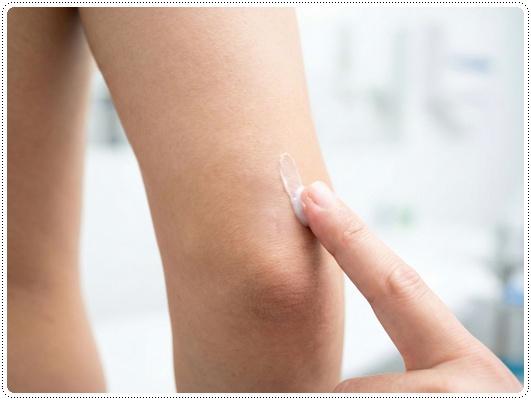
After liposuction, scars are influenced not only by the medical team’s skill but also by the patient’s care. In particular, if you chose liposuction as a weight loss method, you need to pay attention to recovery care as well.
✔️ Avoid moving the incision area excessively
✔️ Use the prescribed ointment consistently
✔️ Avoid sun exposure
✔️ Do not irritate the area while the initial redness is present
This kind of care helps scars settle and fade more steadily.
Scars after liposuction cannot be completely eliminated, but when incision site selection, careful surgical technique, and postoperative care are all carried out together, they often heal so that they are less noticeable.
The same approach is not applied to everyone, and the plan will vary depending on body type, skin condition, and the surgical area. If you are considering liposuction among several weight loss methods, it is important to receive a thorough explanation about scarring and decide in a direction that suits you. If you are wondering which approach is currently appropriate, we recommend checking your condition through a consultation first.