Hello, this is Woori Plastic Surgery.
Even if it is not as noticeable as the shape of the face or facial features, many people feel subtle stress because of the shape of their ears. It is especially easy to worry about it when tying your hair up or wearing styles that expose the ears. In such cases, you may wonder whether otoplasty can help create a neater overall impression. However, because the ears are an area where harmony with the face is important, it is necessary to calmly examine whether correction is actually needed.
Protruding Ears and Split Earlobes
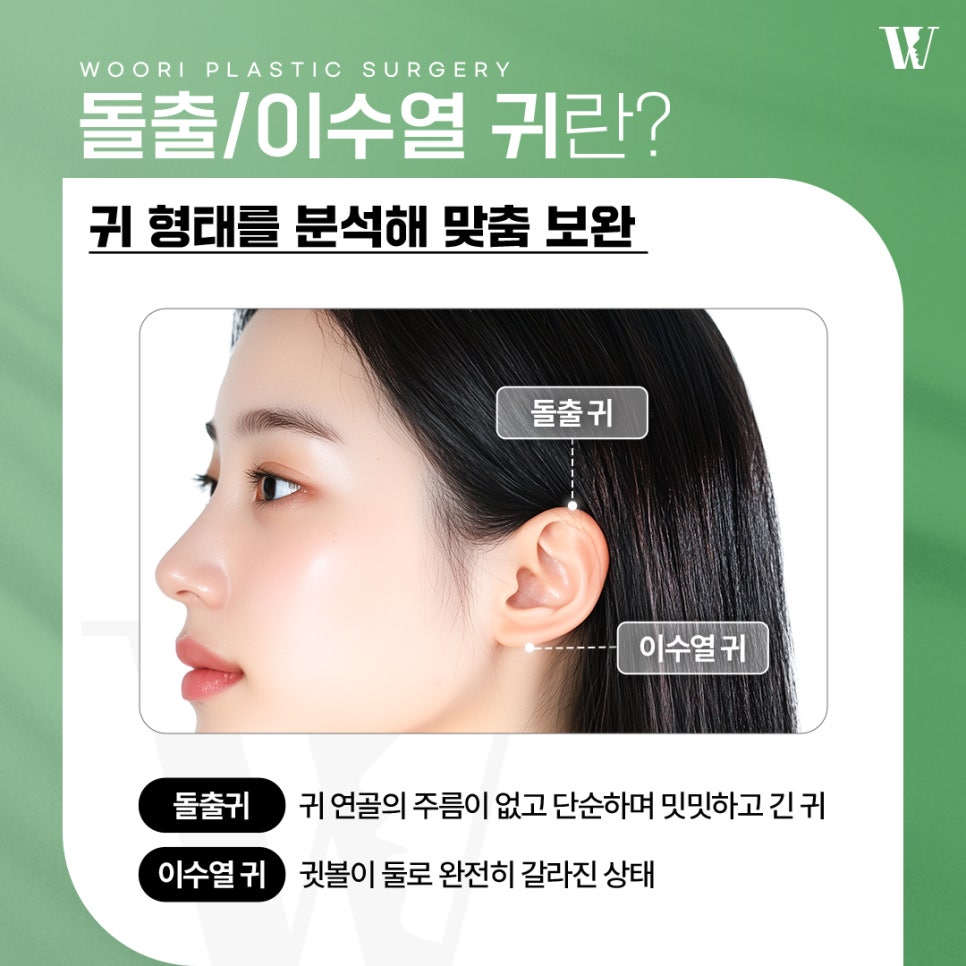
Among ear-shape concerns, the most commonly mentioned are protruding ears and split earlobes.
First, protruding ears refer to ears that appear to stick outward from the face because the folds of the ear cartilage are insufficient or simple. The ears may look flat and elongated overall, and when viewed from the side, they often stand out before the face does.
By contrast, split earlobes are related more to the condition of the earlobe than to the ear’s overall shape, and they refer to a state in which the earlobe is completely split into two. In some cases, it is congenital, and in others, it can occur later due to external irritation such as wearing earrings. Since the correction methods and approaches differ in both cases, an accurate distinction is important.
Cases Where Ear Correction Is Needed
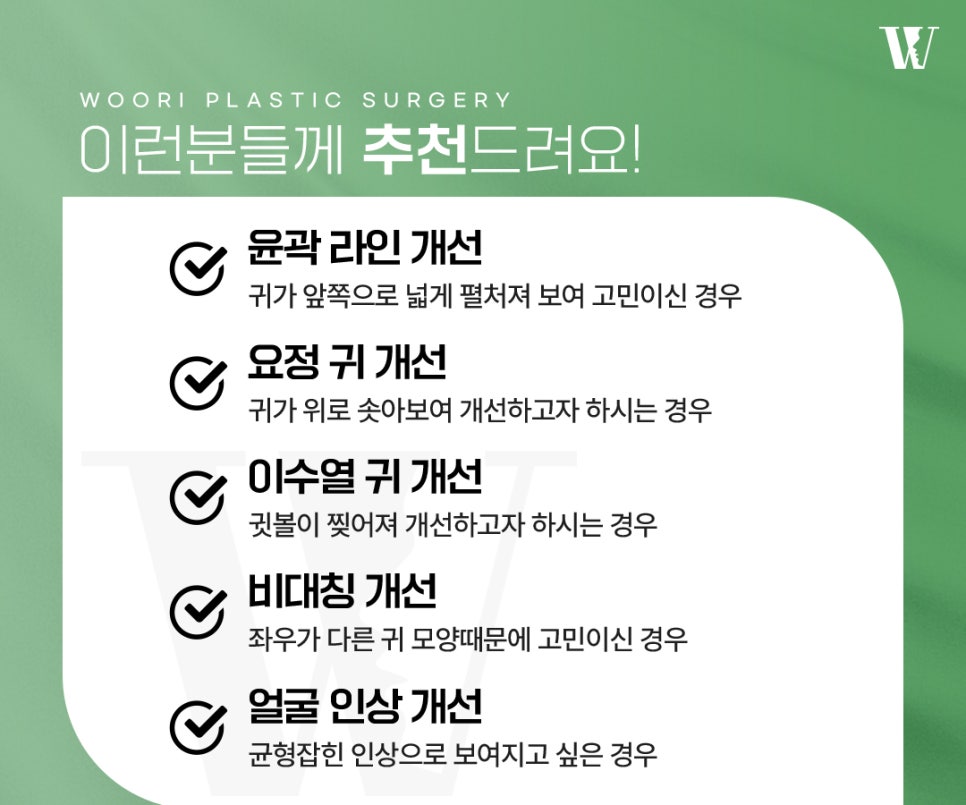
Not every ear shape is a surgical candidate. However, if the ears appear to stick out too much from the face, or if the shape of the earlobes makes the overall impression look unbalanced, improvement through otoplasty may be considered. In particular, for protruding ears, the goal is not to make the ears smaller, but to naturally adjust the angle relative to the face.
For split earlobes as well, the important point is not simply to reattach the earlobe, but to refine the shape and create a natural earlobe line. Therefore, it is necessary to confirm through consultation whether the correction method is appropriate for the current condition.
Important Points in Otoplasty

Ear correction is not about creating a dramatic change like surgery on the eyes or nose; the key is to make the overall impression look more refined. If the ears are attached too tightly or the angle is reduced too much, they may look unnatural instead. The more experienced the medical team is, the more they will consider the elasticity of the ear cartilage, skin thickness, and any left-right asymmetry when making a plan. This kind of approach is necessary for otoplasty to result in a natural outcome that does not interfere with daily life.
What Must Be Checked During Consultation
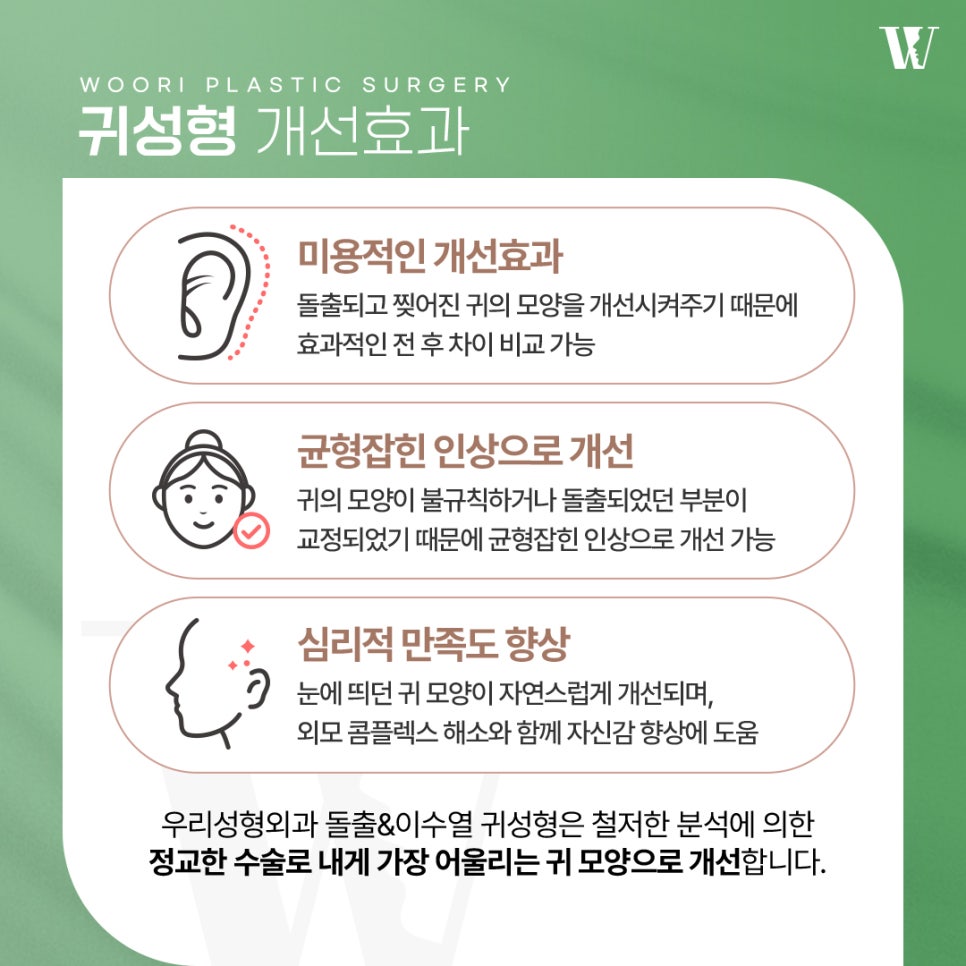
If you are considering ear correction, the first priority is to determine whether your current ear condition actually falls within the range that needs correction, rather than focusing first on whether surgery should be done. This is because the approach differs depending on whether the issue is protruding ears, split earlobes, or simply a personal variation in ear shape. It is also a good idea to receive a full explanation and then decide on factors such as the incision location, the extent of scarring, and the recovery period. When this process is handled well, satisfaction with otoplasty can also increase.
Even small differences in ear shape can affect the overall impression. Otoplasty is less about making the ears noticeably different and more about tidying up protruding or split areas to create a cleaner overall look. If you are concerned about protruding ears or split earlobes, rather than simply deciding on surgery, we recommend first receiving an accurate diagnosis of your current condition and calmly checking whether correction is actually needed for you.