Hello, this is Woori Plastic Surgery.
More and more people are consulting about double-jaw surgery because their jaw appears protruded or because they feel their facial balance is off. Some think of it simply as a way to change the face shape, but in reality, there are many cases where functional discomfort is also present due to problems with the position of the jawbone. Today, we will organize which cases require double-jaw surgery and how it differs from facial contouring.
Difference Between Double-Jaw Surgery and Facial Contouring
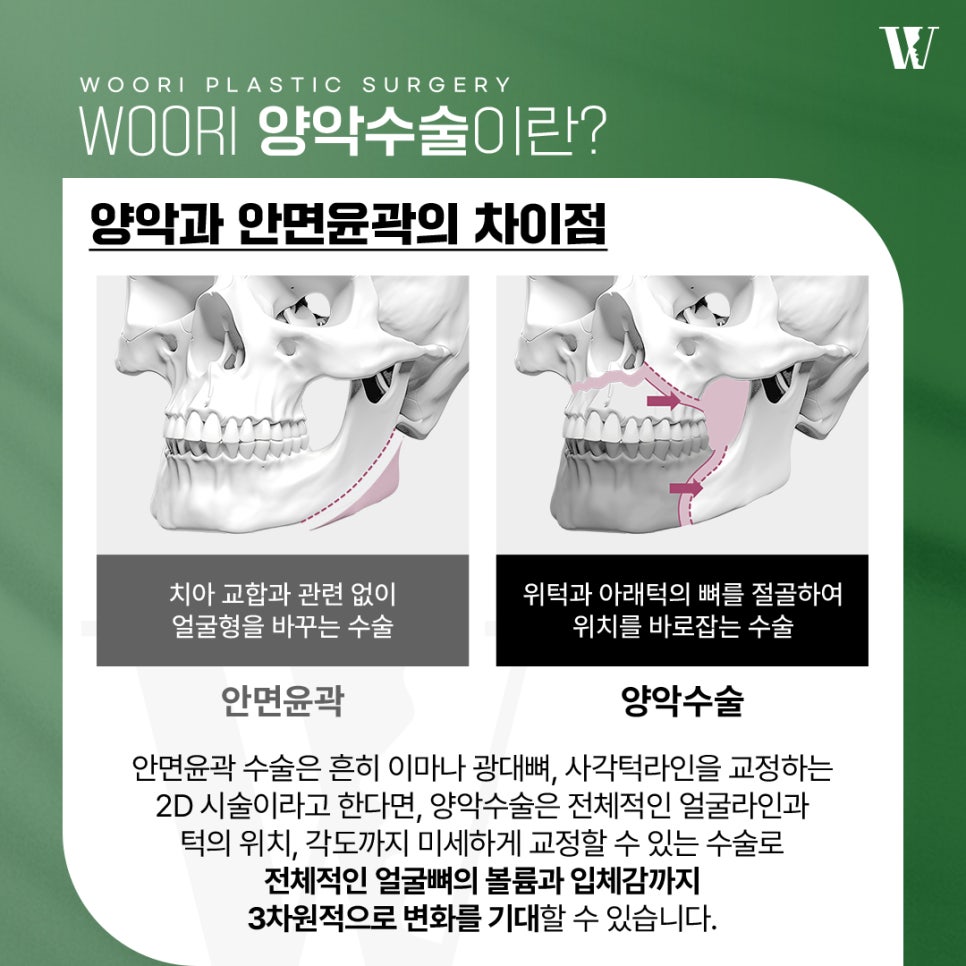
Facial contouring surgery is a procedure that refines the bone lines around the outer face, such as the cheekbones, square jaw, and chin, to soften the impression. In contrast, double-jaw surgery is a procedure that adjusts the position and angle of the upper and lower jaws themselves to improve both bite alignment and facial center balance.
In other words, if contouring surgery is about organizing the face’s “lines,” double-jaw surgery is aimed at correcting the “positional relationship” of the jawbones. When bite alignment or jaw function must also be considered, the approach of the two surgeries becomes clearly different.
Difference in Surgical Methods
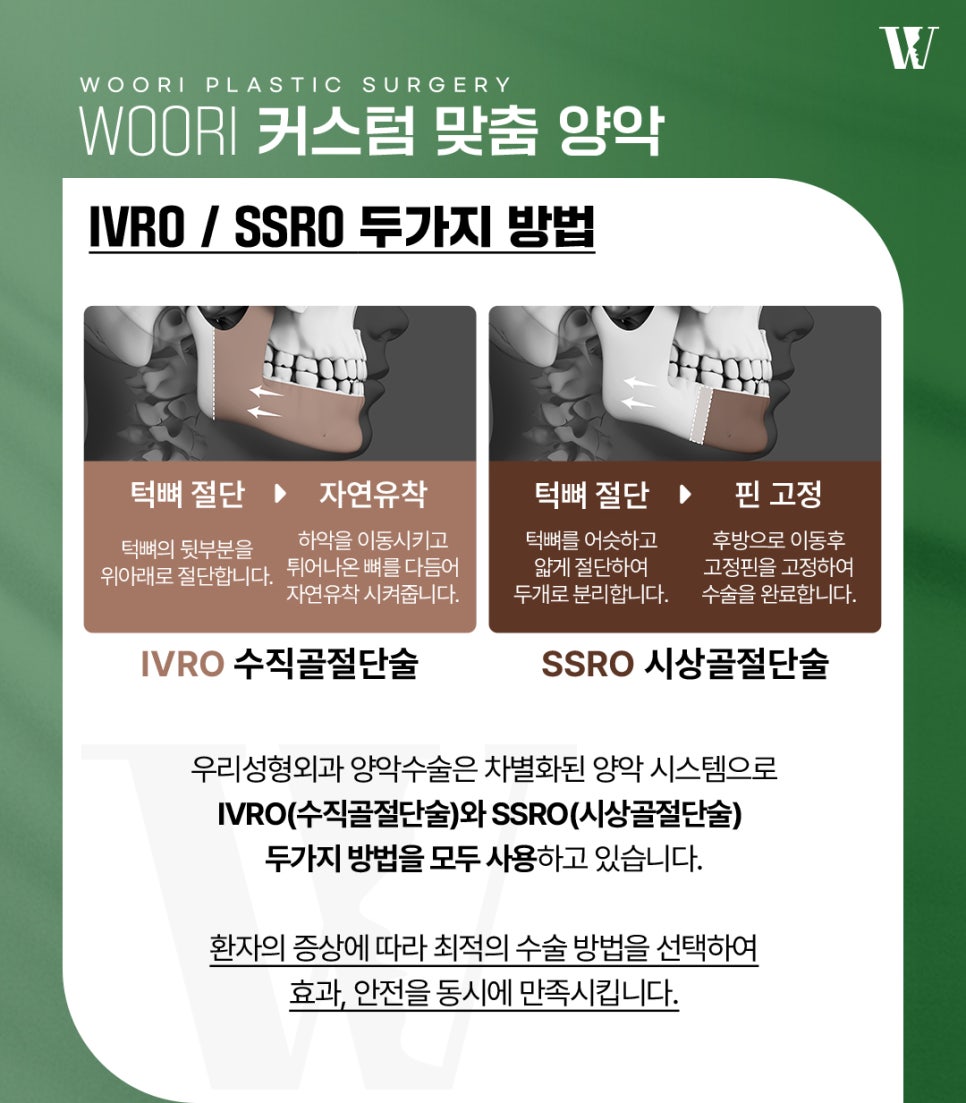
In double-jaw surgery, two representative methods are used: IVRO (intraoral vertical ramus osteotomy) and SSRO (sagittal split ramus osteotomy).
Both methods can be applied, and the optimal surgical approach is selected according to the patient’s jawbone shape, bite condition, and degree of asymmetry. Rather than proceeding with double-jaw surgery in a fixed single way, a customized plan tailored to the patient’s situation is important.
Cases That Require Double-Jaw Surgery
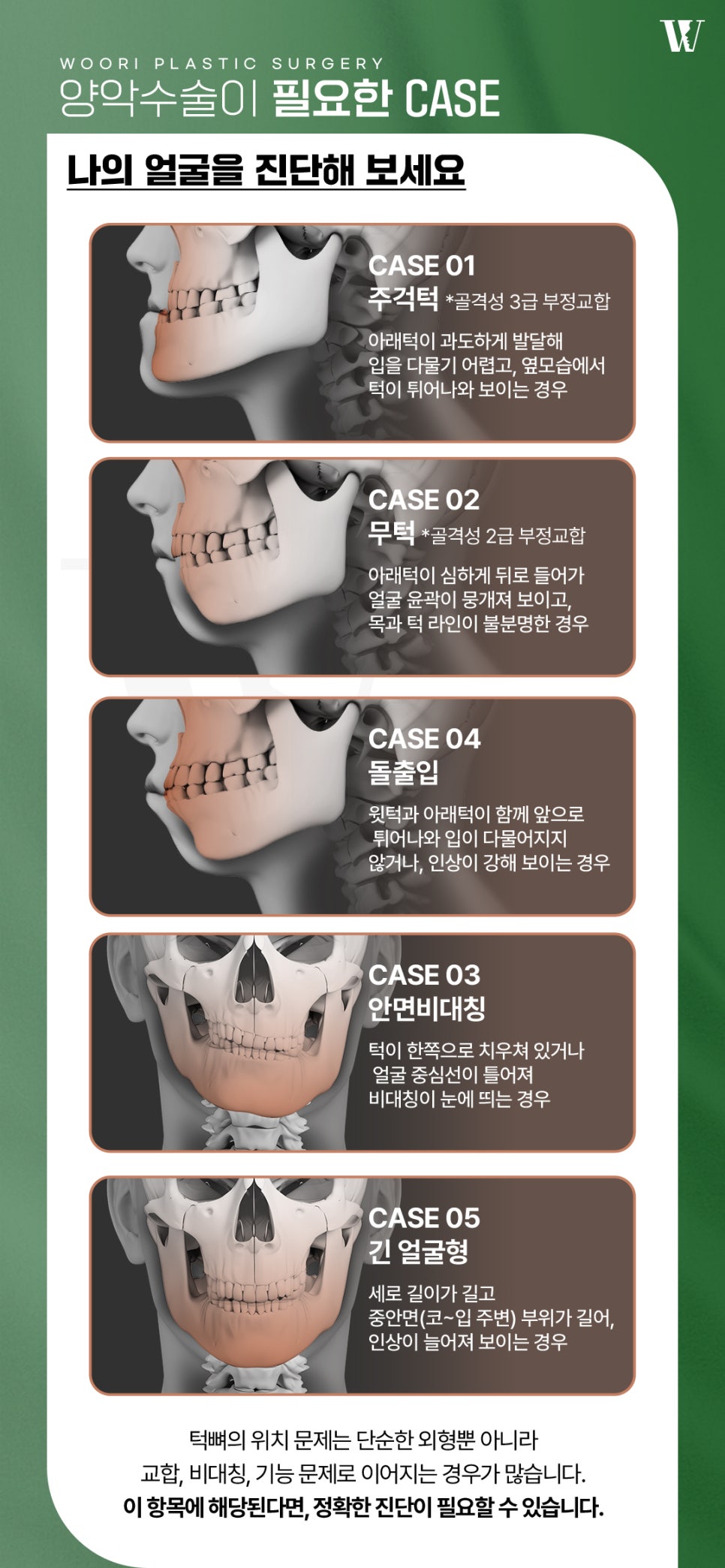
Problems with jawbone position can lead not only to changes in appearance, but also to bite issues, asymmetry, and functional problems. In the following cases, an accurate diagnosis may be needed to determine whether double-jaw surgery is necessary.
📌 Underbite (skeletal Class III malocclusion)
When the lower jaw is excessively developed, making it difficult to close the mouth and causing the chin to appear protruded in side profile
📌 Retruded chin (skeletal Class II malocclusion)
When the lower jaw is severely set back, making the facial contour look collapsed and the boundary between the neck and jaw unclear
📌 Facial asymmetry
When the jaw is shifted to one side or the facial midline is misaligned, making asymmetry noticeable
📌 Protruding mouth
When both the upper and lower jaws project forward, making it hard to close the mouth properly or causing a strong impression
📌 Long face shape
When the vertical length is long and the midface (around the nose and mouth) is also long, making the impression look elongated
Expected Improvement Effects
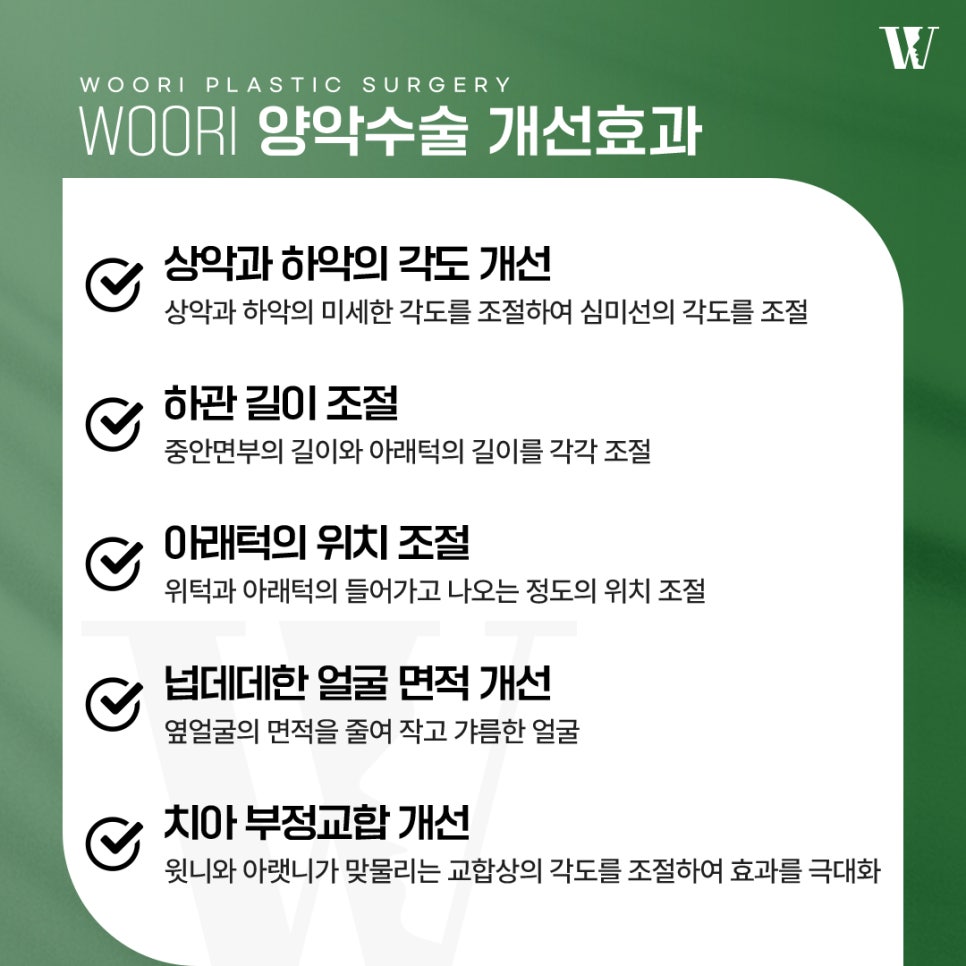
Surgery that adjusts jawbone position considers not only appearance changes but also functional improvement. Through double-jaw surgery, the following changes can be expected.
📌 Improved maxillary and mandibular angles
By adjusting the subtle angles of the upper and lower jaws, the balance of the facial aesthetic line is improved
📌 Adjustment of lower-face length
By adjusting the lengths of the midface and lower jaw, facial proportions are improved
📌 Adjustment of lower-jaw position
By adjusting how far the upper and lower jaws recede or protrude, the side-profile impression changes
📌 Improvement of a broad facial area
By reducing the lateral facial area, the face can appear smaller and slimmer
📌 Improvement of malocclusion
By adjusting the bite angle at which the upper and lower teeth meet, functional stability is strengthened
Problems with jawbone position are not simply a matter of appearance; they can also lead to bite issues, facial imbalance, and functional discomfort. If you relate to the items introduced above, rather than judging on your own, it is important to first confirm through an accurate examination whether your condition requires double-jaw surgery. Since this is a surgery where accurate diagnosis and planning are as important as the degree of facial shape change, we recommend that you carefully review the direction that suits you through sufficient consultation.