
The nose is located at the center of the face and has a major impact on overall facial impression. It is easy to think that simply raising the nose bridge changes the image, but in reality, the structure and angle of the nose, as well as its balance with the face, must all be considered for a natural result.
In particular, these days it is becoming increasingly important to understand and approach not only nose height, but also factors such as the septum and the nasolabial angle. Today, let’s take a closer look at why these elements matter in rhinoplasty.
Rhinoplasty: Is it just about changing height?

Rhinoplasty is often thought of as simply a surgery to raise the nasal bridge, but in reality, it is a process of adjusting the shape and direction of the nasal tip, as well as the overall proportions.
If the balance between the bridge and the tip is off, the result can look awkward, and in some cases it may not harmonize with the face shape. Therefore, rather than a simple change in height, it is important to consider the nose’s structure and angle, along with its balance with the entire face.
The septum,
A factor that determines structure in rhinoplasty
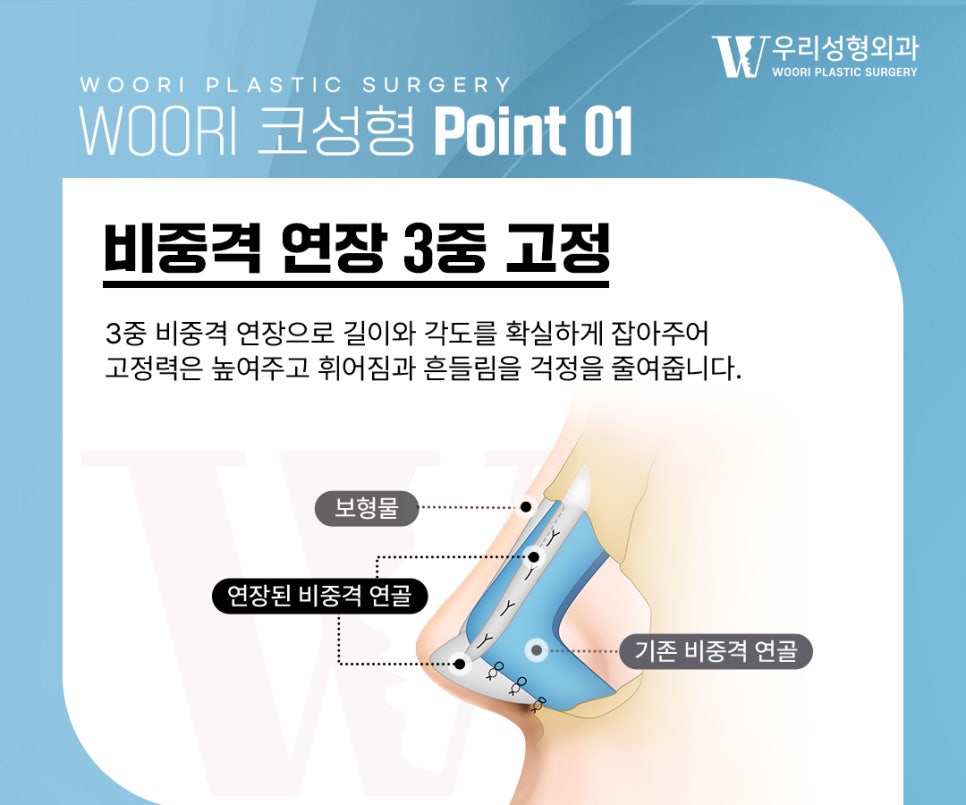
The septum is a structure that acts like a central pillar inside the nose. In rhinoplasty, this septum plays an important role in shaping and supporting the nasal tip.
If the septum has enough support, the nasal tip can be formed more stably. On the other hand, if it is weak or insufficient, it may be difficult to maintain the desired shape.
For this reason, in rhinoplasty, an important point is not only creating the external appearance, but also how the internal structure will be reinforced and designed.
The nasolabial angle,
An important standard that determines impression

The nasolabial angle refers to the angle formed between the nasal tip and the upper lip. Depending on this angle, the facial impression can change significantly.
If the nasolabial angle is too small, the nasal tip may appear to droop downward, creating a stuffy impression. Conversely, if the angle is too large, the tip may appear overly upturned.
Maintaining an appropriate nasolabial angle is an important factor in creating a natural impression, and it is necessary to adjust it to match the individual’s facial shape and proportions.
Rhinoplasty,
What determines the result?

The result of rhinoplasty is not simply a change in height; it is naturally completed when structure, angle, and balance with the face all come together.
Only when structural stability through the septum and a design that considers the nasolabial angle are achieved together can a lasting result be expected over time.
Therefore, when considering rhinoplasty, it is important to look beyond height or shape alone and take into account the structure and proportions that suit your face.
Rhinoplasty is a surgery that affects not only external appearance but also the internal structure and overall impression. Even within the same rhinoplasty, the result can differ depending on how each element is designed.
If you are concerned about the shape of your nose or a change in your impression, it is important to first accurately assess the current structure and proportions of your nose and then find the direction that is appropriate for you. Through consultation with a specialist, we recommend planning for a natural and balanced result.