Hello, this is Woori Plastic Surgery.
Depending on the position or shape of the jaw, a person’s impression may look strong, or the proportions of the face may feel awkward. Among these, a protruding lower jaw can affect not only appearance but also the bite and functional aspects, so more and more people are considering jaw surgery. However, not every case is approached in the same way, so it is important to first accurately understand your own facial type.
My Facial Type
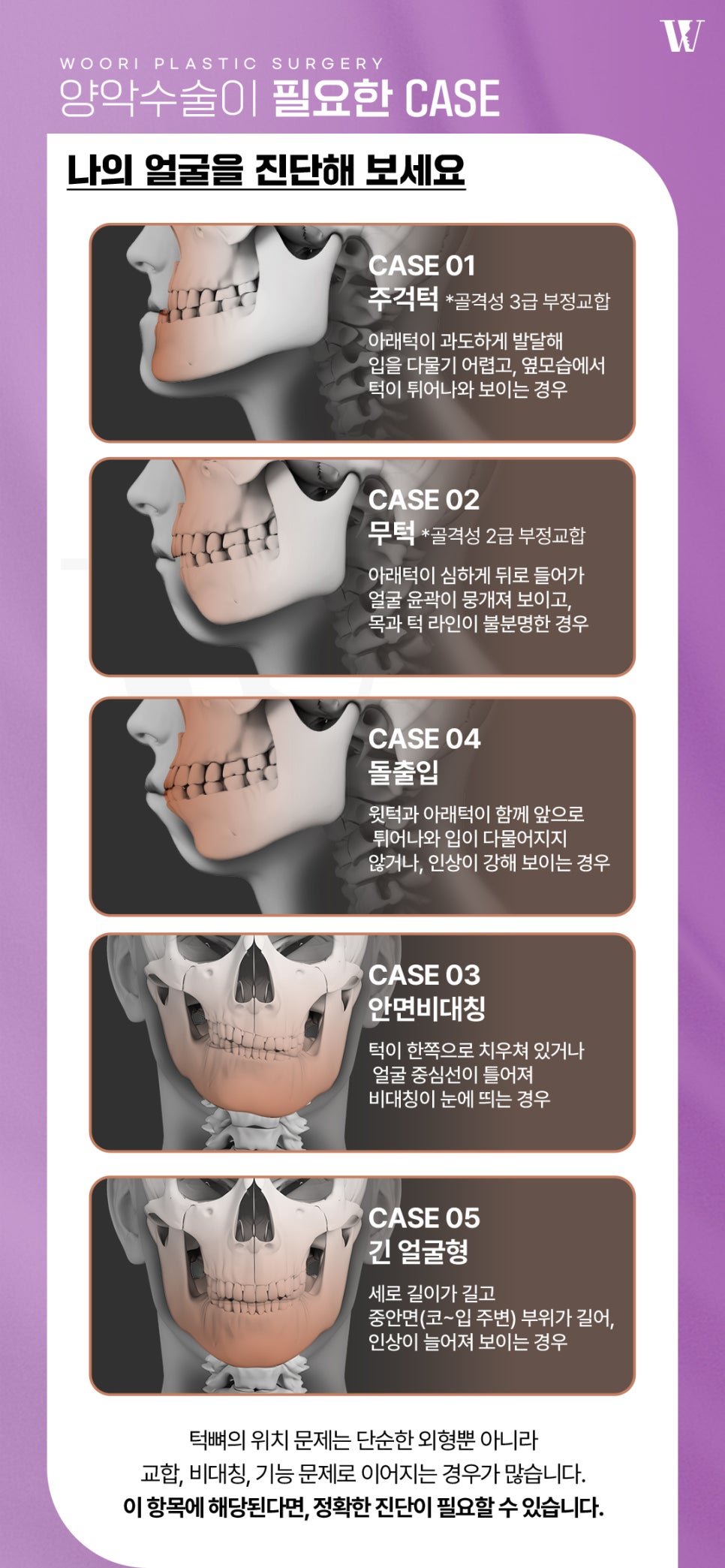
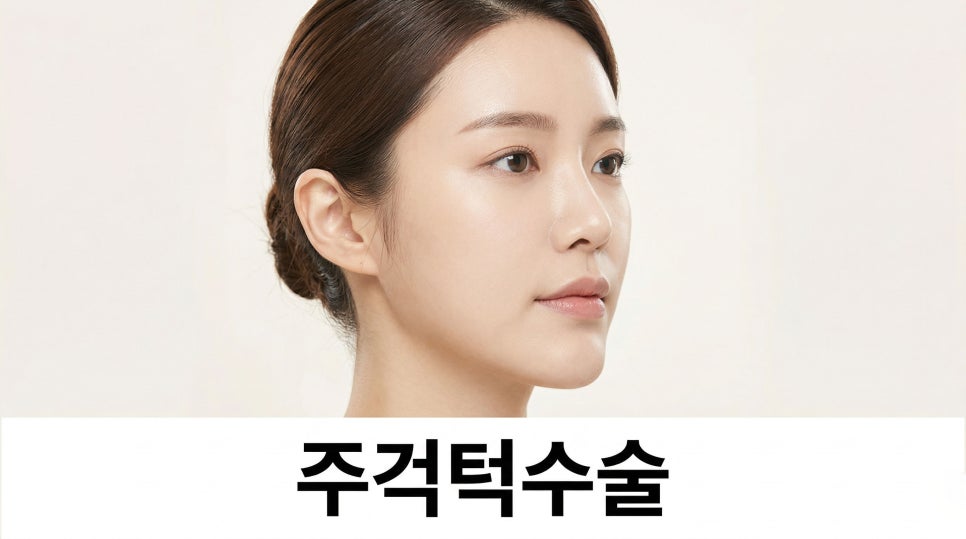
A prominent jaw typically shows a lower jaw that has developed excessively, making it difficult for the mouth to close naturally, or a side profile where the chin appears to protrude forward. In such cases, jaw surgery may be considered to adjust the position of the jaw.
However, jaw issues do not appear in only one form. They can present in various types, such as a receding chin where the lower jaw is set back, protruding lips where both the upper and lower jaws protrude, facial asymmetry where the center of the face is tilted, or a face shape that looks generally long.
Because the approach differs depending on each case, it is necessary to identify the structural cause rather than judging only by appearance.
Normal Range of Jaw Bone
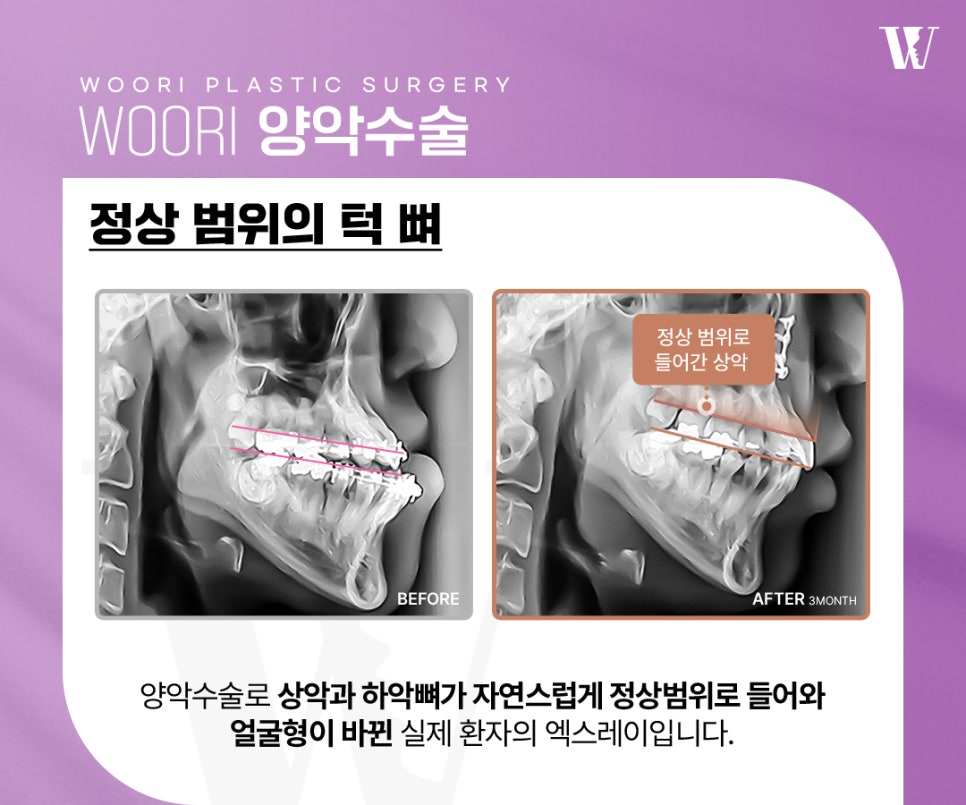
Jaw surgery is not simply a procedure to shave down the jaw; it is a process of adjusting the position and angle of both the upper and lower jaws.
If the position of the jawbone is misaligned, it can make the facial proportions look awkward and also affect tooth occlusion, leading to functional discomfort. In such cases, jaw surgery aims to move the jaw into the normal range while improving both appearance and function.
In particular, double jaw surgery allows three-dimensional adjustment of the facial bones, so it requires a different approach from simple contour improvement.
Two Surgical Methods
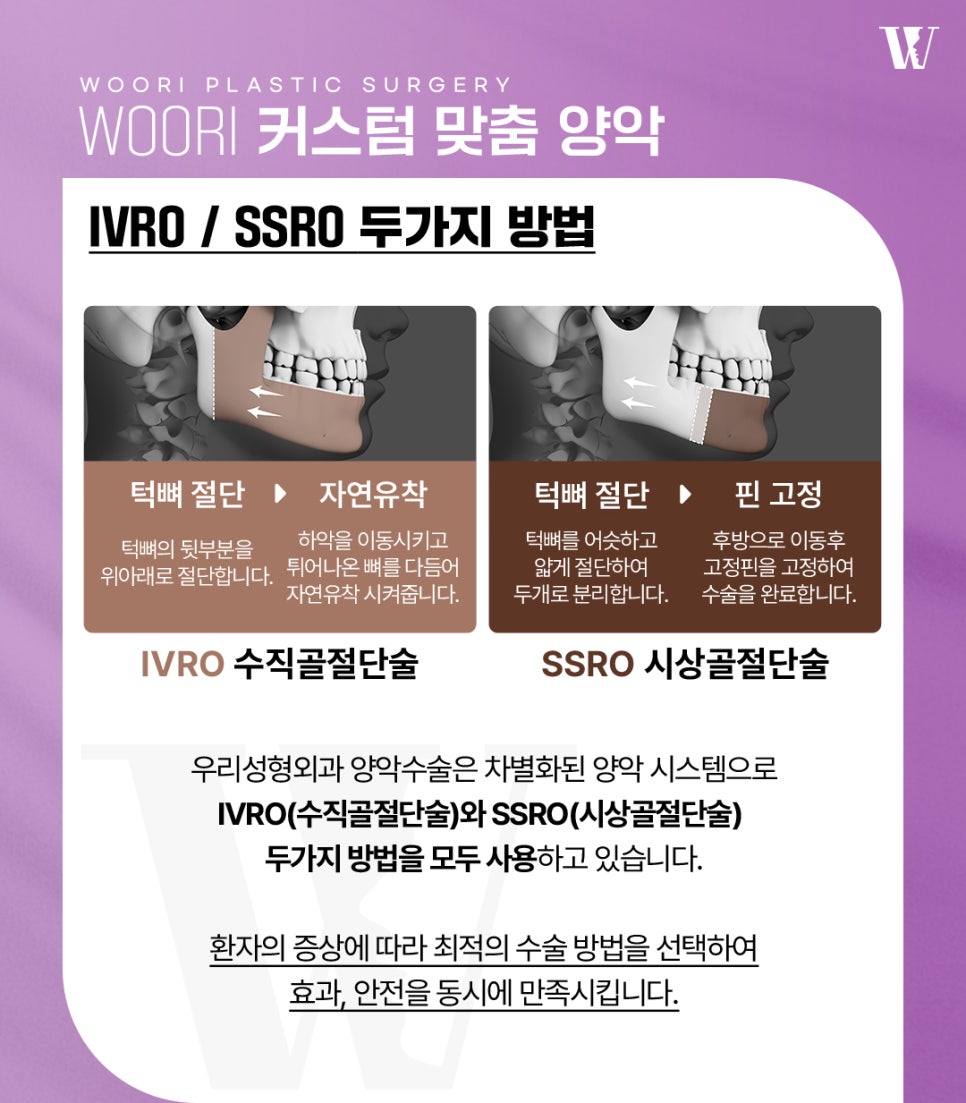
The two main methods used for jaw surgery are IVRO (intraoral vertical ramus osteotomy) and SSRO (sagittal split ramus osteotomy).
IVRO is a method in which the jawbone is cut, moved naturally into position, and allowed to fuse, while SSRO is a method that separates the jawbone and then secures it stably in place using fixation pins.
The appropriate method depends on the degree of protrusion, whether asymmetry is present, the condition of the bite, and so on. In some cases, both methods may be used together. This selection process also has an important effect on the results of jaw surgery.
Improvement Effects of Double Jaw Surgery
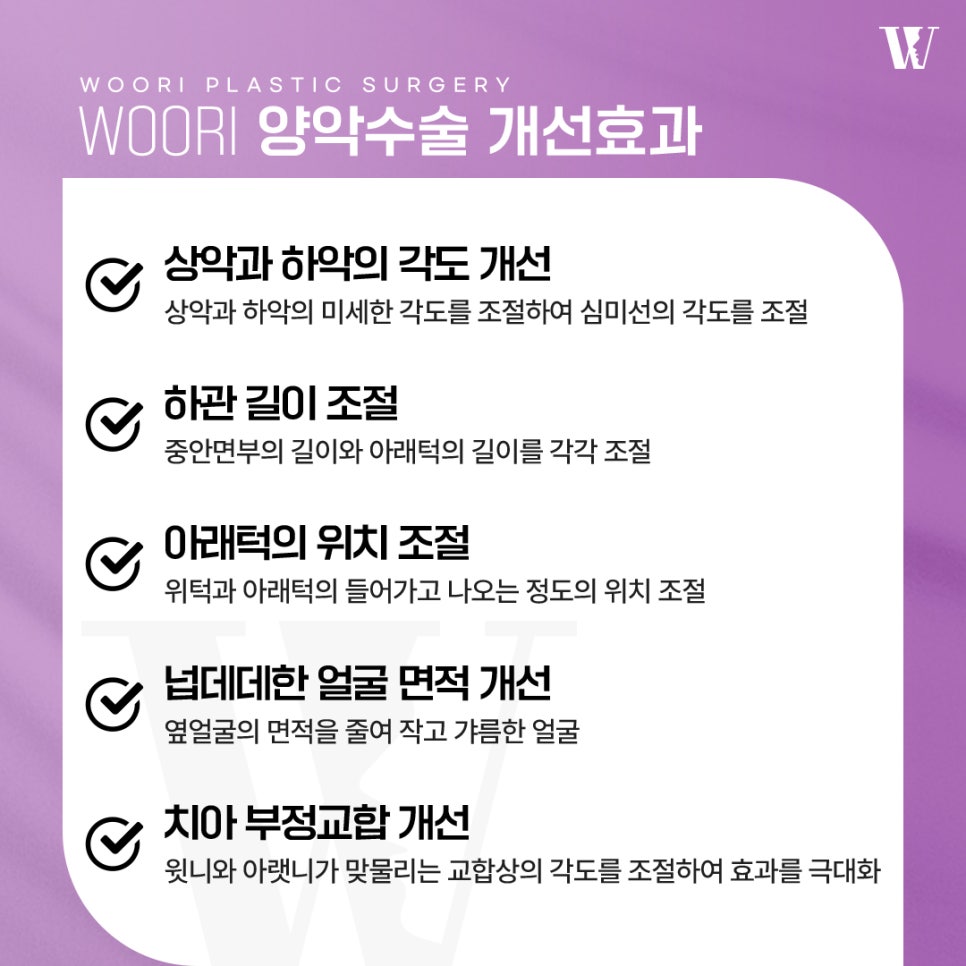
The changes expected from jaw surgery are not limited to improving the facial shape.
By adjusting the angles of the upper jaw and lower jaw, the overall facial proportions can be refined, and the length of the lower face and the position of the chin can be balanced. In addition, as tooth occlusion improves, positive changes can be expected in everyday functions such as chewing and pronunciation.
In this way, jaw surgery is a procedure that considers both appearance and function, so it requires a different approach from surgery done for purely cosmetic purposes.
Jaw surgery is closer to a process of correcting the position and structure of the jaw than it is to a surgery that simply changes the shape of the face.
Therefore, before deciding whether to undergo surgery, it is important to first accurately determine your facial type and whether there are structural problems. Setting the right direction for yourself through sufficient consultation and diagnosis can lead to more satisfying results.