Hello, this is Wooi Plastic Surgery.
Face shape is one of the important factors that determines the overall impression. When the cheekbones stand out or the jawline appears square, the face can look larger than it actually is or create a stronger impression, which is why many people consider facial contouring surgery.
Facial contouring surgery is not simply a procedure to reduce face size, but one that aims to create a softer, more harmonious line by adjusting the structure and proportions of the facial bones. Today, let’s look at the concept of facial contouring surgery along with its representative procedures.
Organizing the balance of the face shape
Facial contouring surgery
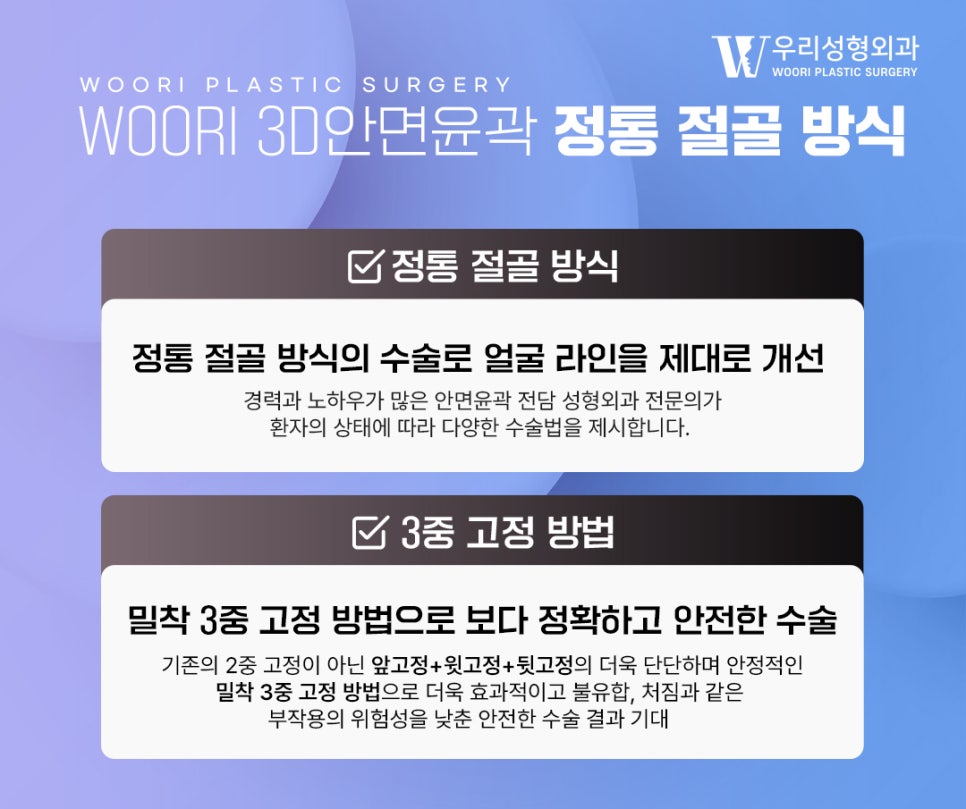
Facial contouring surgery is a procedure that refines the bone structure forming the outer shape of the face to organize the overall contour line.
It is carried out by adjusting areas that affect the face shape, such as the square jaw, cheekbones, and chin, to soften a angular appearance and create a softer, more balanced impression. Rather than changing only a specific area, it is important to consider the proportions and connectedness of the entire face.
In particular, because the face is structured with each area connected to one another, making excessive changes to just one area can instead lead to an unnatural impression. Therefore, after thoroughly analyzing an individual’s skeletal structure and facial shape characteristics, it is important to set the surgical plan based on the overall balance.
Square jaw reduction, to connect it to a softer jawline
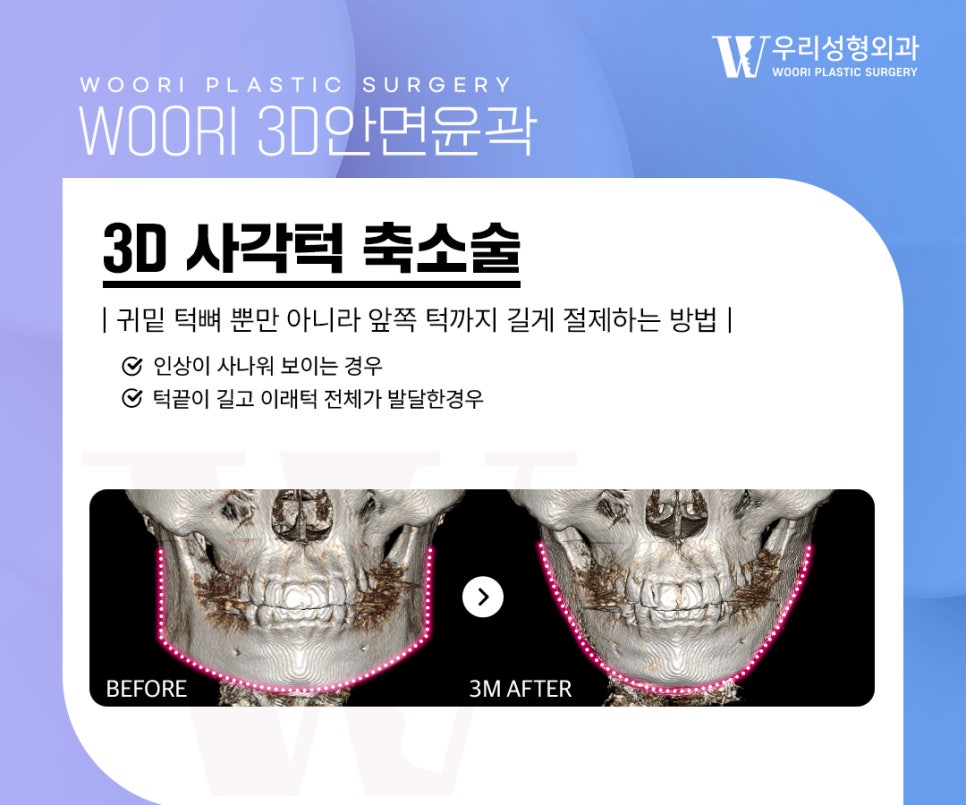
Square jaw reduction is a procedure that smooths an angular jawline by refining the developed bone in the mandibular angle area.
When the jaw looks wide or strongly developed, the lower face can give an impression of being heavy and large. The goal is to organize these parts so they connect to a softer and smoother jawline.
Also, it is important to consider not only reducing the angle near the ear, but also the flow of the jawline extending to the chin, in order to achieve natural results. If muscle development is also present, it is important to plan the procedure after checking the condition of both the bone and the soft tissue.
Cheekbone reduction, considering both facial width and three-dimensionality
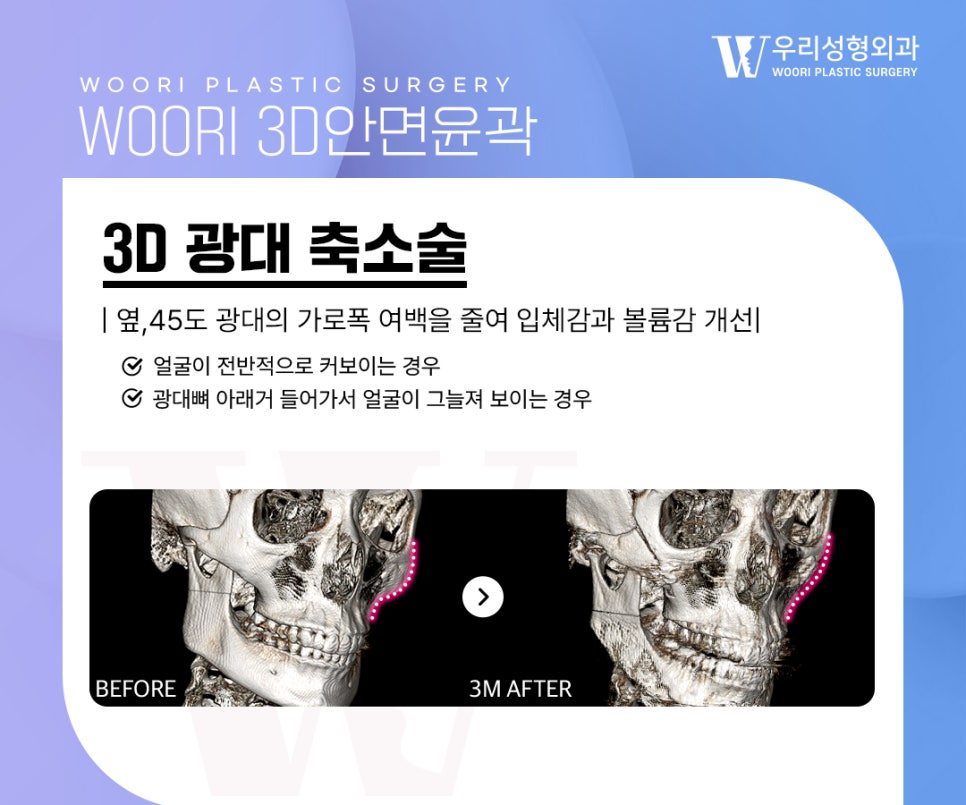
Cheekbone reduction is a procedure that adjusts the position of protruding cheekbones to reduce facial width and refine the contour line.
When the cheekbones stand out outward, the face can appear wider not only from the front but also at a 45-degree angle. In this case, the cheekbones are moved inward or rotated to make the outer facial line look slimmer.
In particular, cheekbone reduction is not simply about reducing the protruding area; it must also take into account the face’s three-dimensionality and balance of volume. If the reduction is excessive, it can lead to an unnatural look, so it is important to approach it based on the harmony of the entire face.
Chin reduction surgery, a process of
adjusting the lower-face proportions
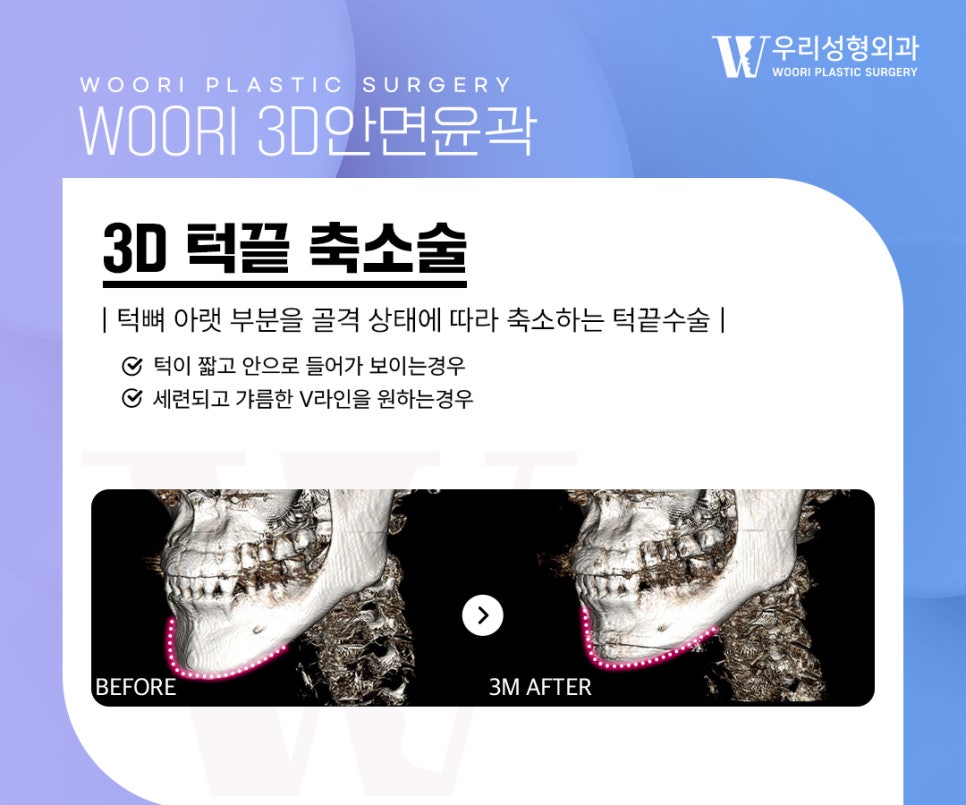
Chin reduction surgery is a procedure that organizes the balance of the lower face by adjusting the length, width, and shape of the chin.
When the chin appears long or wide, or when there is left-right asymmetry, the facial proportions may feel awkward. By correcting this, it can help create a more natural and refined lower-face line.
Since the chin is an area connected to the proportions of the center of the face, it is often considered together with square jaw reduction or cheekbone reduction rather than performed on its own. This is because a more sophisticated and harmonious impression can be achieved by balancing the length and width of the face together.
Facial contouring surgery is not simply a process of reducing face size, but a surgery that considers the overall proportions and lines of the face to restore balance.
The square jaw, cheekbones, and chin are not separate areas; they are connected elements that complete the face shape together. Therefore, rather than looking at only one part, it is important to examine the overall harmony as well.
If you are considering facial contouring surgery, I hope you will first fully discuss the characteristics of your current face shape and the changes you want, then calmly plan the direction that suits you best.