Hello, this is Woori Plastic Surgery Clinic.
During consultations for male rhinoplasty, we more often see patients who feel stressed because of a humped nose than those who are concerned about having a low nose.
In particular, many people seek consultation because the bridge of the nose appears prominent in profile photos, or because their face looks fine from the front but gives a strong impression from the side.
A humped nose is often not simply an issue of nasal height; the balance between the bridge and the tip of the nose can also have a significant effect.
Today, we will look at how a humped nose is approached in male rhinoplasty.
Why does a humped nose
create a strong impression?
A humped nose refers to a shape in which the middle portion of the nasal bridge appears prominent.
Although it may make the nose appear high, if the protruding area is pronounced, the overall impression can feel sharp or strong.
In addition, when the nasal tip is relatively low or drooping, the hump may appear even more pronounced.
Therefore, in male rhinoplasty, it is important to consider not only refining the hump but also its proportion in relation to the nasal tip.
Why is the proportion of the nasal tip important?
Improving a humped nose does not end with simply smoothing the nasal bridge.
The connection between the bridge and the tip must flow naturally to achieve a more balanced nasal line.
In particular, men often prefer a nasal line that is closer to straight rather than one that looks excessively high or elaborate.
For this reason, the height and angle of the nasal tip, as well as the overall proportions, are considered together during the design process.
Why is stable support for the nasal tip important?
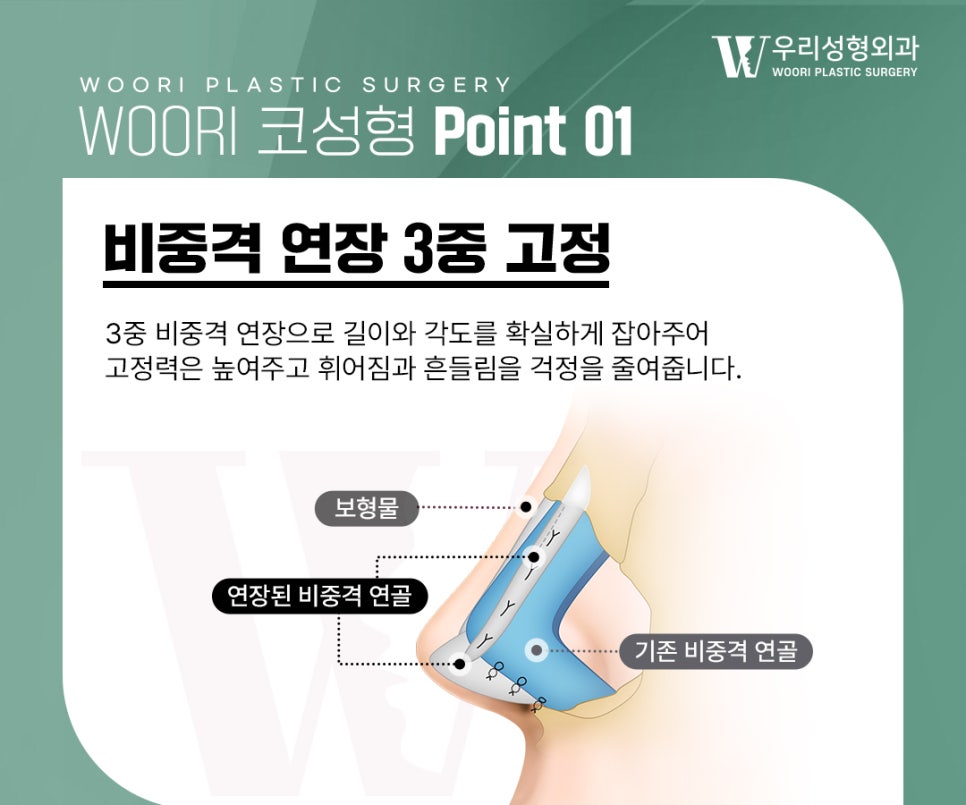
The nasal tip needs sufficient support to maintain its shape stably over time.
For this purpose, septal extension may be used to plan the length and angle of the nasal tip.
In particular, the triple septal extension technique is one method designed to provide more stable support for the extended septal cartilage.
By increasing fixation strength and helping reduce the possibility of movement or deviation of the nasal tip, it is an important aspect considered in male rhinoplasty.
The role of 2Layer fixation
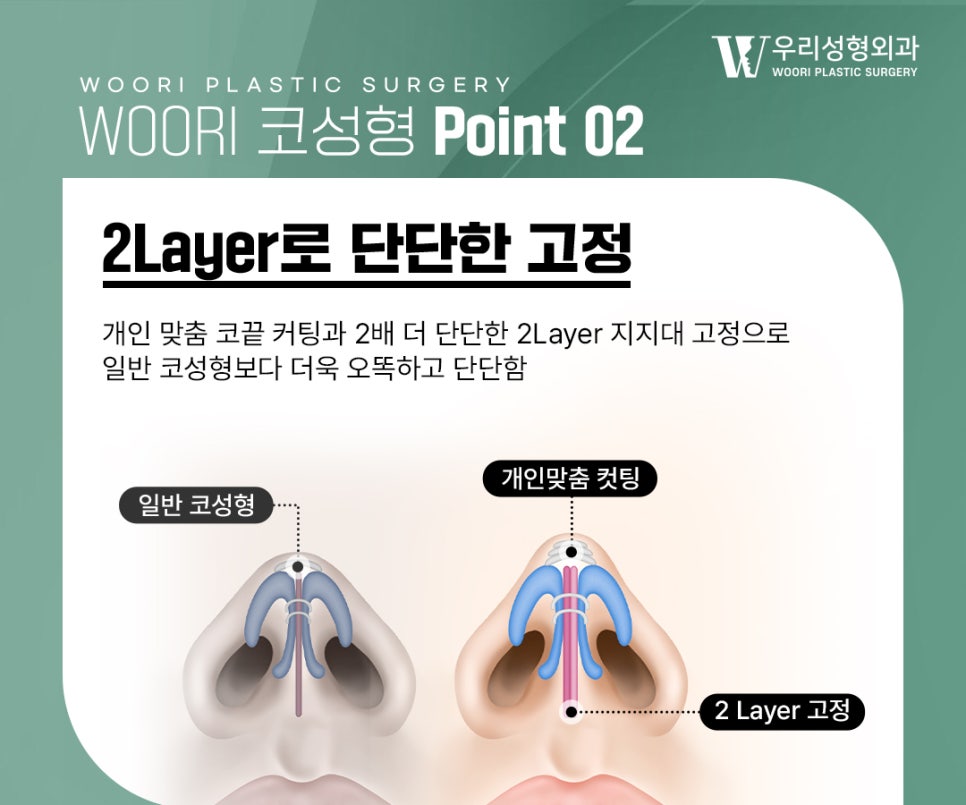
Even a small difference in the nasal tip can change the overall impression.
Therefore, it is important to design the tip cartilage according to each individual’s nasal structure and then provide stable support for it.
The 2Layer fixation method is designed to support the nasal tip more firmly.
It is applied together with a customized nasal-tip design and may help maintain the tip line over time.
The importance of the nasolabial angle in male rhinoplasty
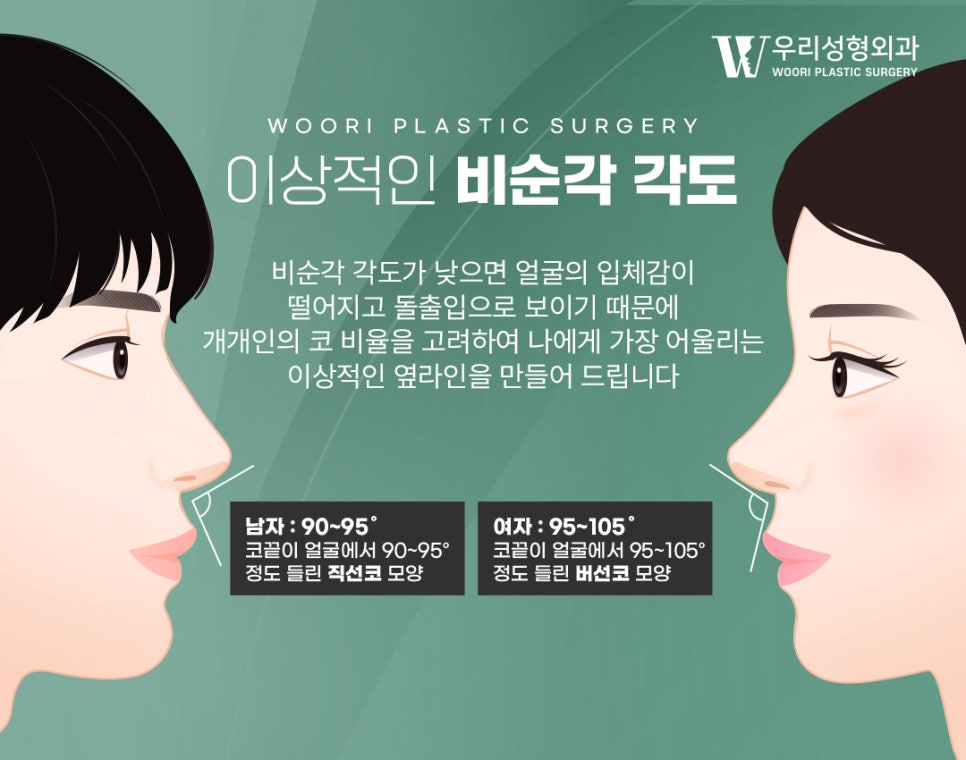
In male rhinoplasty, proportions are more important than height.
Among these factors, the nasolabial angle has a significant effect on the appearance of the profile.
If the nasolabial angle is too small, the mouth may appear protruding or the face may appear to lack three-dimensional definition.
Conversely, if it is made excessively large, a more feminine impression may appear, so care is needed.
In general, an angle of approximately 90–95 degrees is considered for men, and the design often aims for a straight nasal line.
Having concerns about a humped nose does not mean that simply raising the nose will necessarily lead to a good result.
The current height of the nose, the shape of the nasal tip, and the proportions of the face should all be considered together to achieve a more natural and masculine impression.
In male rhinoplasty, it is important to create a straight nasal line that harmonizes with the face rather than pursuing a dramatic change.
If your face appears strong because of a humped nose or you are concerned about your profile, we recommend receiving a thorough consultation to analyze your current nasal structure and determine the nasal line that suits you.