Hello, this is Woori Plastic Surgery Clinic.
Because the nose is located at the center of the face, even a small change can have a significant impact on one’s overall impression. However, simply raising the bridge of the nose does not necessarily lead to a satisfying result. The harmony with the face, the direction of the nasal tip, and structural stability must all be considered to achieve a more natural rhinoplasty result.
Today, let’s take a look at some important design points in rhinoplasty.
Considering Facial Proportions: The Nasolabial Angle
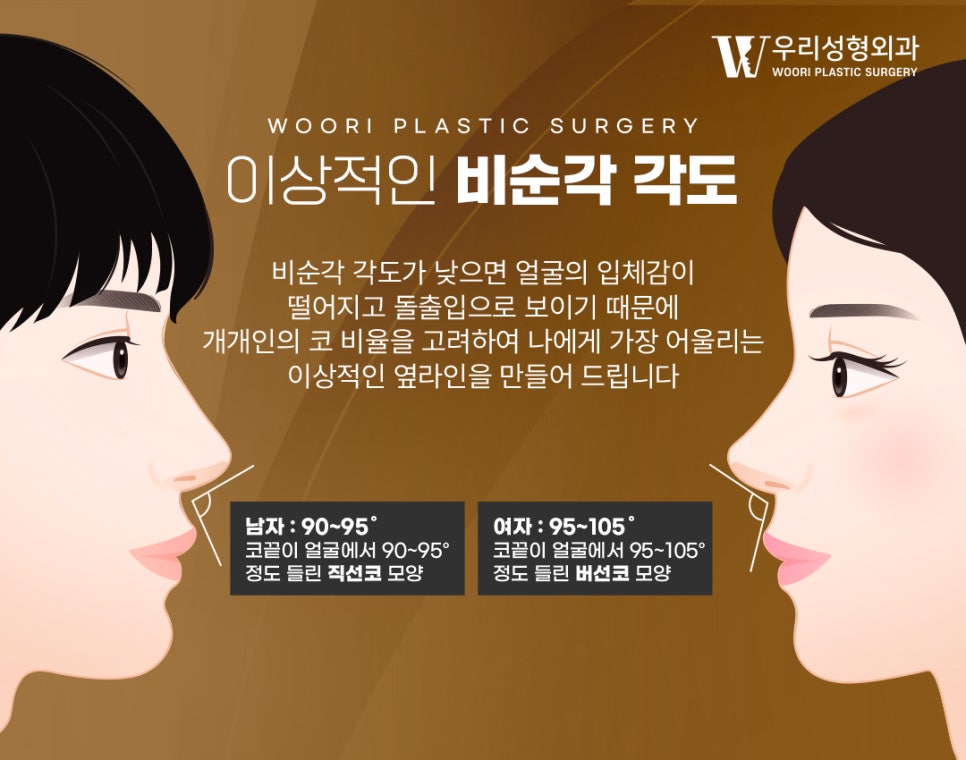
In rhinoplasty, not only the height of the nose but also the “nasolabial angle,” the angle formed by the nose and lips, is an important factor.
The nasolabial angle is one of the standards used to determine the direction and three-dimensional appearance of the nasal tip, and it can affect the balance of the entire face and the naturalness of one’s impression. If the angle is too small, it may create a constrained appearance, while an excessively large angle may look unnatural.
Therefore, rather than applying a uniform standard, it is important to design an appropriate nasolabial angle based on each individual’s facial shape and the proportions of their facial features.
For a Stable Result
Three-Point Septal Fixation
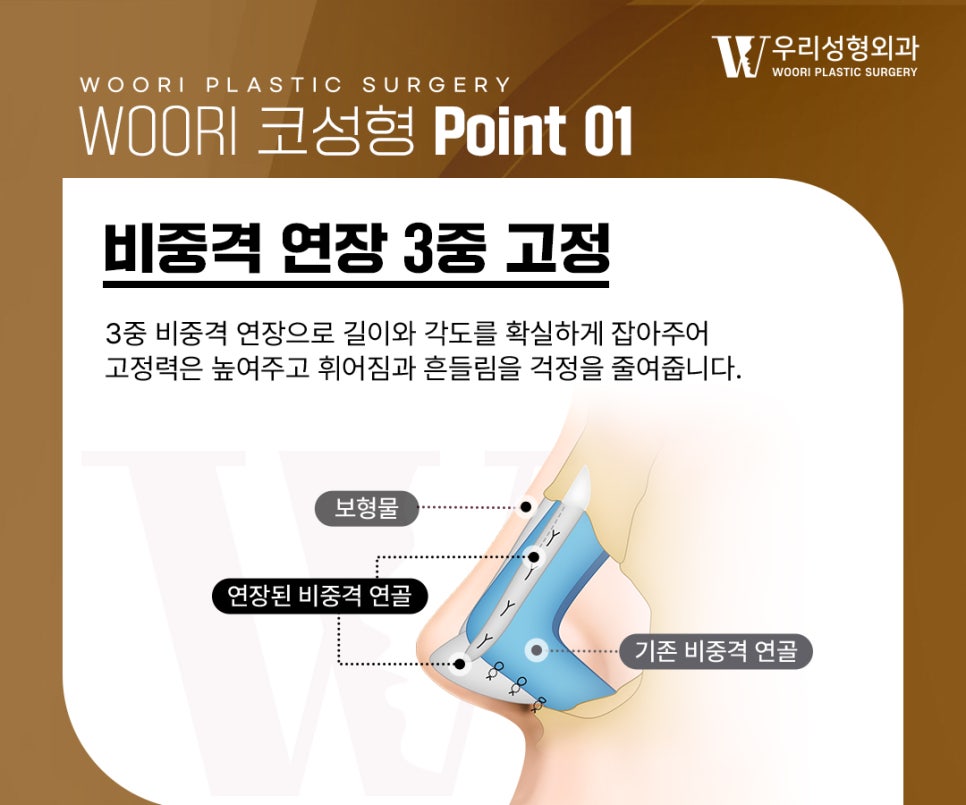
Because the nasal tip is an area that bears force over time, structural stability must also be carefully considered.
Three-point septal fixation is a method intended to provide more stable support for the nasal tip, and it may help maintain the position and shape of the tip. Rather than simply creating height, considering the internal structure as well is an important part of rhinoplasty.
Establishing a stable support structure may help maintain a natural nasal contour over time.
A Nasal Tip Design Tailored to the Individual
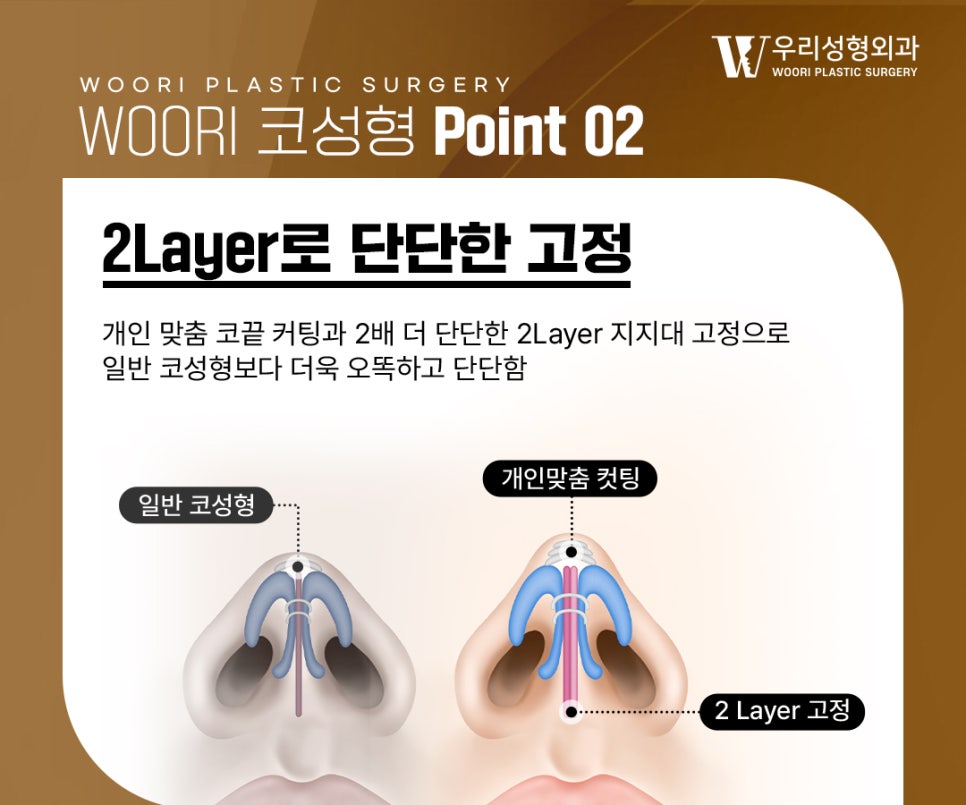
Everyone has different skin thickness, nasal tip shape, and cartilage structure. For this reason, the design should be tailored to the individual’s condition rather than performing rhinoplasty in the same way for everyone.
Nasal tip trimming is also performed with these factors in mind. Instead of excessively removing unnecessary cartilage, it is important to create a design that considers overall proportions and balance.
When planning a nasal tip contour that harmonizes with the individual’s face, a more natural and gentle impression may be achieved.
To achieve a satisfying rhinoplasty result, it is important to consider harmony with the entire face rather than simply increasing the height of the nose. A natural nasal contour can be completed when various factors—including the balance of the nasolabial angle, stable septal fixation, and an individualized nasal tip design—work together.
Above all, because each person has a different nasal structure and desired image, it is important to plan a design suited to the individual through sufficient consultation and an accurate diagnosis. Rhinoplasty that harmonizes with one’s face may lead to a more satisfying result.