Hello, this is Woori Plastic Surgery Clinic.
Among those who visit us for a consultation because they are concerned that their face looks wide, many ask, “Will my face look smaller if I only reduce my cheekbones?”
In fact, various features affect facial width, including not only the cheekbones but also the square jaw and chin.
That is why it is important to accurately identify the cause of the face looking wide.
Today, we will summarize some useful information for those considering cheekbone reduction.
Why Does the Face
Look Wide?
Not everyone whose face looks large has the same underlying cause.
In some cases, developed lateral cheekbones can make the face appear wider, while in others, protruding 45-degree cheekbones can make the facial area look larger.
A developed square jaw or an imbalanced chin ratio can also make the face appear wide and blunt.
Therefore, when planning cheekbone reduction, it is important to analyze the proportions of the entire face rather than focusing only on the cheekbones.
Why Are the Lateral Cheekbones and
45-Degree Cheekbones Important?
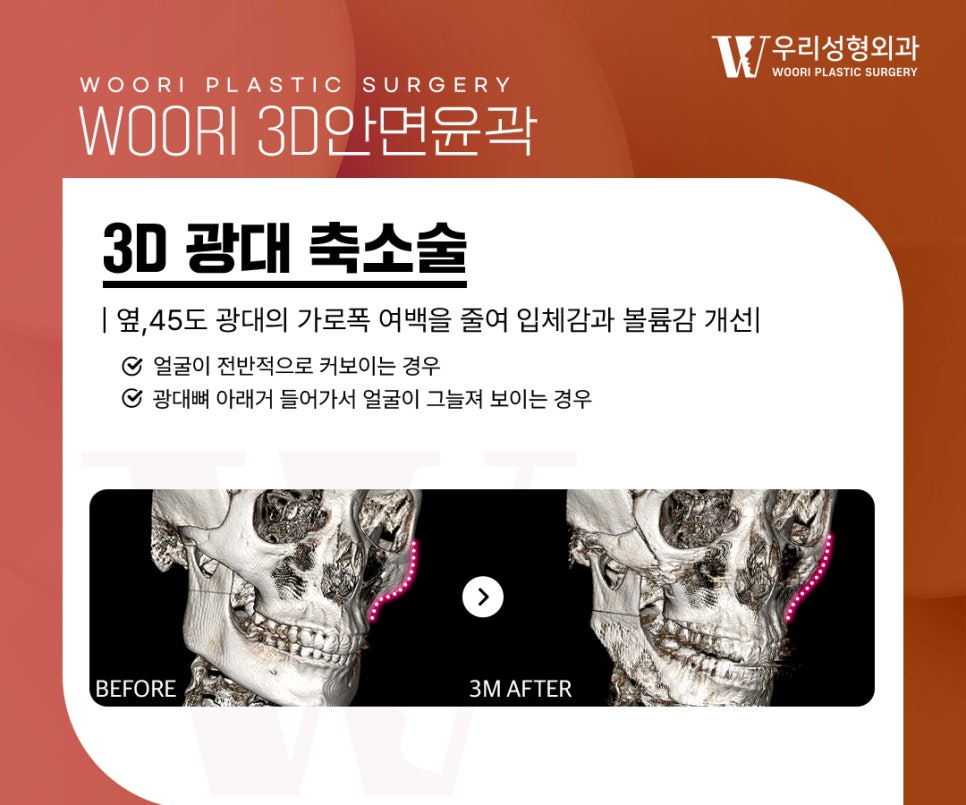
The cheekbones are not limited to the areas visible from the front.
Developed lateral cheekbones can make the face look wider, while protruding 45-degree cheekbones can make the face look larger or less dimensional.
In some cases, the area beneath the cheekbones may look sunken, creating an impression as though shadows have formed on the face.
For this reason, cheekbone reduction should be approached with consideration for the balance and three-dimensionality of the entire face, not simply as a procedure to reduce the cheekbones.
Can Reducing Only the Cheekbones
Make the Face Look Smaller?
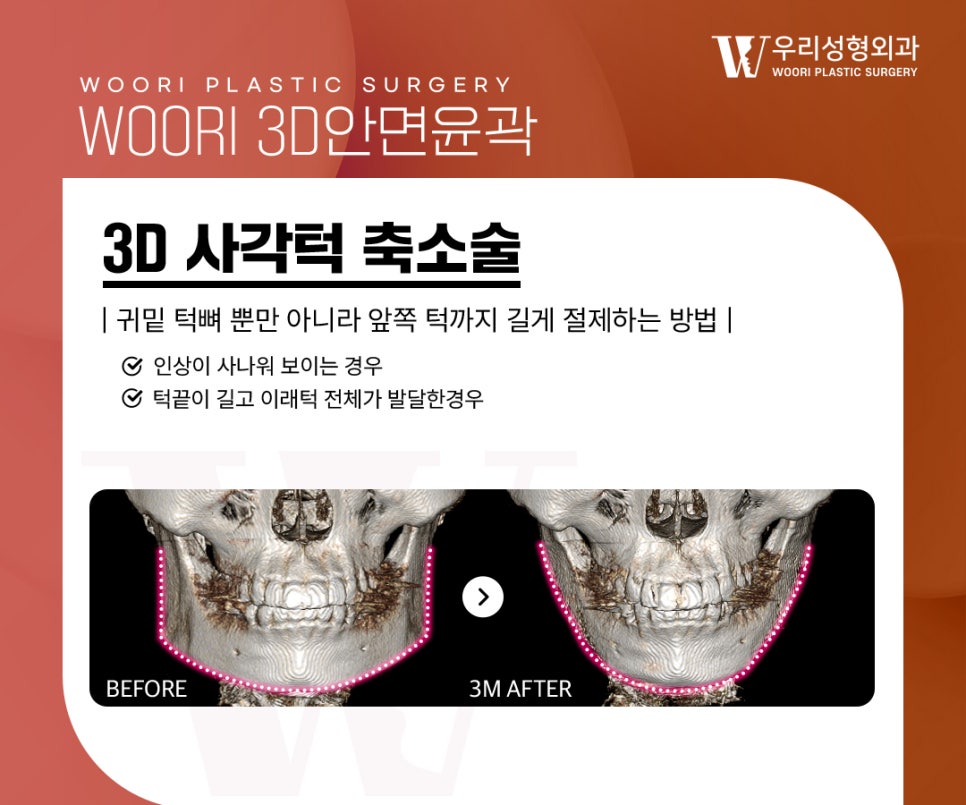
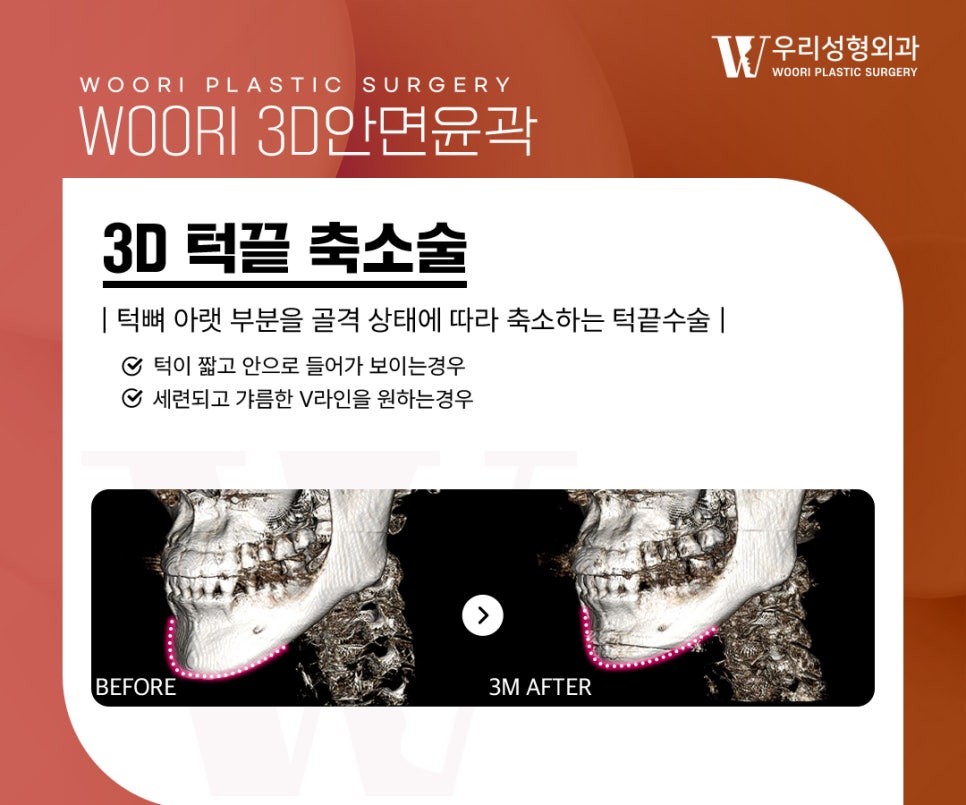
Many people think that cheekbone reduction alone will make their face look smaller, but the outcome can vary from person to person.
If the cheekbones are the main cause of the facial width, cheekbone reduction may create a slimmer impression.
However, if the square jaw is also developed or the chin proportions are a contributing factor, reducing only the cheekbones may not result in a satisfying change.
Therefore, during the consultation process, the square jaw and chin are often analyzed along with the cheekbones.
Contour Plans That Vary According to Facial Shape
Facial contouring is often not an issue limited to just one area.
When the cheekbones are developed, 3D cheekbone reduction surgery may be considered to reduce the width of the lateral and 45-degree cheekbones.
When the square jaw is developed, a plan may take into account not only the jawline beneath the ear but also the front jawline. If the chin appears short or recessed, chin surgery may also be considered.
As such, the required surgical scope and method may vary depending on the shape of the face.
Why Is the Conventional Osteotomy Technique Important?
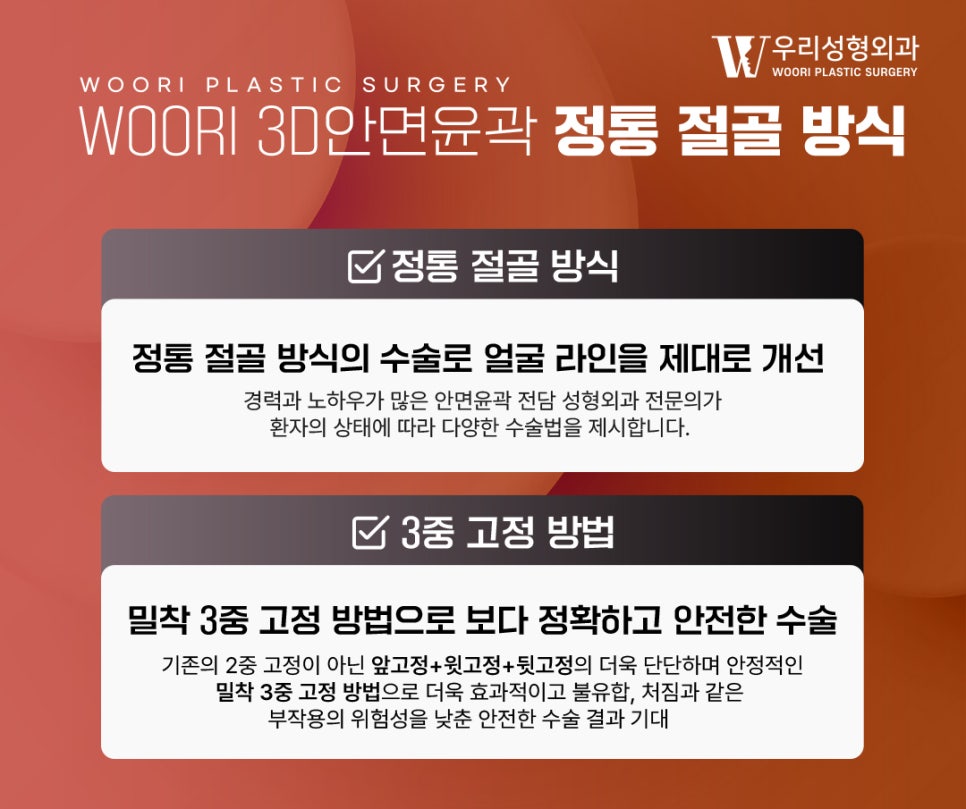
Because facial contouring surgery involves the facial bones, precise osteotomy and fixation are important.
Cheekbone reduction must also be planned not simply to reduce the bone, but to improve the facial contours naturally.
It is important to establish an appropriate osteotomy range based on the patient’s skeletal condition and to proceed while considering the proportions of the face.
Why Consider Triple Fixation?
After the bone has been repositioned, stable fixation is necessary.
To achieve firmer fixation than with conventional methods, a triple fixation method incorporating front, upper, and rear fixation may be considered.
This can help maintain the repositioned bone more stably and is used as one of the elements for securing stability after surgery.
Cheekbone reduction is not simply a procedure to reduce the cheekbones.
The priority is to accurately analyze whether the cause of the face looking wide is the cheekbones, the square jaw, or the proportions of the chin.
Because facial shape is determined by the combined effects of multiple factors, it is important to consider the overall contours and harmony of the face when planning cheekbone reduction.
If you are concerned about your facial width or cheekbones, we recommend first taking sufficient time to determine what is causing your current facial shape.