Hello. This is Woori Plastic Surgery.
When conducting consultations for facial contouring, we are often asked questions such as, “Will my face really become smaller?” and “Will reducing only the cheekbones make my face look slimmer?”
In reality, the reason a face looks large is not simply its overall size. Depending on the balance between the cheekbones, square jaw, and chin, the face may look wider or give a heavy impression.
Today, we will discuss why facial width may look different after facial contouring surgery.
The Causes of a Face Looking Wide
Are Diverse
A face that looks large does not always have the same underlying cause.
In some cases, the face looks wide because the lateral cheekbones are prominent, while in others, the face may look large because the 45-degree cheekbones protrude.
In addition, if the jaw angle below the ears is prominent or the chin is long and wide, the lower face may look heavy, making the overall facial area appear wider.
Therefore, rather than examining only one area, facial contouring surgery requires an analysis of the entire facial bone structure and proportions.
Why Cheekbone Reduction
Affects Facial Width
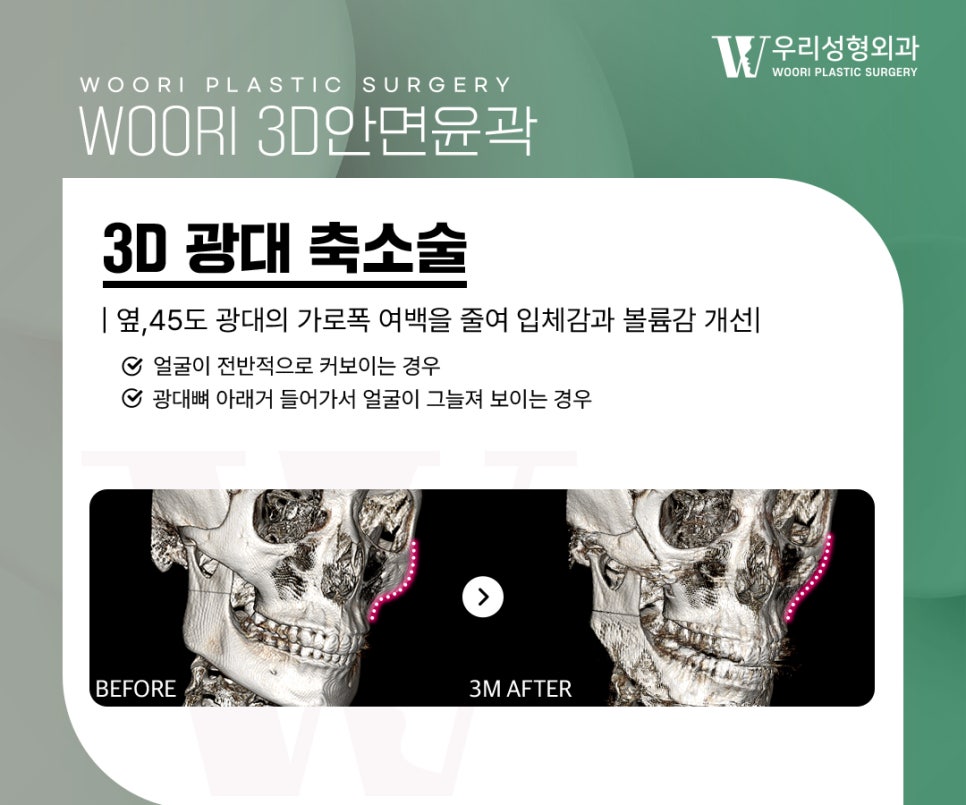
The cheekbones are an important area that determines the apparent size of the face not only from the front but also at a 45-degree angle.
When the lateral and 45-degree cheekbones protrude, the face may look wider and appear to lack dimension.
3D cheekbone reduction is a method that reduces the width of both the lateral and 45-degree cheekbones to create more naturally refined facial contours.
If the area below the cheekbones is hollow and appears to create shadows on the face, the surgical plan is also developed with the facial proportions in mind.
Why the Square Jaw and Chin
Are Also Important
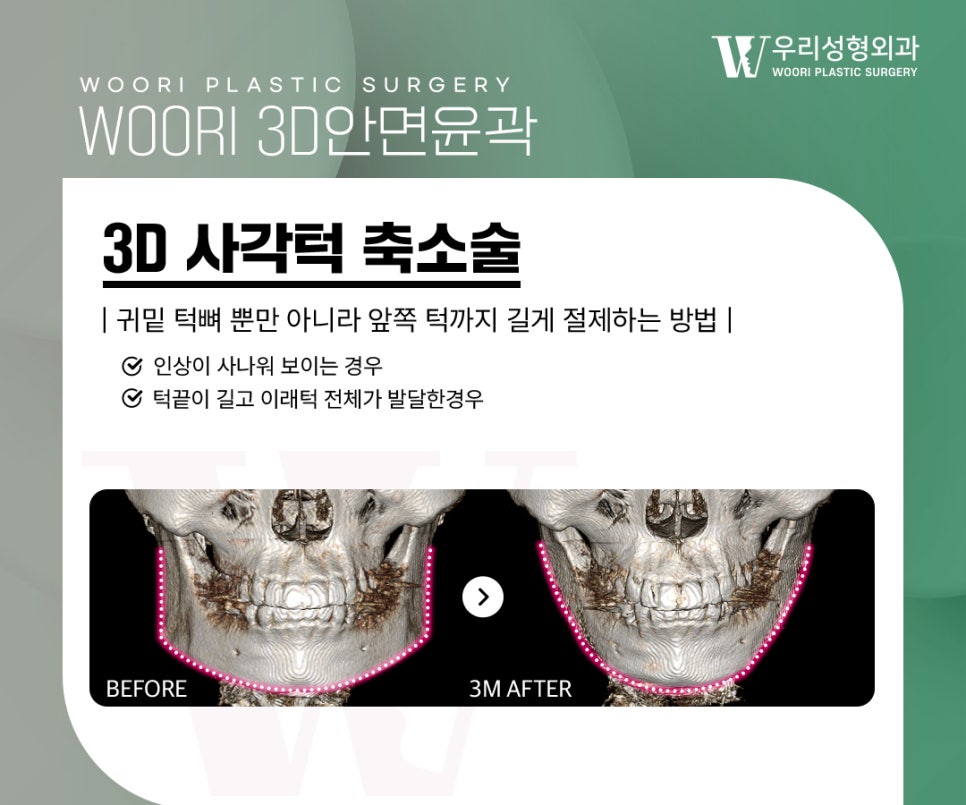
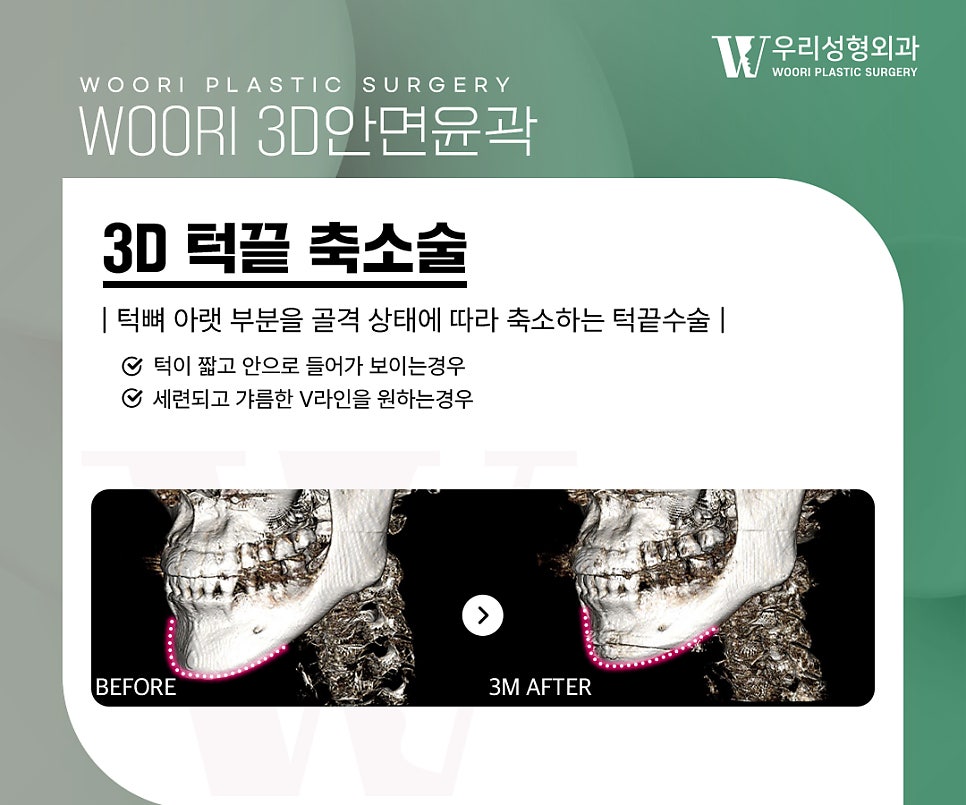
Facial width is not only an issue involving the cheekbones.
If the jawbone below the ears is prominent or the chin is long and wide, the face may appear more angular.
3D square-jaw reduction considers not only the jaw below the ears but also the front of the jaw to refine the facial contours. If the chin is short or appears recessed, chin surgery may also be considered to plan a more balanced facial shape.
Because several factors affect facial shape together, it is important to plan facial contouring surgery according to each individual’s bone structure.
Why the Traditional Osteotomy Method Is Important
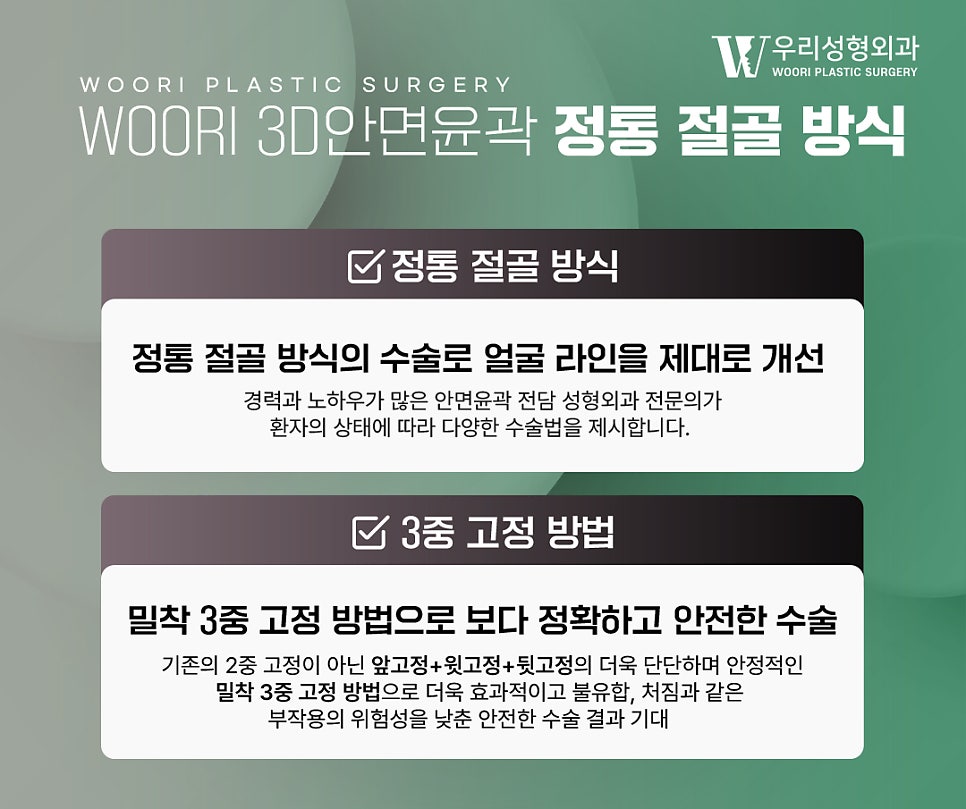
Because facial contouring surgery involves the facial bones, precise osteotomy is important.
After thoroughly analyzing the patient’s facial shape and bone structure, the osteotomy range and amount of movement must be determined to achieve more natural facial contours.
Medical professionals specializing in facial contouring and with extensive experience develop a surgical method suited to each individual while taking the bone structure and proportions into consideration.
This is why it is important not simply to remove a large amount of bone, but to consider the harmony of the entire face.
Why Triple Fixation Is Needed
After the bones are moved, stable fixation is also important.
The triple-fixation method, using front, upper, and rear fixation, may help maintain the repositioned bones more securely.
Stable fixation is one of the important factors considered during recovery and bone union, and it is used as part of the process to improve the stability of the results after surgery.
Facial contouring surgery is not simply a procedure to make the face smaller.
It can be viewed as a process of harmonizing facial width and overall proportions by considering the balance between the cheekbones, square jaw, and chin.
Even when the concern is the same facial width, the appropriate method may differ depending on whether the cause lies in the cheekbones, square jaw, or chin.
If you are concerned that your face looks wide, we recommend receiving an accurate diagnosis of your overall bone structure and proportions rather than examining only one area, and developing a surgical plan suited to you.