Hello, this is Woori Plastic Surgery.
Facial balance is an important factor that affects not only appearance but also jaw function and dental occlusion. If the lower jaw protrudes forward, is positioned too far back, or the left and right sides of the face are unbalanced, aesthetic concerns may be accompanied by functional discomfort.
In such cases, double jaw surgery, which considers the position of the jaws and dental occlusion along with the facial shape, may be helpful. Today, we will look at cases in which double jaw surgery may be needed, the changes that can be expected, and how it differs from facial contouring surgery.
If You May Need Double Jaw Surgery
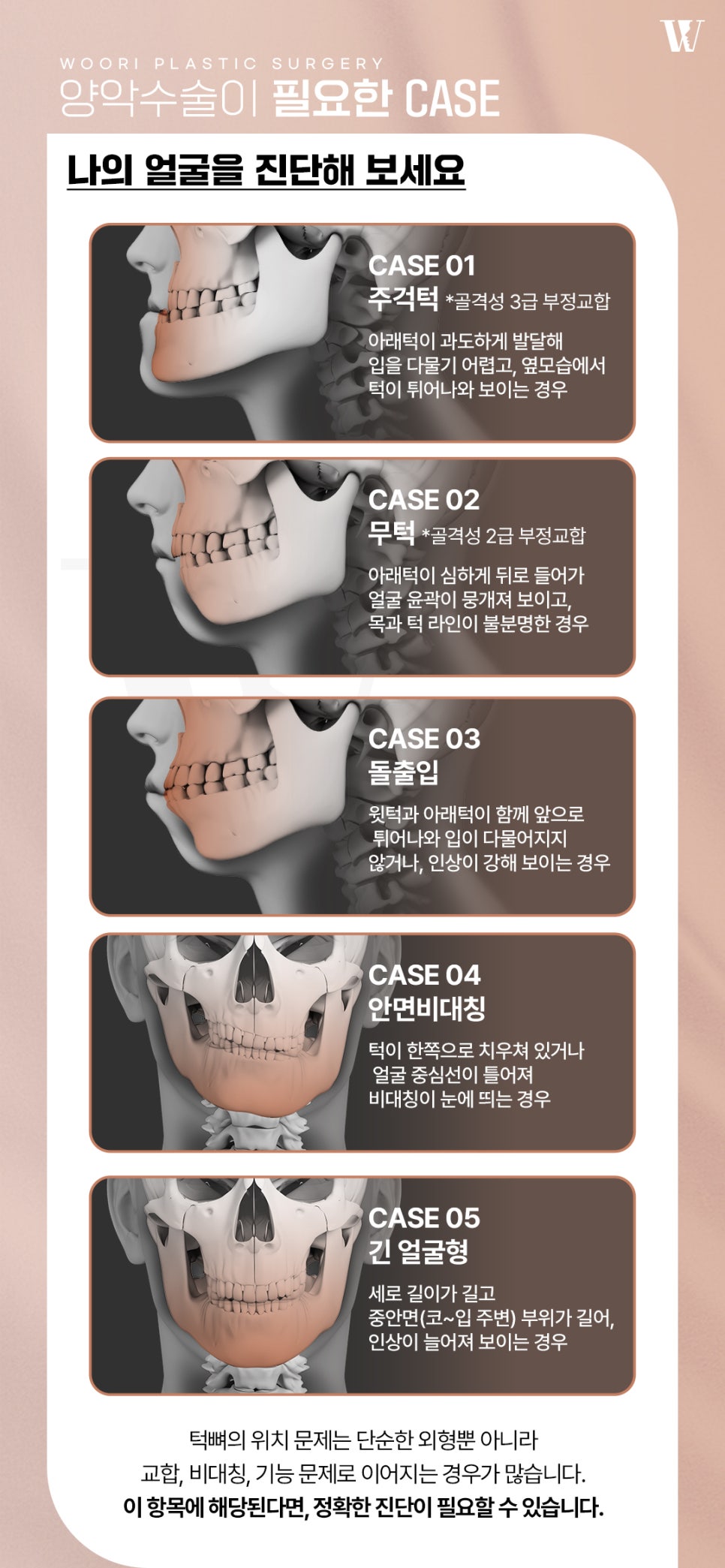
Double jaw surgery may be considered when an abnormal jawbone position causes problems with facial balance or dental occlusion.
It may be applied in various cases, including a protruding lower jaw, a recessed lower jaw, a protruding mouth, facial asymmetry, and a long facial shape. The important point is to check not only the facial shape but also the position of the jaws and any functional issues before creating a surgical plan suited to the individual.
Changes You Can Expect from Double Jaw Surgery
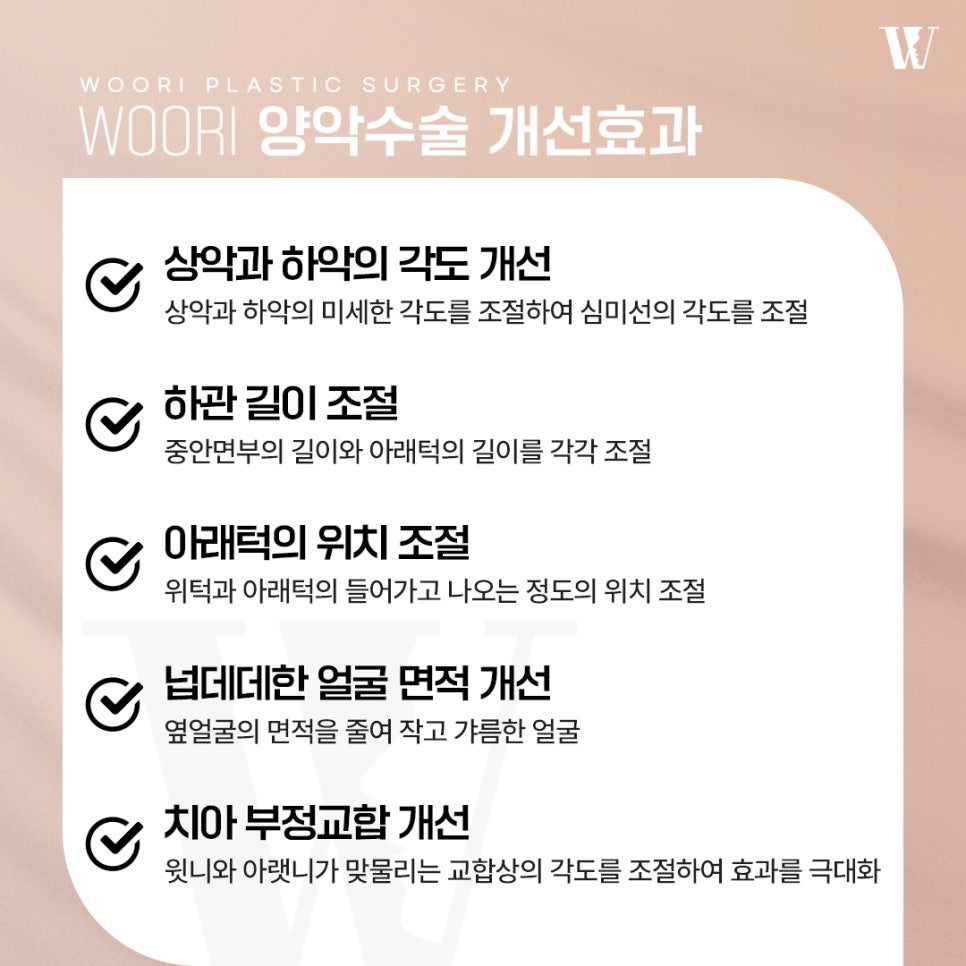
Double jaw surgery adjusts the positions of the upper and lower jaws to improve both facial balance and function.
It may help harmonize the angles of the upper and lower jaws and improve the length of the lower face and overall facial proportions. By adjusting a protruding mouth or the position of the jaw, it may also help create a more balanced facial shape. In addition, improving dental malocclusion may positively affect chewing function and the stability of the bite.
How Is Double Jaw Surgery Different from Facial Contouring Surgery?
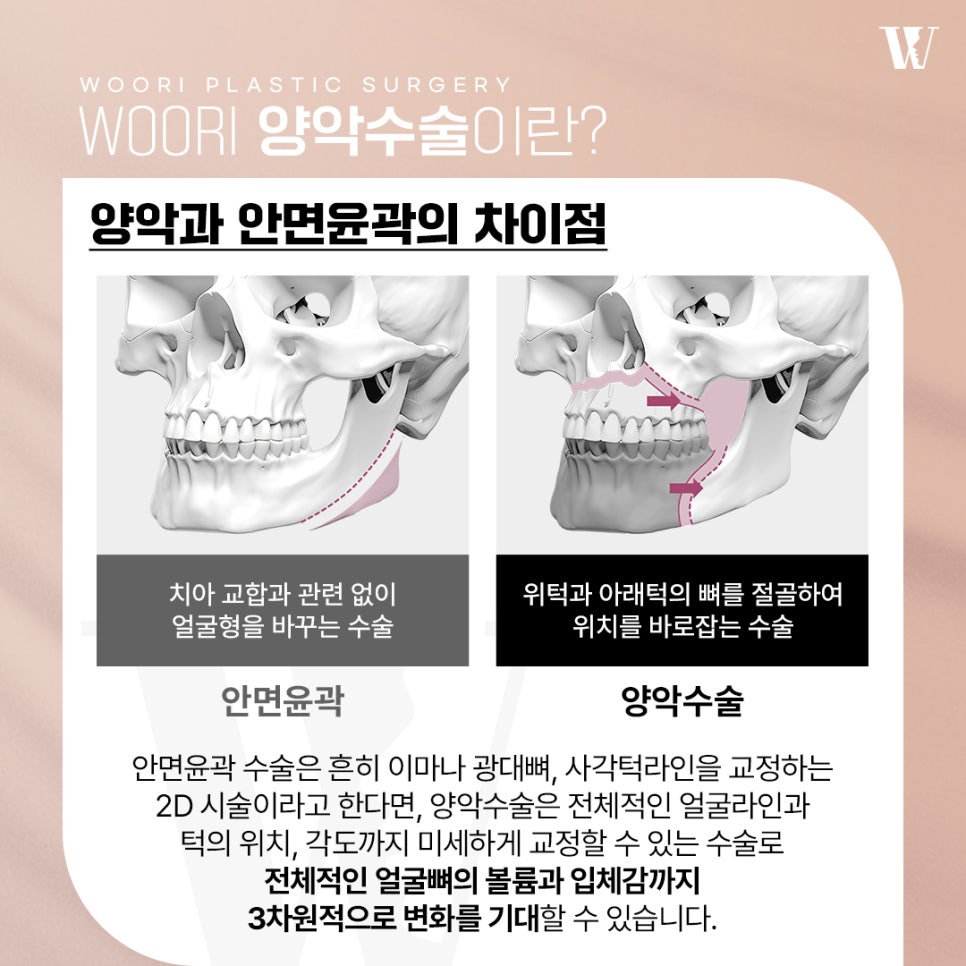
Double jaw surgery and facial contouring surgery are both procedures intended to improve facial shape, but they differ in their purposes and approaches.
Facial contouring surgery reshapes facial bones, such as the cheekbones, chin, or square jaw, to improve the external contours. Double jaw surgery, on the other hand, moves the upper and lower jaws while considering facial balance, dental occlusion, and jaw function as well.
Therefore, if there are problems with the position of the jaws or dental occlusion, it is important to choose a surgical method suited to your condition through an accurate diagnosis.
Double jaw surgery is not simply a procedure to change the facial shape; it comprehensively considers the position of the jaws, dental occlusion, and facial balance.
The surgical plan may vary depending on whether the cause of your concerns about your facial shape lies in the position of the jaws and whether improvement is possible through facial contouring surgery. With sufficient consultation and an accurate diagnosis, creating a double jaw surgery plan suited to you may help achieve more harmonious facial proportions and stable functional improvement.