Hello, this is Woori Plastic Surgery.
The nose is located at the center of the face and greatly affects overall appearance and facial proportions. Therefore, in rhinoplasty, it is important to consider not only increasing the height of the nose, but also its harmony with the face, the direction of the nasal tip, and structural stability. Since the shape of the nose, skin thickness, and cartilage condition vary from person to person, a surgical plan should be developed based on a thorough analysis.
Today, we will discuss the nasolabial angle, septal extension, and methods of providing stable support for the nasal tip—important considerations in rhinoplasty.
Considering the Ideal Nasolabial Angle
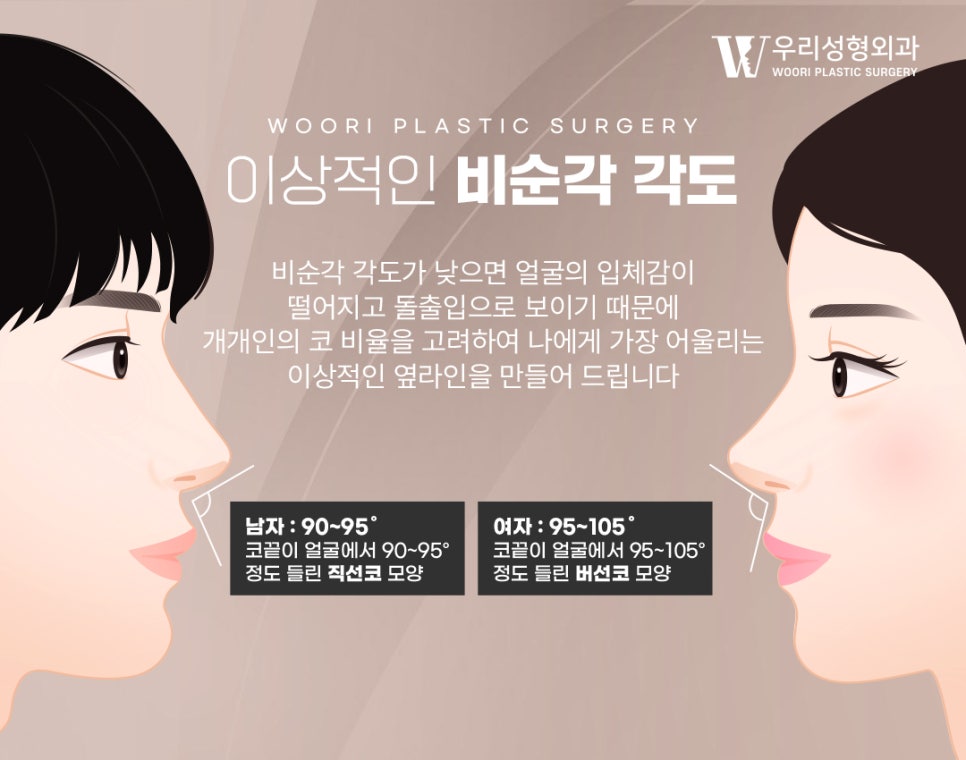
The nasolabial angle refers to the angle formed by the nose and upper lip and is one of the important factors determining the overall appearance of the nose.
If the nasolabial angle is too small, the nasal tip may appear droopy or create a stuffy impression. Conversely, if it is excessively large, it may create an unnatural appearance. Therefore, in rhinoplasty, it is important to plan an appropriate nasolabial angle by considering not only the elevation of the nasal tip but also facial proportions and the profile view. A design suited to the individual’s facial shape and nasal structure can help create a natural result.
Considering Stability with Triple Fixation for Septal Extension
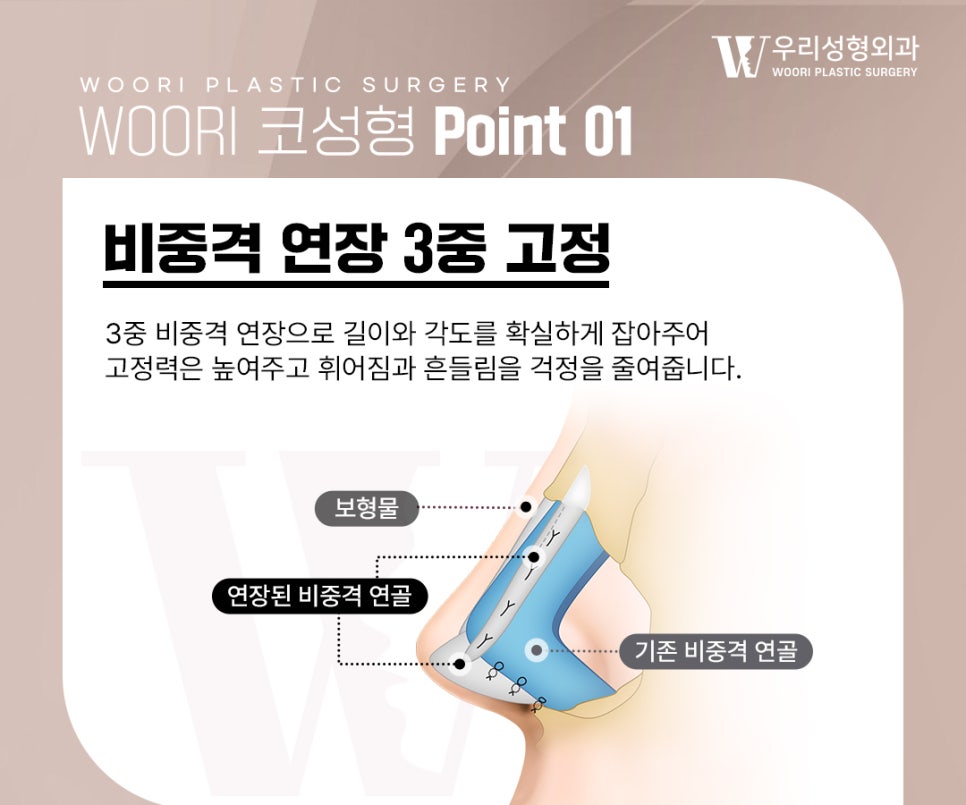
Creating a firm supporting structure is important for maintaining the shape of the nasal tip.
Septal extension is one of the methods used to design the nasal tip in the desired direction, and it is performed with sufficient consideration for structural stability. In particular, triple fixation is a method planned to help increase support, with the goal of helping the nasal tip remain more stable. However, the application method may vary depending on the condition of the individual’s nasal septum and the structure of the nose.
Providing Stable Support for the Nasal Tip with a Two-Layer Support Structure
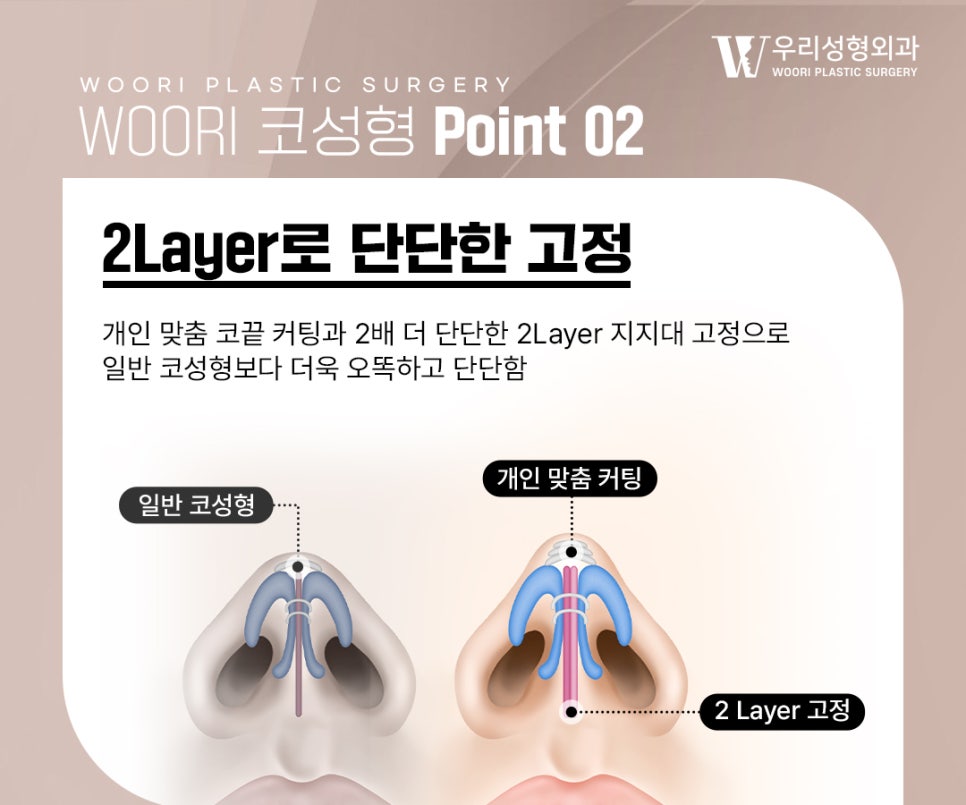
Sufficient support is important because the strength of the nasal tip may weaken over time.
Two-layer support fixation is a method designed to stabilize the nasal tip from multiple directions. Rather than simply creating height, the plan takes structural stability into account so that the shape and direction of the nasal tip can be maintained together. Analyzing the individual’s cartilage condition and skin thickness helps create an appropriate support structure, which can contribute to achieving a natural and balanced nasal contour.
Rhinoplasty is not simply a procedure to create height; it is a process of planning a nose that harmonizes with the face.
In addition to the nasolabial angle, the direction of the nasal tip, and nasal height, structural stability must also be considered to achieve a more natural result. Since the shape of the nose and the condition of the cartilage vary from person to person, it is important to establish an appropriate surgical plan for each individual based on a thorough consultation and accurate diagnosis. This customized planning is an important process leading to rhinoplasty that considers both function and aesthetics.