Hello, this is Woori Plastic Surgery.
Because the nose is located at the center of the face, even a small change can alter the overall impression. However, some people consider revision rhinoplasty when they are dissatisfied with the shape after their initial surgery or when changes to the nasal tip, asymmetry, or reduced support develop over time. Since revision surgery requires an examination of both the results of the previous surgery and the current nasal structure, more careful planning is important than with the initial procedure.
3-Way Septal Extension to Consider Nasal Tip Support
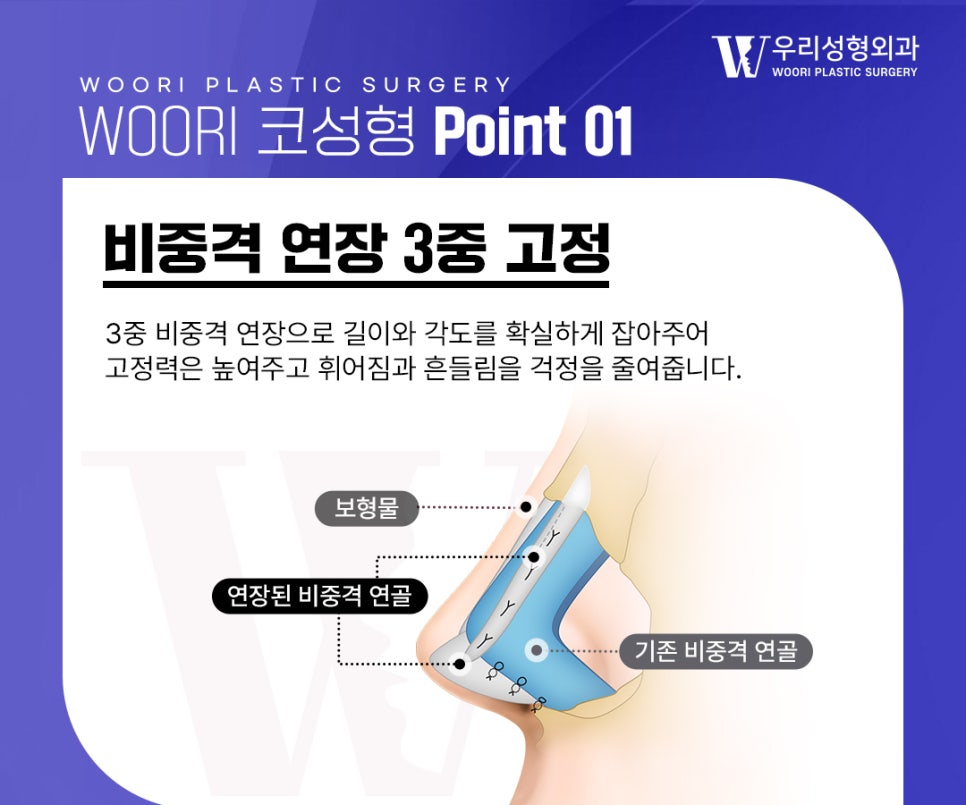
In revision rhinoplasty, the process of creating a structure that can be maintained stably is more important than simply determining how much to raise the nasal tip.
The condition and support of the nasal septum may vary depending on the history of previous surgery, so the current nasal structure must first be analyzed accurately. When necessary, a surgical plan may include a 3-way septal extension to provide more stable support for the nasal tip. However, whether this technique is appropriate and how it is performed may vary depending on the condition of the septum and the individual’s nasal structure, so it is important to make this decision through a thorough diagnosis.
Customized Nasal Tip Trimming for Balance
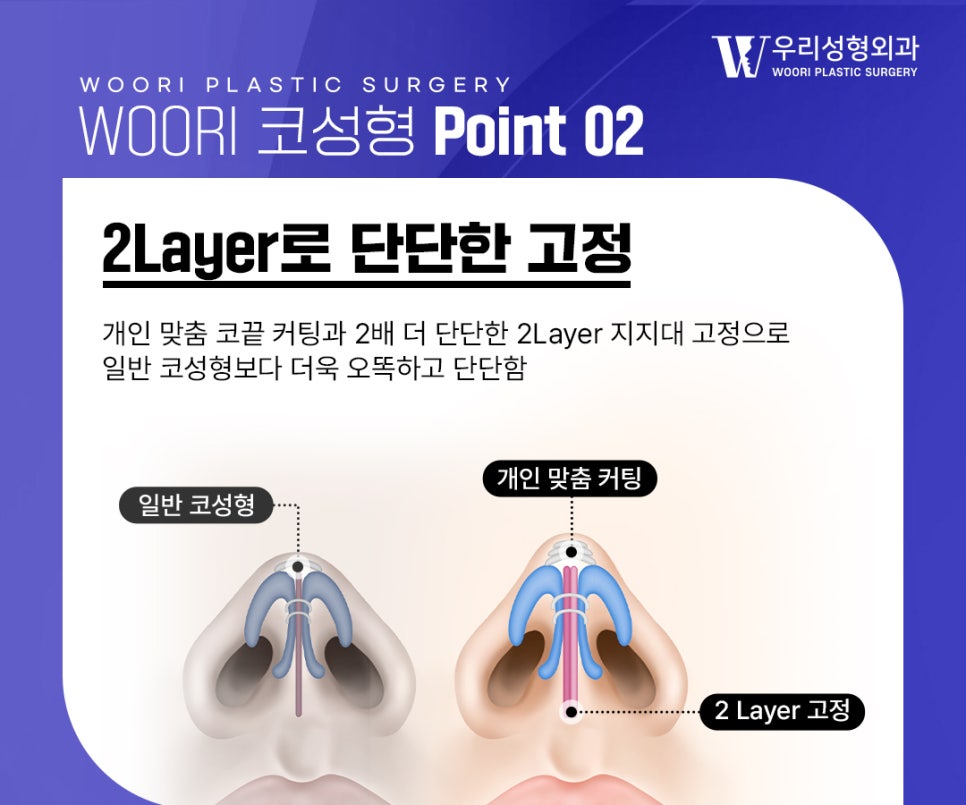
The shape of the nasal tip varies from person to person, as do the size and thickness of the cartilage and the characteristics of the skin.
Therefore, in revision rhinoplasty, it is important to analyze the current shape of the nasal tip and adjust only the areas that require correction, rather than applying a uniform technique. Customized nasal tip trimming is planned by considering the shape of the cartilage, left-right balance, and skin characteristics as a whole, with an emphasis on creating a nasal tip line that harmonizes with the entire face. Rather than making the nasal tip unconditionally higher or sharper, considering a design that suits the individual’s facial proportions may lead to a more natural result.
The Nasolabial Angle and Side Profile Are Also Considered

A natural nasal line is not determined by height alone.
The overall balance of the face must also be examined, including the nasolabial angle formed by the nose and lips and the flow of the side profile from the forehead to the nasal tip. If the nasolabial angle is too narrow or too wide, it may affect the direction of the nasal tip or the impression of the mouth area, making it important to plan an angle suited to the individual’s facial proportions. The side profile should also be designed comprehensively so that the forehead, nose, and jawline connect naturally, which may help create a more harmonious overall impression.
Revision rhinoplasty is not simply a procedure to raise the existing nose again or change its shape.
The first priority should be to accurately determine why the current result occurred and comprehensively analyze the nasal structure, skin condition, and support. Establishing a surgical plan suited to the individual based on thorough consultation and an accurate diagnosis may help in pursuing a nasal shape that considers both structural stability and the balance of the entire face.