Hello, this is Woori Plastic Surgery.
Many people who are concerned about their facial shape ask questions such as, “Would shaving down only my square jaw be enough?” or “Will reducing only my cheekbones make my face look smaller?” However, the shape of the face is not determined by a single bone. The square jaw, cheekbones, and chin tip must be balanced with one another to complete the overall facial contour.
Therefore, improving only one area may not produce as much change as expected. In some cases, it may even make another area appear more prominent. For this reason, it is important to approach three-part facial contouring surgery by considering the proportions and harmony of the entire face together.
Reducing only the square jaw does not complete the facial shape
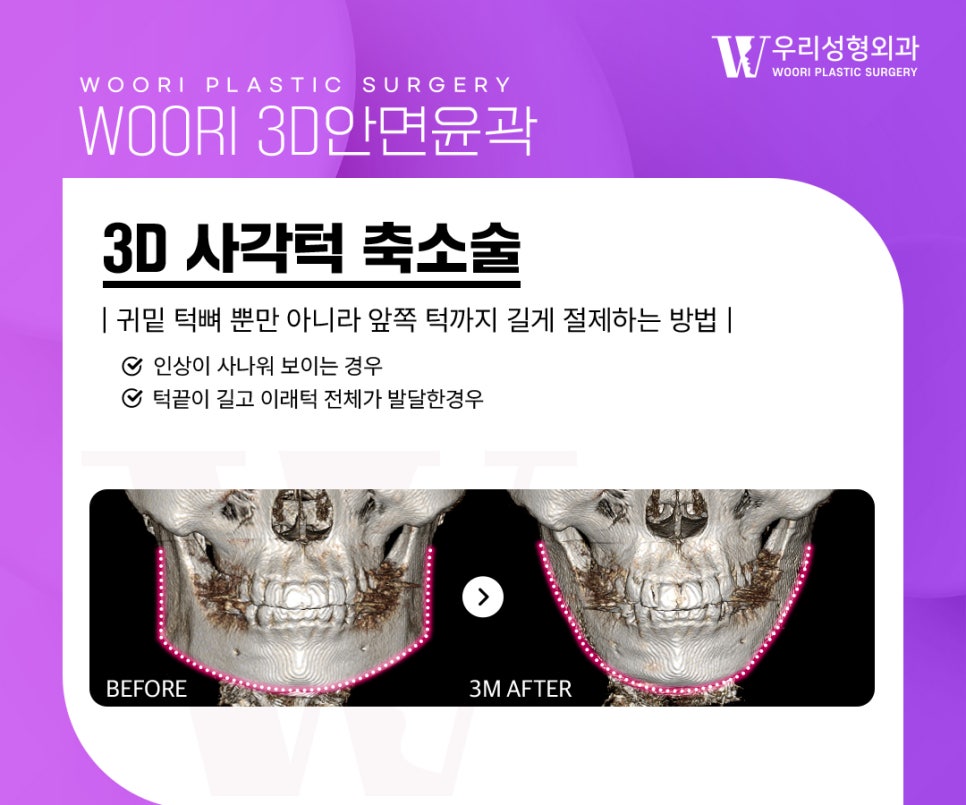
The square jaw is one of the main factors that can make the face look wide and strong.
In particular, when not only the jawbone below the ears but also the front of the jaw is well developed, the lower face may appear heavy and angular.
3D square-jaw reduction surgery aims to create a softer, more natural facial line by making a long incision that extends from the jawbone below the ears to the front of the jaw.
However, improving only the square jaw does not complete the entire face into an ideal contour. For three-part facial contouring surgery, considering the balance with the other facial structures is also necessary to achieve a more natural result.
The cheekbones are an important factor in determining the width of the face
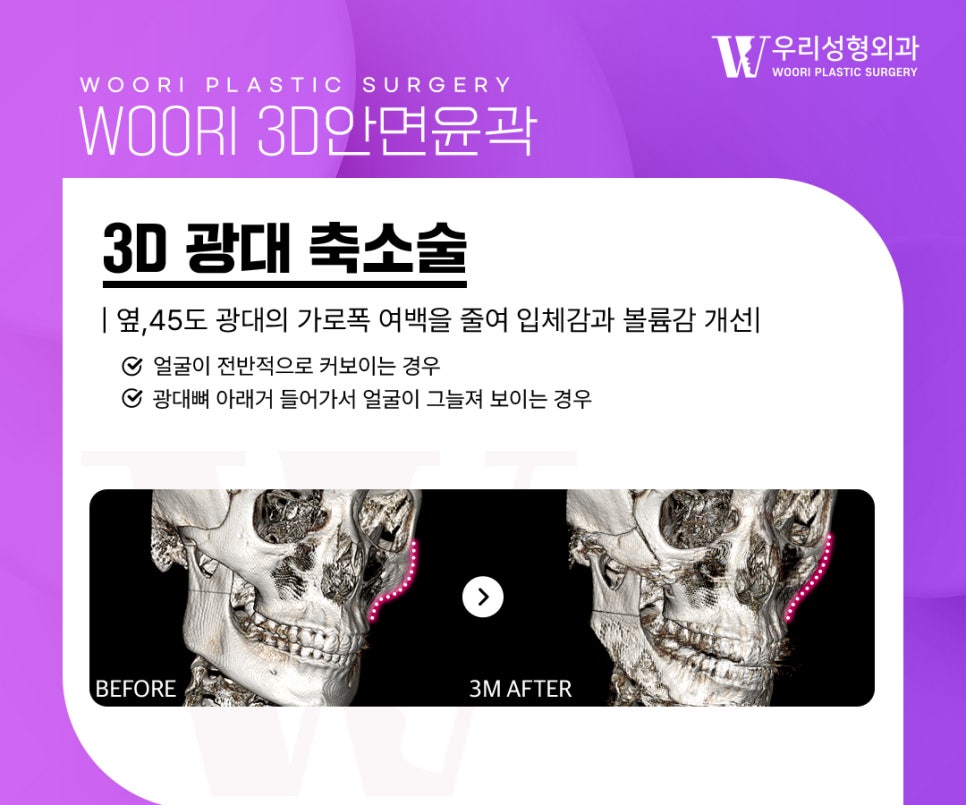
Even if the square jaw is improved, the face may still appear wide if the cheekbones remain prominent.
The cheekbones are an important area that determines the three-dimensional appearance and width of the face, not only from the front but also at 45-degree and side angles.
3D cheekbone reduction surgery may help reduce the width of the face and create a more three-dimensional facial line by improving prominent cheekbones.
In particular, when the area beneath the cheekbones appears hollow and creates shadows on the face, it is important to design the procedure while considering the balance of the entire face. For this reason, three-part facial contouring surgery often involves examining the cheekbones and square jaw together.
Considering the chin tip as well is necessary to complete a natural V-line
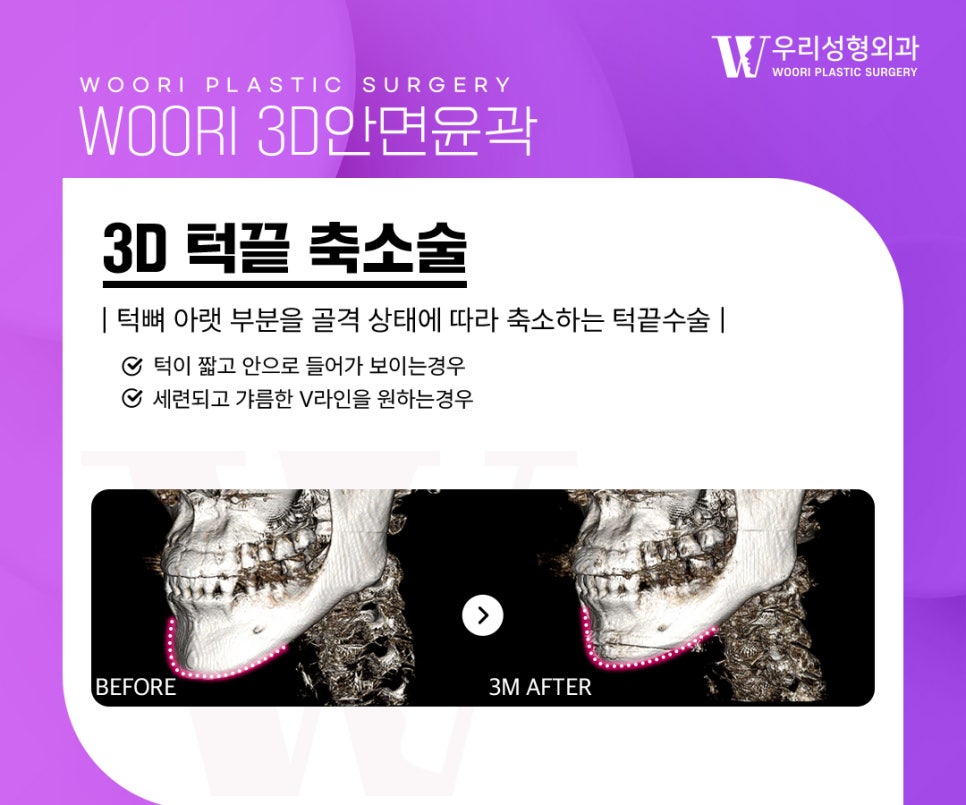
The chin tip is the area that determines the final proportions of the face.
If the chin appears short or recessed, the overall facial proportions may feel awkward even after improving the square jaw and cheekbones.
3D chin-tip surgery aims to create a more refined and slender V-line by designing the chin tip according to the individual’s skeletal structure.
The square jaw, cheekbones, and chin tip must harmonize with one another to create a balanced facial shape. Therefore, it is important to plan three-part facial contouring surgery by viewing the entire face as one structure.
Facial contouring methods are also important, not just the facial shape
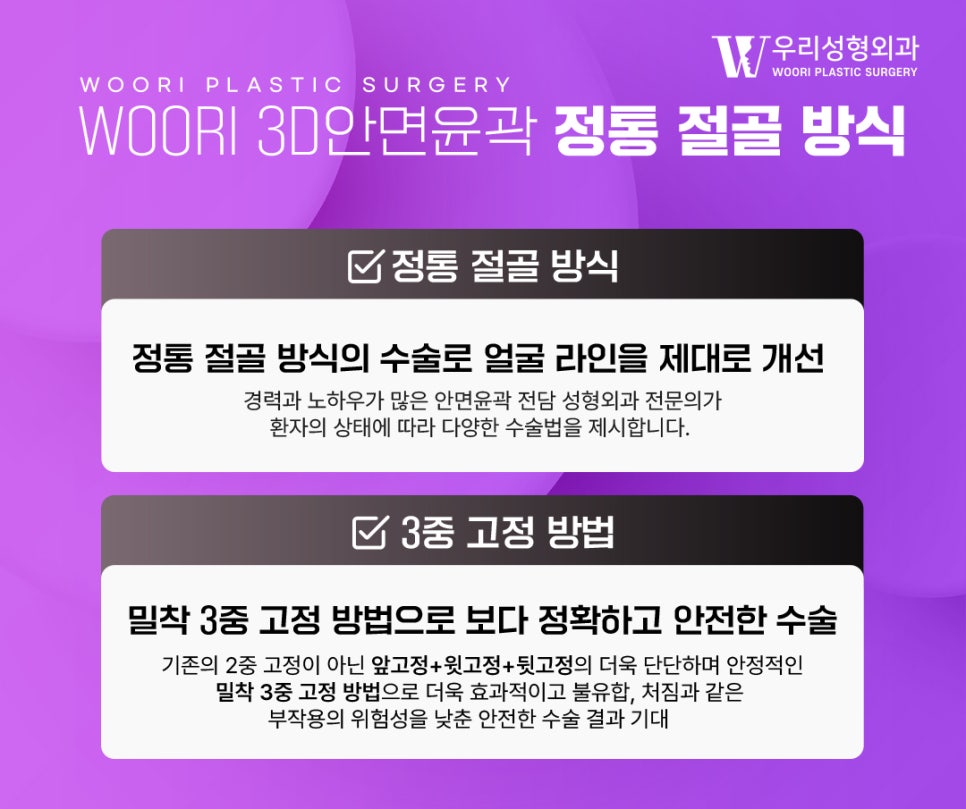
For facial contouring surgery, the area being treated is important, but the method used to perform the surgery can also affect the outcome.
Woori Plastic Surgery analyzes the facial shape based on conventional osteotomy techniques and then develops a surgical plan suited to the individual’s skeletal structure. A plastic surgeon specializing in facial contouring comprehensively considers the proportions of the face and the shape of the bones, and performs the surgery with the goal of creating a more natural facial line.
In addition, when fixing the bones, the clinic applies a close-fitting three-point fixation method consisting of front, upper, and rear fixation, instead of the conventional two-point fixation method. The procedure is planned to secure the bones more stably, taking postoperative bone union and stability into consideration. This may support a more stable recovery, and it is especially important to establish a surgical plan suited to each individual’s condition.
Facial contouring surgery does not produce a better result simply by removing more bone.
Because the square jaw, cheekbones, and chin tip are interconnected, considering the facial proportions and harmony of the facial features together, rather than changing only one area, may lead to a more satisfactory result.
In particular, for three-part facial contouring surgery, it is important to comprehensively analyze the causes of the facial shape concerns and then establish a surgical plan suited to the individual’s skeletal structure and proportions. Since the causes of concern and bone structure differ from person to person, determining the appropriate surgical scope through sufficient consultation and a detailed diagnosis may be the first step toward creating a natural and balanced facial shape.