Hello, this is Woori Plastic Surgery Clinic.
Many people are concerned about facial asymmetry when their face appears shifted to one side in the mirror or the left and right sides look different in photographs.
However, not all cases of facial asymmetry are candidates for double jaw surgery. Some cases may be caused by lifestyle habits or differences in muscle development, while skeletal facial asymmetry caused by the position of the jawbones and bite may require a different approach.
Today, we will discuss the relationship between facial asymmetry and double jaw surgery, as well as the cases in which double jaw surgery may be needed.
Facial contouring and double jaw surgery have different purposes
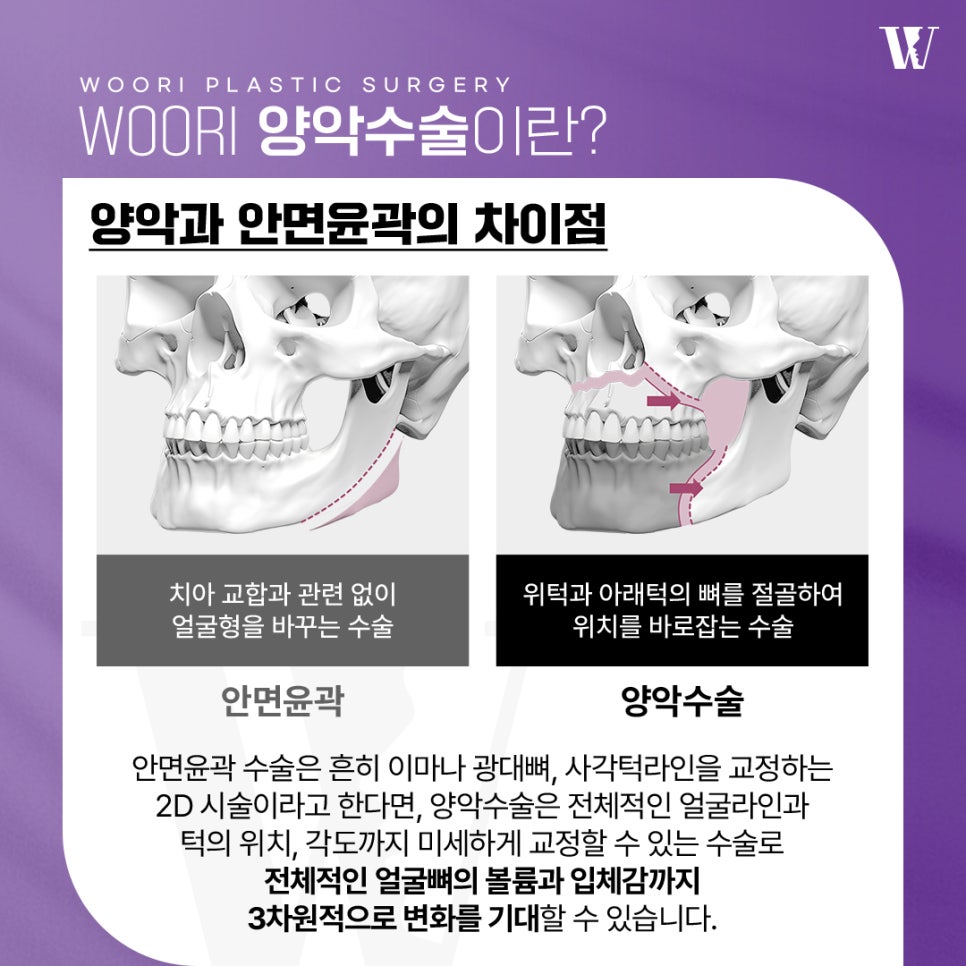
Facial contouring and double jaw surgery are both procedures intended to improve facial shape, but their purposes are different.
Facial contouring surgery improves the facial line by reshaping the facial bones, such as the cheekbones, square jaw, and chin.
In contrast, double jaw surgery corrects the positions of the upper and lower jaws to improve both the bite and the center of the face.
In particular, when facial asymmetry is caused by an abnormal jawbone position, it may be difficult to improve the condition simply by reducing the size of the bone. It is important to correct the position and angle of the jaws together.
The surgical method also varies depending on the symptoms
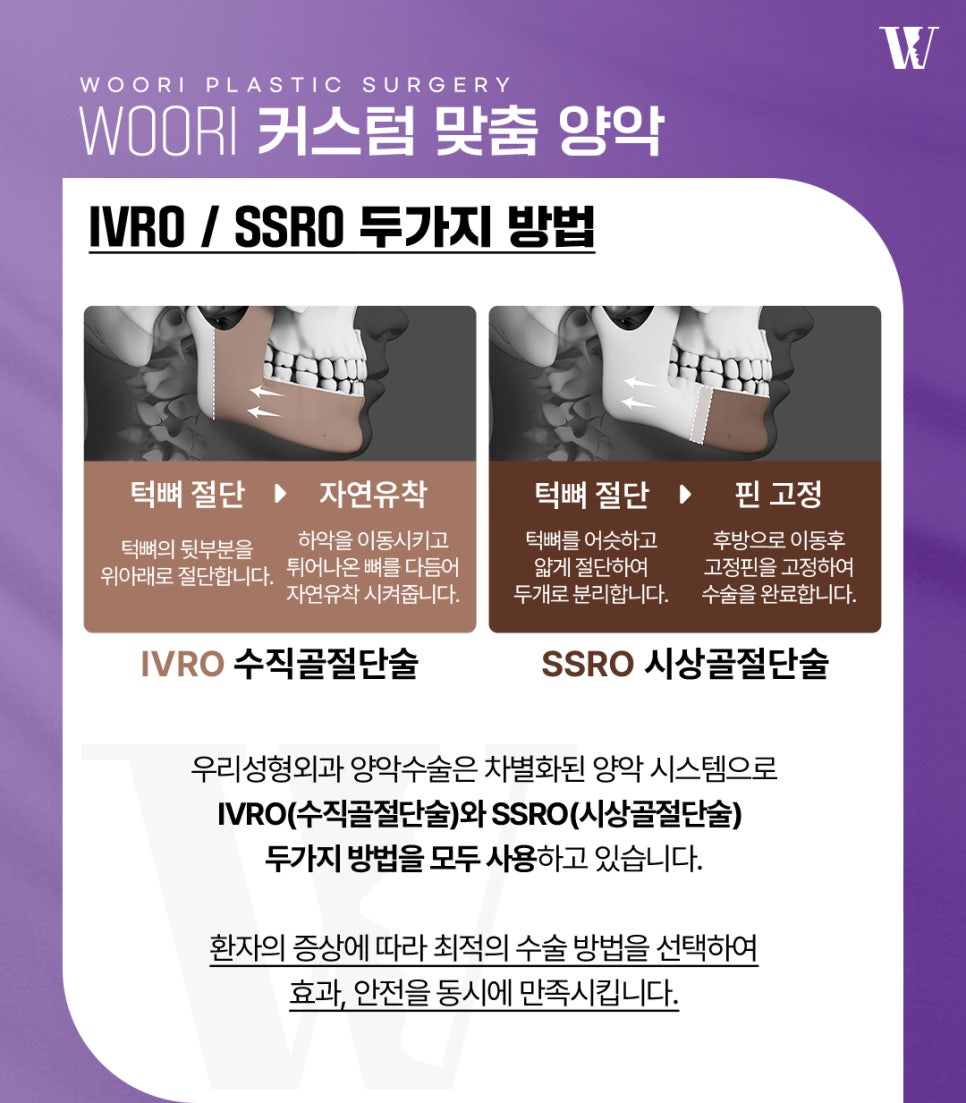
Double jaw surgery is not performed in the same way for every patient.
After comprehensively analyzing the condition of the jawbones, the bite, and the degree of asymmetry, the appropriate surgical method is selected.
IVRO (intraoral vertical ramus osteotomy) and SSRO (sagittal split ramus osteotomy) are commonly used, and each is suited to different circumstances.
At Woori Plastic Surgery Clinic, we conduct a detailed diagnosis of each patient’s condition and select the more appropriate method from these two options.
As such, the surgical plan may also vary depending on the cause and symptoms of facial asymmetry.
Double jaw surgery may be considered in cases such as these
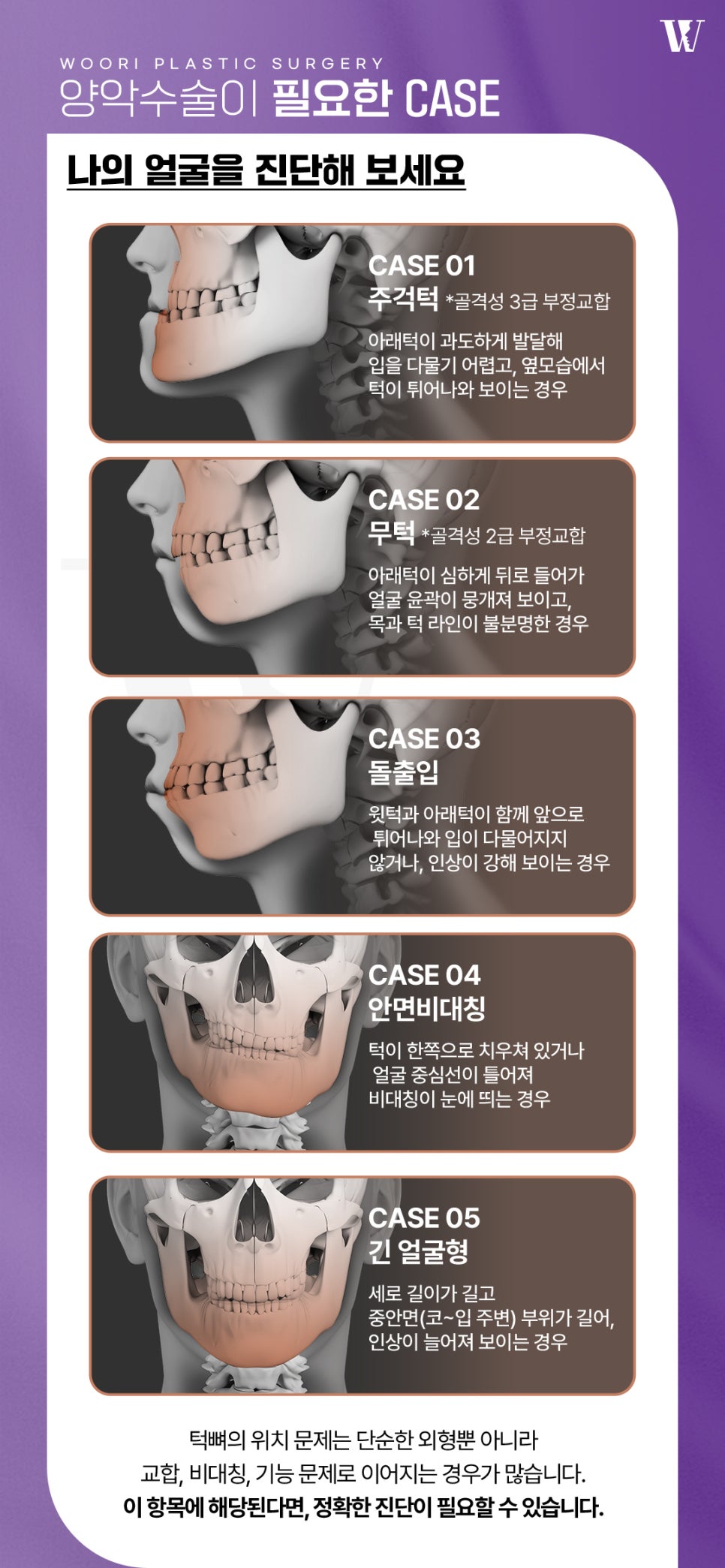
Facial asymmetry may occur alongside various jawbone problems.
A protruding jaw caused by excessive development of the lower jaw, a receding chin caused by a lower jaw positioned too far back, and bimaxillary protrusion, in which both the upper and lower jaws protrude forward, may also be conditions for which double jaw surgery is considered.
An accurate diagnosis is also necessary when the jaw is shifted to one side, causing the facial midline to become misaligned, or when the vertical length of the face is excessive and its balance is disrupted.
When facial asymmetry is not merely an appearance-related issue but is caused by problems with the dental bite and jawbone position, improvement through double jaw surgery may be considered.
Double jaw surgery corrects the position of the jawbones
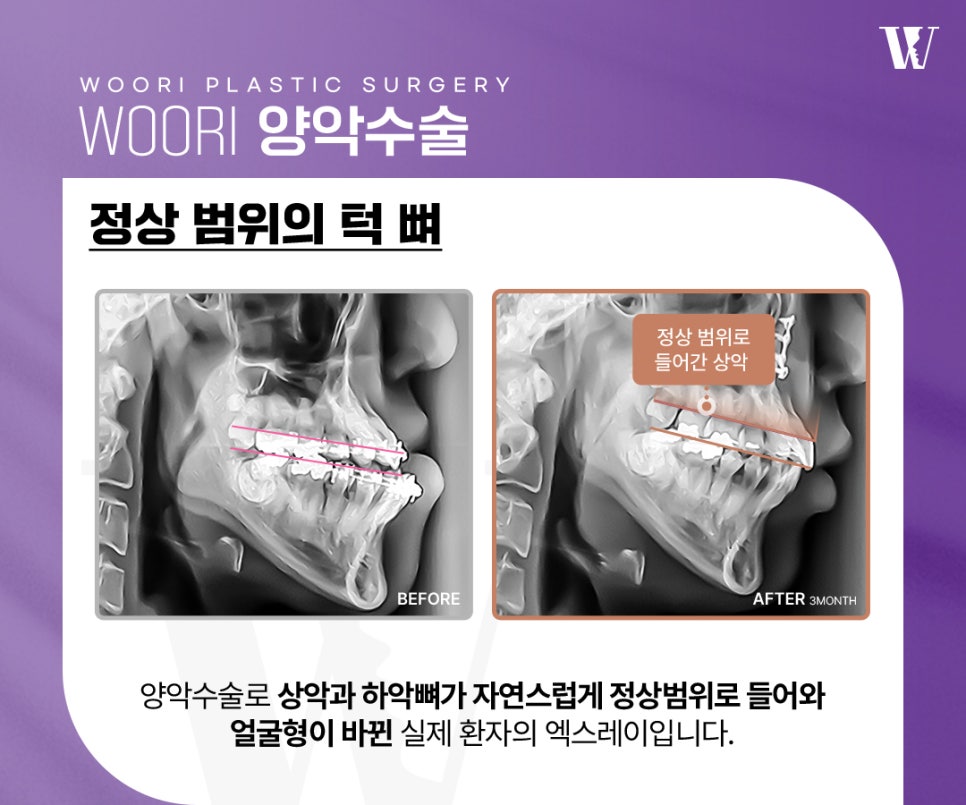
Double jaw surgery is a procedure that moves the upper and lower jaws within a normal range to improve facial balance.
Actual X-rays may show that the positions of the jawbones were outside the normal range before surgery, while after surgery, the upper and lower jaws have moved to more natural positions.
Thus, the purpose of double jaw surgery is not simply to make the face smaller, but to correct the positions of the jawbones and improve the center and balance of the face.
Changes that may be considered alongside improvement of facial asymmetry
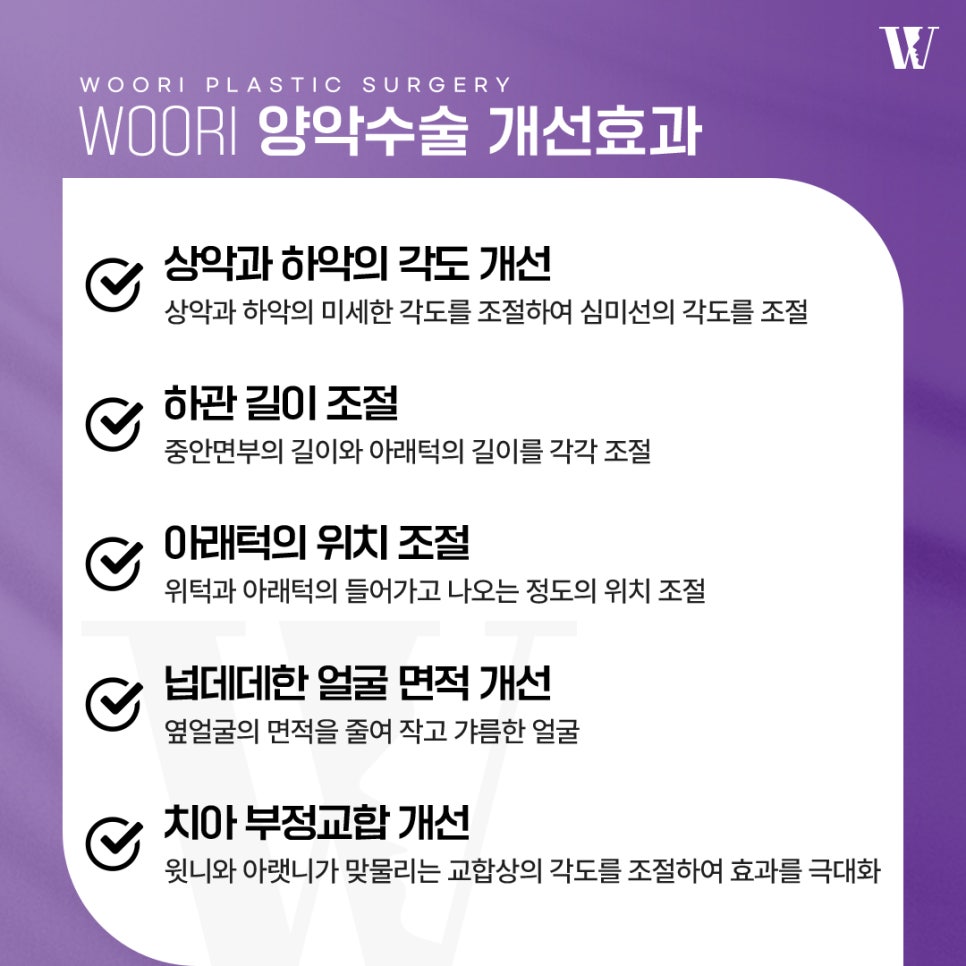
Double jaw surgery takes into consideration not only the left-right balance of the face but also various other aspects.
The angles of the upper and lower jaws can be adjusted to improve facial balance, and the lengths of the midface and lower face can be planned in harmony.
The position of the lower jaw can also be adjusted to improve the profile line and help correct the dental bite at the same time.
Improving the three-dimensional appearance of a face that looks broad or aligning the facial midline may also be included in the double jaw surgery plan. These changes may vary depending on the current condition of the jawbones.
Not everyone with facial asymmetry needs double jaw surgery.
It is important to first determine whether the asymmetry is caused by muscles or lifestyle habits, or whether it is skeletal asymmetry caused by problems with the jawbones and bite.
After identifying the cause accurately through sufficient examinations and a detailed diagnosis, establishing a treatment plan suited to the individual may allow both functional and aesthetic aspects to be considered in the improvement process.