Hello. This is Woori Plastic Surgery.
When the cheekbones are prominent, the face may look wider from the front or appear more intense, regardless of its actual size. In particular, when both the lateral cheekbones and 45-degree cheekbones protrude, the outer contour of the face may stand out even more in photographs.
One of the biggest concerns when looking into cheekbone reduction surgery because of this facial shape is cheek sagging after surgery.
Cheekbone reduction surgery is not a procedure that simply removes as much protruding bone as possible. It is important to analyze the current shape and direction of cheekbone projection, cut and reposition only the necessary areas, and then secure them firmly.
Today, we will discuss why, when planning cheekbone reduction surgery, you need to check not only the amount of reduction but also the osteotomy and fixation methods.
How Are Lateral Cheekbones Different From 45-Degree Cheekbones?
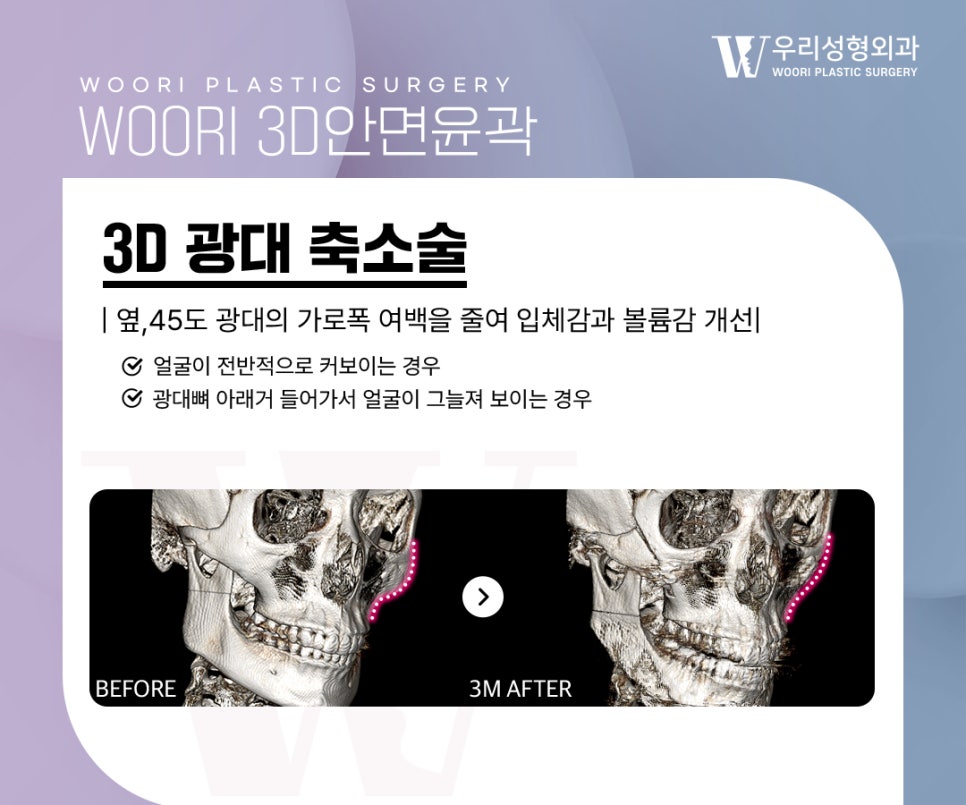
Even when cheekbones are a concern, the location that appears prominent differs from person to person.
Some people have lateral cheekbones that extend broadly toward the area in front of the ears, making the face look wider from the front. Others have prominent 45-degree cheekbones that stand out between the front and side views. In some cases, both areas are developed, making the overall facial structure look larger.
When the cheekbones protrude significantly, the cheek area below them may appear relatively sunken, creating shadows on the face or making its contours feel more pronounced.
Therefore, cheekbone reduction surgery should involve a three-dimensional analysis of the direction in which the cheekbones protrude from the front, 45-degree, and side views, rather than reducing only the cheekbones visible from one direction.
The surgical range should be determined by appropriately adjusting the width of the lateral and 45-degree cheekbones while avoiding an excessive loss of the face’s three-dimensional appearance.
It Is More Important to Reposition the Cheekbones Appropriately Than to Reduce Them Excessively
When people hear “cheekbone reduction surgery,” they may easily assume that removing more of the protruding cheekbone will make the face smaller.
However, because the cheekbones are structures that create the three-dimensional shape of the face, removing an excessive amount of bone does not necessarily lead to a better result.
If the cheekbones are reduced excessively without considering their degree of projection, facial width, the volume of the front cheekbones, and the surrounding soft tissue, the face may instead look flat or existing hollows in the cheeks may become more pronounced.
For this reason, it is important to reduce the facial width by cutting the necessary areas and appropriately moving them inward, then securing the repositioned bone so that it can settle firmly in place.
Ultimately, cheekbone reduction surgery can be viewed not as simple bone removal, but as a repositioning process that takes the overall width and three-dimensional appearance of the face into account.
Why Is Fixation Important in Cheekbone Reduction Surgery?
Once the cheekbone has been cut and repositioned, the next important step is fixation.
This is because sufficient fixation strength is needed to allow the repositioned cheekbone to unite in a stable position.
Since the cheekbone is not a structure that moves in only one direction, it needs to be fixed while taking multiple points of the repositioned bone into consideration.
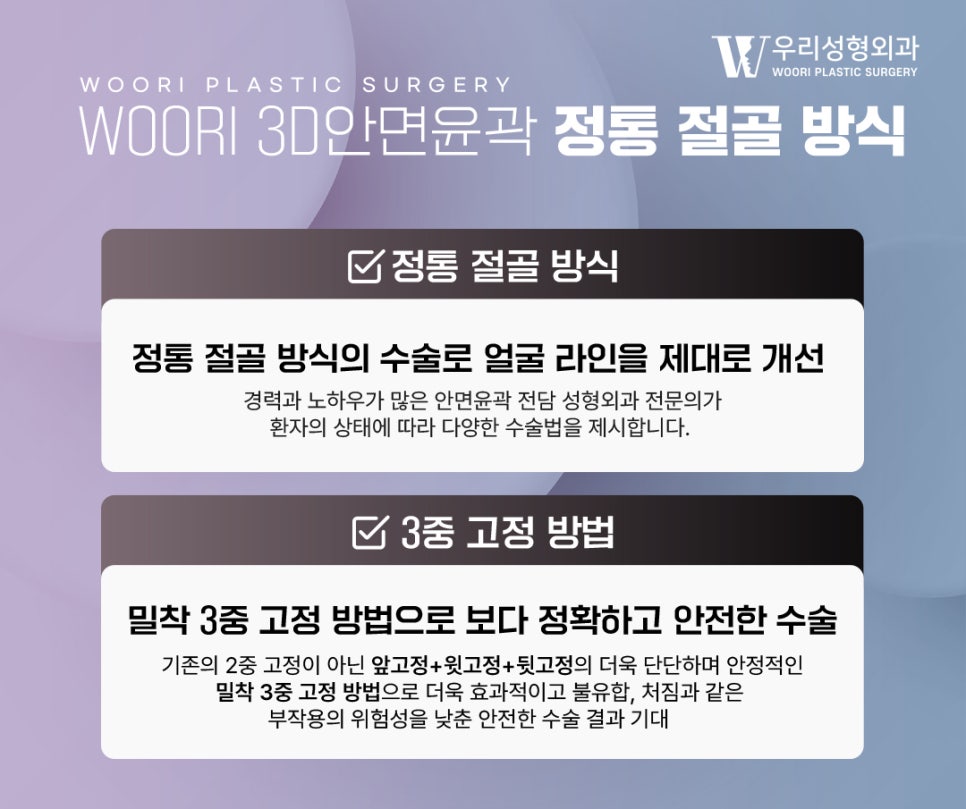
At Woori Plastic Surgery, we use a close-contact triple-fixation method that secures the front, upper, and rear areas, taking the condition and range of movement of the cheekbone into account.
The goal is not simply to fix the bone at one or two points, but to secure it stably from multiple directions so that the repositioned cheekbone can remain in the planned position.
However, the specific fixation method and locations may vary depending on the individual’s skeletal structure and surgical range.
Why Is Cheek Sagging a Concern After Cheekbone Reduction Surgery?
Cheek sagging is a common concern after cheekbone reduction surgery because various types of soft tissue—including skin, fat, and muscle—are connected around the cheekbone.
When the position of the cheekbone changes, the surrounding tissues may also be affected. Therefore, it is necessary to consider not only how much the bone will be moved, but also the current skin elasticity, amount of cheek fat, and condition of the soft tissue.
In particular, rather than reducing the cheekbone by an excessive amount, it is important to determine the reduction range needed for the individual face and securely fix the repositioned cheekbone.
If cheek sagging is already present before surgery or skin elasticity has significantly decreased, these factors should also be assessed during the consultation.
Therefore, instead of judging the possibility of sagging based on the fixation method alone, it is advisable to comprehensively consider the osteotomy range, the amount of cheekbone movement, the fixation method, and the individual’s soft-tissue condition.
Why Should the Square Jaw and Chin Also Be Evaluated?
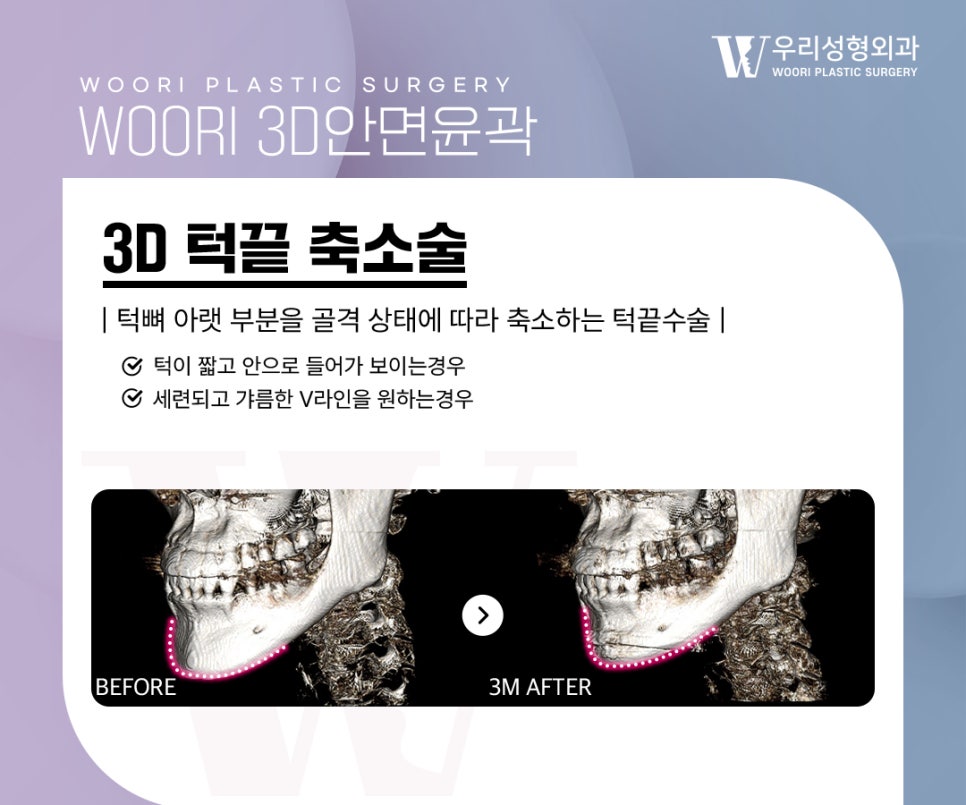
Cheekbones are not the only factor that can make the face look large or angular.
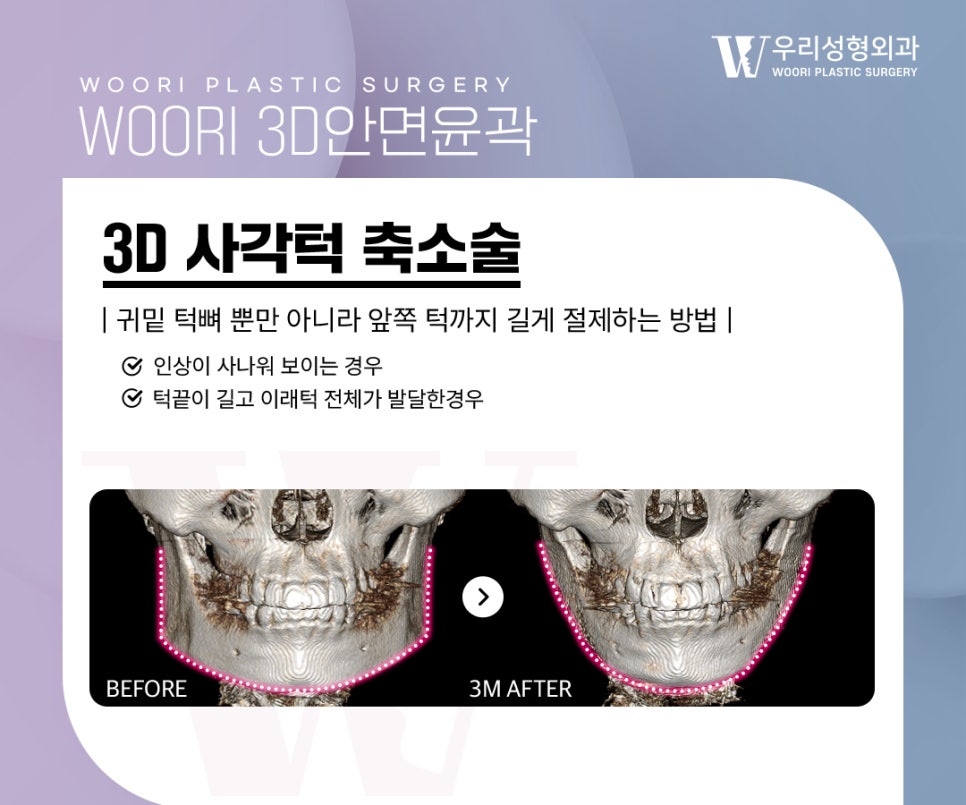
When the angle below the ears is prominent along with the cheekbones, or when the entire lower jaw is wide, the square jaw can make the outer contour of the face look larger. A short or wide chin can also affect the overall facial proportions.
Square jaw reduction surgery is not limited to smoothing the protruding angle below the ear. Depending on the skeletal structure, the procedure may be planned by considering the contour extending toward the front of the jaw.
The appropriate approach for the chin may also differ depending on its current length, width, and degree of projection.
Therefore, during a cheekbone reduction consultation, it is important to analyze the overall facial structure, including the square jaw and chin, rather than examining the cheekbones alone, and to identify which areas actually require correction.
It is not necessary to operate on every area together; priority should be given to selecting and treating only the areas needed for the current facial shape.
The Three-Dimensional Facial Contour Should Be Evaluated, Not Just the Front View
It is difficult to assess the outcome of facial contouring surgery based only on how small the face looks from the front.
Even if the facial width is reduced from the front, satisfaction may be lower if the cheekbones still stand out at a 45-degree angle or if the facial contours look unnatural from the side.
At Woori Plastic Surgery, we analyze each individual’s skeletal structure, including the cheekbones, square jaw, and chin, and plan surgery using a traditional osteotomy method when necessary.
Because the cheekbones determine not only the width of the face but also its three-dimensional appearance, it is especially important to design them so that the lateral and 45-degree cheekbones connect naturally.
Rather than aiming to make the face unconditionally smaller, the approach should focus on refining the protruding areas while preserving the face’s natural three-dimensional appearance.
When looking into cheekbone reduction surgery, you may first be interested in how much bone can be reduced.
However, in actual surgery, it is important to consider not only how much the cheekbones will be reduced, but also which areas will be cut, in which direction they will be moved, and how the repositioned bone will be fixed.
If you are particularly concerned about sagging after surgery, rather than simply confirming an explanation that “there will be no sagging,” it is advisable to have a thorough consultation about your current skin elasticity, amount of cheek fat, range of cheekbone movement, and fixation method.
At Woori Plastic Surgery, we assess the degree of each individual’s cheekbone projection and facial skeletal structure to plan the correction range for the lateral and 45-degree cheekbones. When necessary, we consider stable union of the repositioned cheekbone through close-contact triple fixation in the front, upper, and rear directions.
If you are considering cheekbone reduction surgery, instead of simply looking for a method that reduces the cheekbones as much as possible, make sure to carefully check whether the surgical plan can create a natural facial contour from the front, 45-degree, and side views.