Hello, this is Woori Plastic Surgery Clinic.
Rhinoplasty is not simply a procedure that ends with changing the height of the nose or the shape of the nasal tip. To establish a specific surgical plan, it is necessary to examine the condition of the nasal septum and cartilage that form the center of the nose, the structures supporting the nasal tip, and the proportions of the entire face together.
In particular, rhinoplasty results involve not only the appearance immediately after surgery but also how the position of the nasal tip and the side profile harmonize with the face.
Septal Extension and Triple Fixation
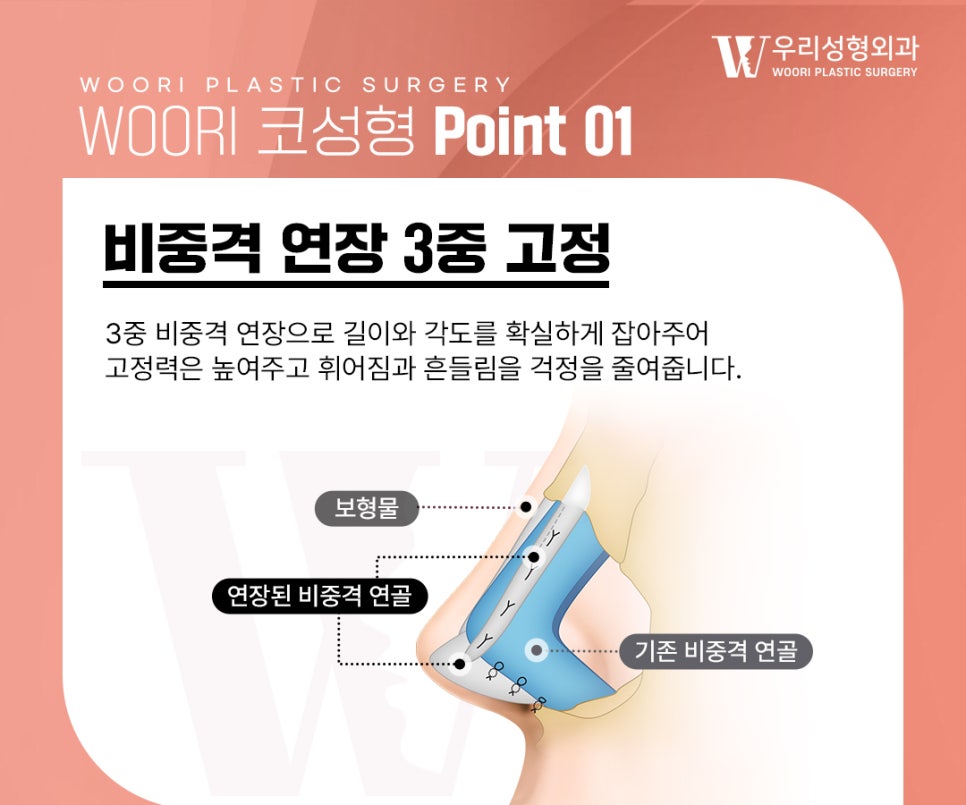
Septal extension is a method of reinforcing the nose’s supporting structure using the nasal septum to adjust the position, length, and angle of the nasal tip. Since the length and direction of the septum can be adjusted in detail according to where the nasal tip is to be positioned, this technique is used when establishing a structural plan for rhinoplasty.
When a triple-fixation method is applied, the extended septum and the surrounding supporting structures can be connected at multiple points as part of a surgical plan designed to maintain them stably. Rather than simply raising the nasal tip, this process also involves fixing the central axis and supporting structures of the nose so that they remain properly aligned.
However, the condition of the nasal septum and the shape of the cartilage vary from person to person, so the same fixation method is not applied to every rhinoplasty procedure. After examining the current nasal structure and the extent of correction required, an appropriate fixation method is selected.
2-Layer Fixation for Firm Nasal Tip Support
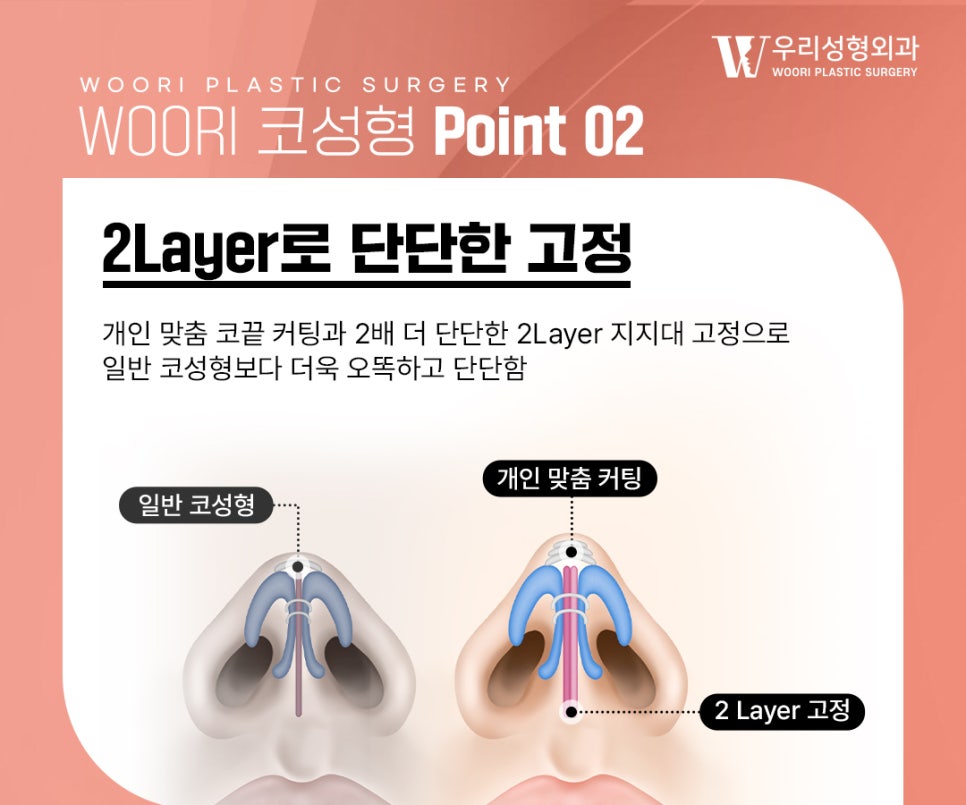
To maintain the shape of the nasal tip stably, a plan for the structures supporting the tip is also necessary. 2-layer fixation is a method of firmly connecting the supporting structures of the nasal tip by dividing them into two layers, and it may be used to maintain the position and shape of the tip.
The appearance of the nasal tip can vary even when the same procedure is performed, depending on the thickness of the skin and cartilage, as well as the strength and shape of the existing cartilage. Therefore, rather than simply raising the tip, the position where it will be placed and how it will be connected to the surrounding structures are considered together.
This structural approach is also an important part of planning rhinoplasty results. However, the actual fixation method and extent of surgery may vary depending on the individual’s nasal structure and the degree of correction required.
Completing the Side Profile with the Nasolabial Angle

When examining the side profile in rhinoplasty, the nasolabial angle, where the nose and lips meet, is considered along with the bridge and tip of the nose. If the shape of the nasolabial angle does not harmonize with the overall side profile of the face, the overall balance may feel awkward even if the nose itself has undergone significant changes.
The nasolabial angle is not set simply to match a specific angle. The direction of the nasal tip, the position of the lips, the shape of the chin, and the line extending from the forehead to the bridge of the nose are considered together. The angle and direction of the nasal tip that harmonize naturally may vary according to each person’s facial proportions.
Therefore, when evaluating rhinoplasty results, it is necessary to look not only at the height of the nose or the size of the nasal tip but also at the proportions formed by the entire face and the nose from both the front and side.
Rhinoplasty is a procedure in which septal extension and fixation, the supporting structures of the nasal tip, and the shape of the nasolabial angle are interconnected. Rather than adjusting just one area separately, the surgical scope should be determined after analyzing the current nasal structure and facial proportions together.
Rhinoplasty results may also vary depending on the individual’s skin thickness and cartilage condition, the existing shape of the nose, and the extent of surgery. When deciding on the desired nasal line, considering not only the external design but also the supporting structures of the nose and their harmony with the entire face may help create a more specific surgical plan.