Hello, this is Woori Plastic Surgery.
Although the ears do not occupy a large area of the face, they can become a noticeable concern in one’s overall appearance if they protrude significantly outward or if the shape of the earlobes differs from the typical form. In particular, because the ears are structures shaped by the cartilage, skin, and earlobes together, it is difficult to determine the surgical method based solely on the size of the ears.
When looking into ear shape surgery, it is also helpful to first identify which part of the ear is currently a concern. Common examples include protruding ears, which are related to the shape of the ear cartilage, and split earlobes, which have a different appearance and may require a different correction method.
Protruding Ears and Split Earlobes Have Different Forms
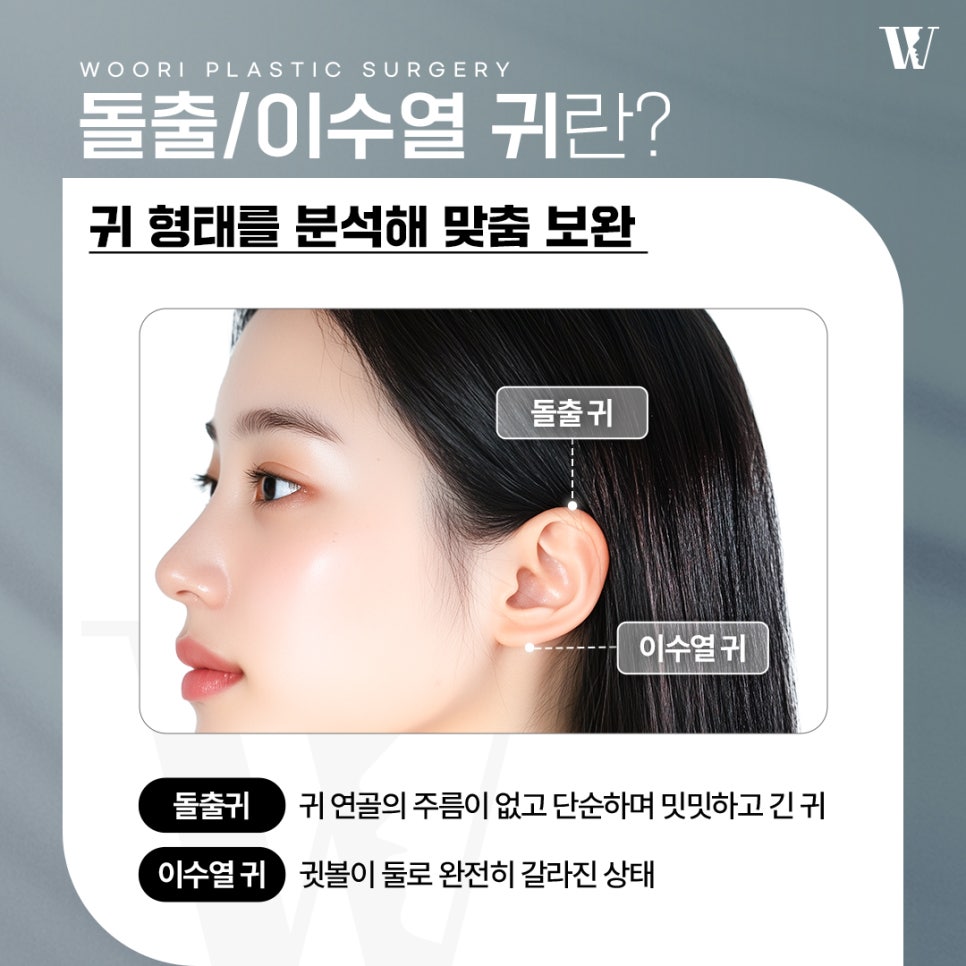
Protruding ears refer to ears that appear to extend significantly outward from the head. In general, when the folds of the ear cartilage have not formed sufficiently, the ears may appear relatively smooth and flat, or the entire ear may face outward.
On the other hand, split earlobes refer to earlobes that are divided into two parts. Because the earlobe tissue has not fully connected and appears split, they are approached differently from protruding ears.
Therefore, even within the category of ear surgery, the purpose and method may differ depending on whether the procedure involves correcting the shape of the cartilage or restoring the split portion of the earlobe.
The Shape Is Refined According to the Structure of the Ear
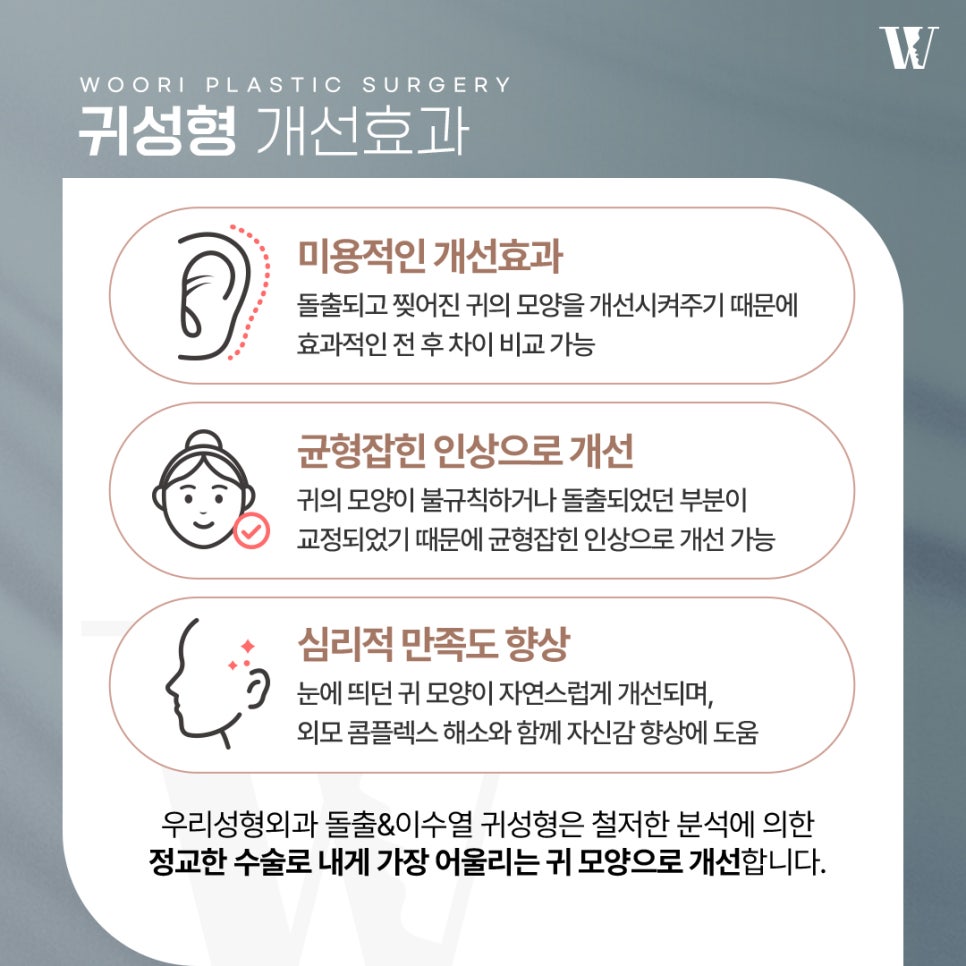
Protruding ears may be corrected by forming new folds in the ear cartilage or adjusting the angle at which the ear is attached to the head. The surgical extent is determined by assessing how flexible the ear cartilage is and where the folds are insufficient, with the aim of creating a natural shape without pressing the ear excessively.
Split earlobes may be treated by refining the edges of the split earlobe and connecting and suturing the tissue on both sides. The incision and suturing methods may vary depending on the extent of the split, the thickness of the earlobe, and the condition of the skin.
After ear surgery, the visible shape of the ears may change not only from the front but also from the side as the position of the ears or the shape of the earlobes changes. However, the postoperative shape, scars, and recovery process may vary depending on each person’s ear structure and the extent of the surgery.
The Specific Concerns Regarding the Shape of the Ears Are Carefully Assessed

The purpose of ear shape surgery is not necessarily to make the ears smaller or attach them closely to the head. After assessing the current cartilage structure and skin condition of the ears, as well as the position of the ears in relation to the face, a surgical plan is established to refine the areas that require correction.
If significantly outward-pointing protruding ears are a concern, the degree of protrusion and the cartilage folds can be assessed. If split earlobes are the concern, the extent of the split and the condition of the earlobe tissue can be examined.
In addition, if the shapes of the two ears differ, each ear can be assessed separately to determine the surgical extent. Ultimately, ear surgery requires a process of planning a shape that looks natural and harmonious when the face and ears are viewed together, rather than considering the shape of only one ear.
Ear shape surgery is approached differently depending on its purpose—for example, refining the shape of the ear cartilage in cases such as protruding ears or restoring a split earlobe in cases such as split earlobes. Even when the procedure falls under the same category of ear surgery, the surgical plan may vary according to the ear structure, skin condition, and extent of the correction required.
Therefore, if you are considering ear surgery because you are concerned about the shape of your ears, it is advisable to first identify the specific shape of your ears rather than simply comparing before-and-after results. After determining the areas that require correction through a thorough assessment, it is necessary to consider the harmony between the ear structure and the face when deciding on the appropriate surgical method and extent.