Hello. This is Woori Plastic Surgery.
When researching facial contouring, you will often come across the term “three-part contouring.” This refers to undergoing surgery on the cheekbones, square jaw, and chin tip together.
For this reason, some people look at facial contouring reviews and come to believe that all three areas must be operated on to make the face look smaller and more slender overall.
However, the degree of facial bone development and the locations of protrusions differ from person to person. In some cases, the cheekbones and square jaw are developed while the chin-tip proportions are appropriate. In other cases, the overall balance may improve only when the length or position of the chin tip is adjusted as well.
Therefore, with facial contouring, it is more important to accurately determine which areas of the current face are affecting the overall contour than to focus on the number of procedures.
What face shapes require square jaw surgery?
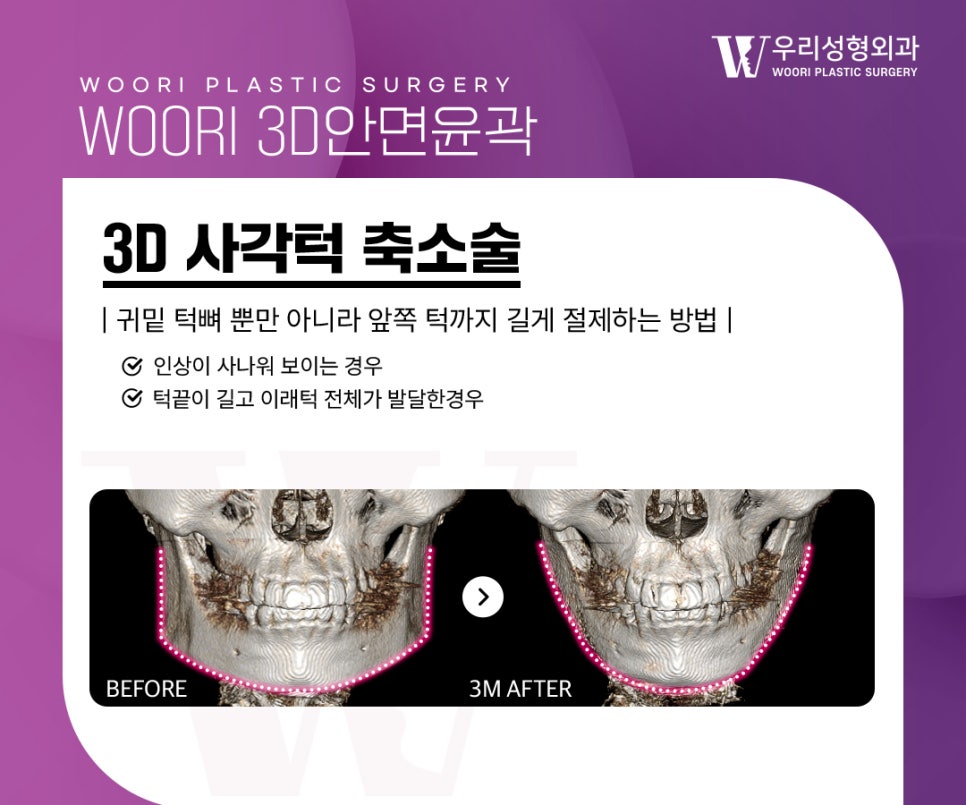
When the square jaw is prominent, the lower face may look wide from the front, or the angle of the jaw beneath the ears may stand out from the side, creating a strong impression.
If only the protruding area beneath the ears is briefly trimmed, the width of the lower face seen from the front or the line extending toward the chin may still be unsatisfactory.
3D square jaw reduction considers the overall mandibular line extending from the jawbone beneath the ears to the front of the chin and removes bone across the necessary range.
In particular, when the entire lower jaw is developed or the angular jawline makes the impression look strong, it is necessary to determine how far correction should extend to create a natural, continuous line.
If you are concerned about your cheekbones, you should also check the direction of their prominence
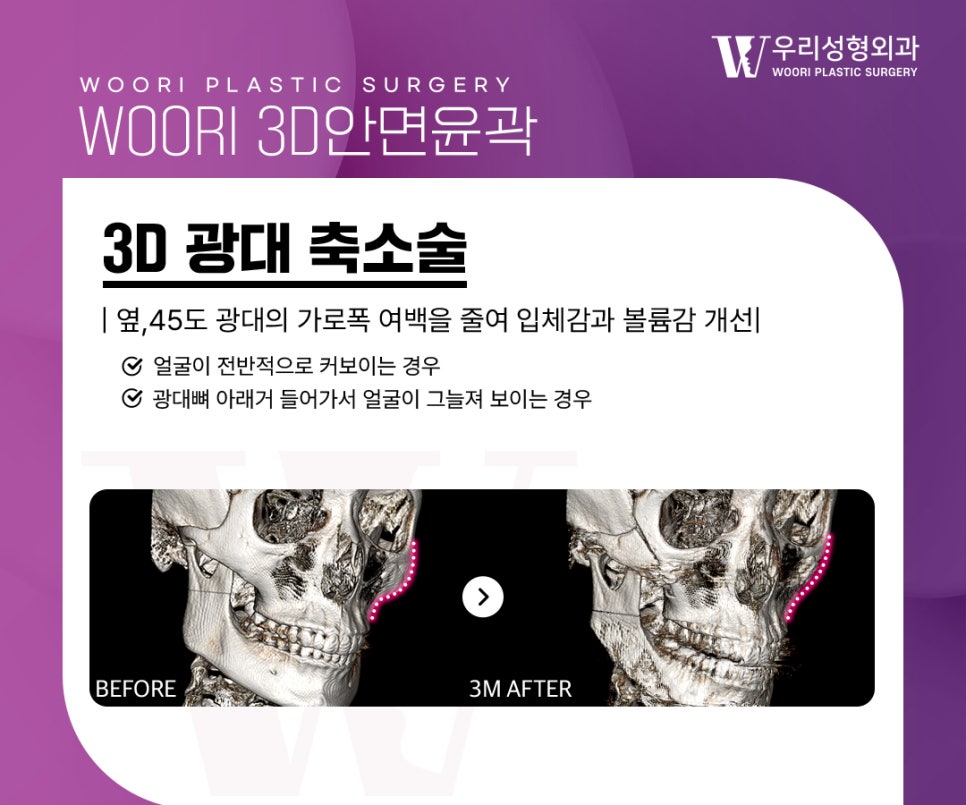
The cheekbones are an area that affects the width and three-dimensional appearance of the face.
Prominent lateral cheekbones can make the face look wider from the front, while protruding 45-degree cheekbones may stand out more from certain angles.
In addition, if the area below the cheekbones is relatively hollow, the contrast with the protruding cheekbones can create shadows on the face and make its contours appear more pronounced.
Therefore, when checking before-and-after cheekbone reduction results in facial contouring reviews, it is better to look not only at how much the facial width has decreased, but also at how the three-dimensional appearance of the face has changed from the front, at a 45-degree angle, and from the side.
Chin-tip surgery is not necessary for everyone
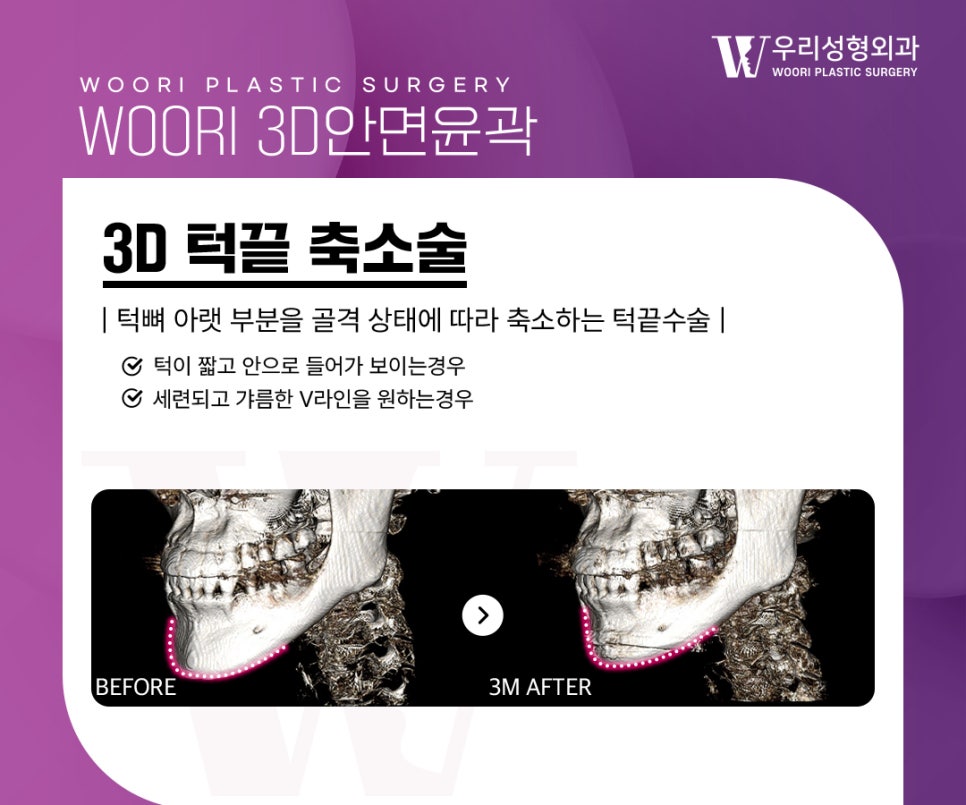
Having cheekbone and square jaw surgery does not necessarily mean that chin-tip surgery must also be performed.
Because the chin tip determines the vertical proportions of the face and the overall shape of the lower face, its current length, width, and front-to-back position should first be assessed.
Chin-tip surgery may be considered depending on the skeletal condition when the chin appears short or recessed, or when a wide chin tip makes the lower face look blunt, for example.
On the other hand, if the length and position of the chin tip already suit the face well, focusing on areas of actual concern, such as the cheekbones or square jaw, rather than adding unnecessary surgery may help produce a more natural result.
The overall facial proportions should be assessed before deciding on three-part contouring
The purpose of facial contouring is not to reduce multiple areas as much as possible, but to create overall balance in the face.
For example, if the lateral cheekbones and square jaw are both developed, a method of adjusting the widths of the upper and lower face together may be considered. If the cheekbones are appropriate but only the lower face is wide, a plan centered on the square jaw may be considered.
Therefore, just because someone underwent surgery on the cheekbones, square jaw, and chin tip in a facial contouring review does not mean that the same approach is necessary for you.
The priority should be to examine the bone structure from various angles, including the front, side, and 45-degree views, and to distinguish which areas of the current face need improvement.
The fixation process is as important as the osteotomy
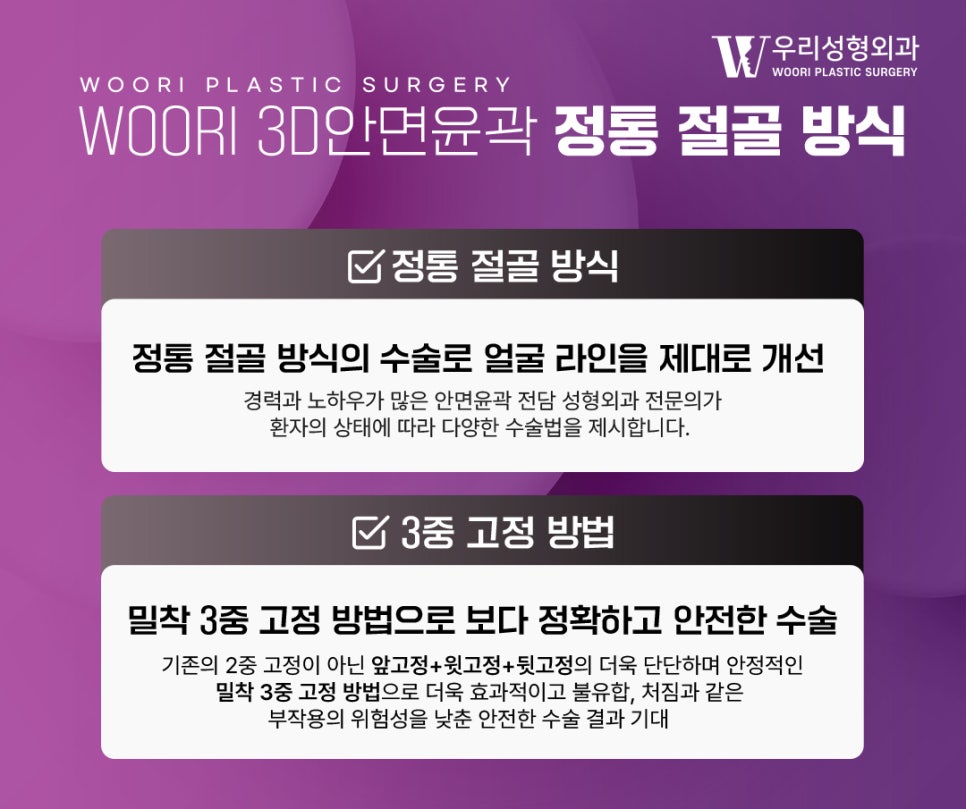
In cheekbone reduction surgery, the process of securely fixing the bone after moving it is also important.
At Woori Plastic Surgery, the conventional osteotomy method is applied according to the patient’s skeletal condition. After moving the cheekbone, a three-point fixation method that considers the front, upper, and rear directions is used.
This is because, for stable union of the osteotomized bone, not only the accuracy of the osteotomy and repositioning but also the fixation process must be considered.
The surgical method and fixation technique may vary depending on an individual’s skeletal structure and the extent of surgery, so it is advisable to confirm the appropriate method for you through a consultation.
When considering facial contouring, there is no need to decide first whether to undergo “two-part or three-part contouring.”
If you are concerned about your square jaw, you should determine how far the mandible has developed. If you are concerned about your cheekbones, you should identify whether the lateral cheekbones or the 45-degree cheekbones are more prominent. For the chin tip, you should check whether its current proportions suit your face.
In particular, facial contouring reviews may be helpful for referring to other people’s changes, but because each person’s facial bone structure is different, it is difficult to expect the same surgical method and results.
If you are unsure which procedure among cheekbone, square jaw, and chin-tip surgery you need, we recommend thoroughly analyzing your current bone structure and facial proportions before developing a surgical plan focused on the areas that require correction.