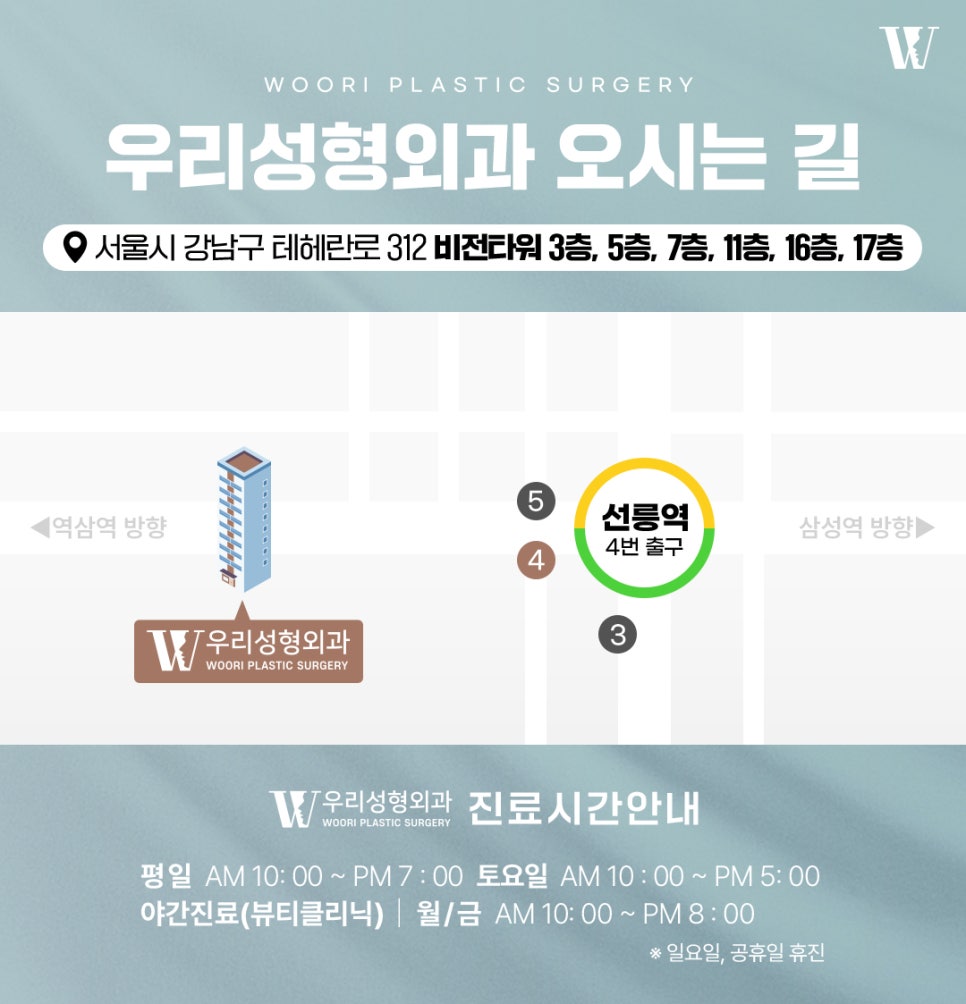
Hello, this is Woori Plastic Surgery.
When pores or acne scars are noticeable, the skin texture is uneven, or the skin feels less elastic, some people look into treatments that deliver energy to the skin layers. Potenza is a treatment that uses needles to deliver radiofrequency energy to the skin and is used to manage various skin concerns.
Since the locations of skin concerns and the condition of the skin vary from person to person, it is necessary to check the skin’s thickness and elasticity, as well as the condition of the pores and scars, before treatment and then proceed with an appropriate method.
Delivering radiofrequency energy to the skin layers
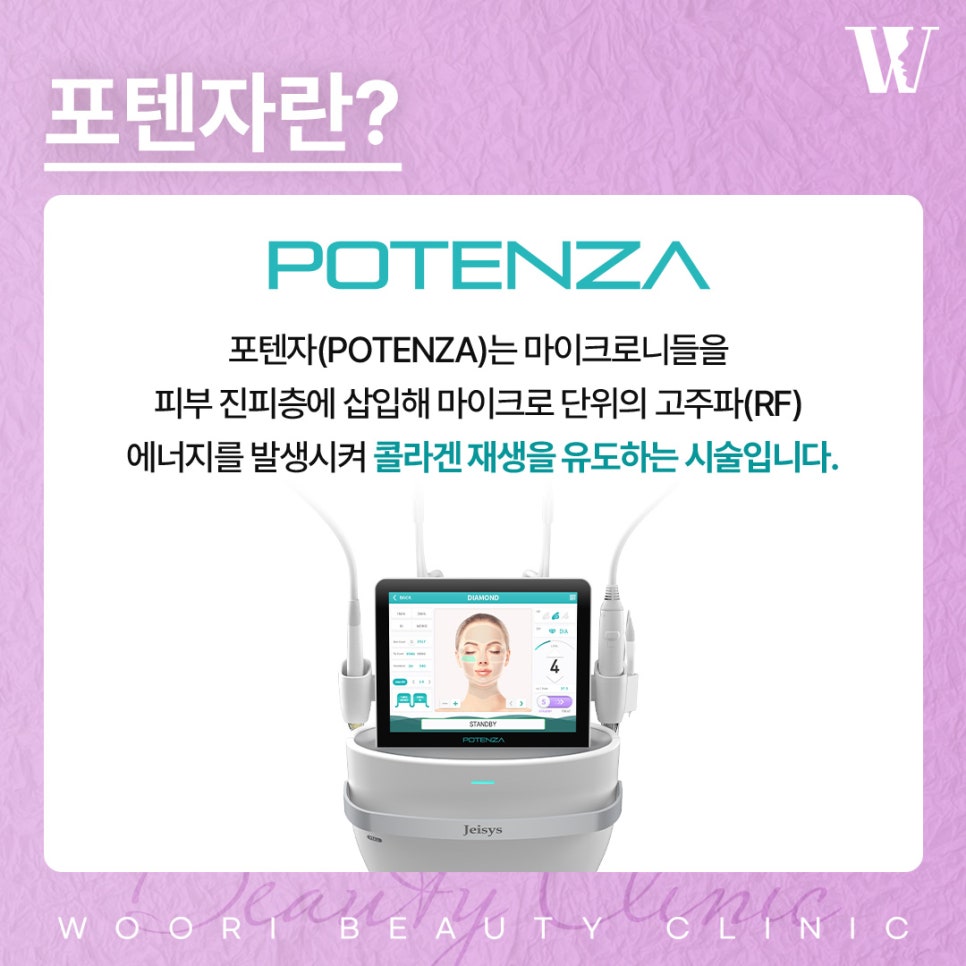
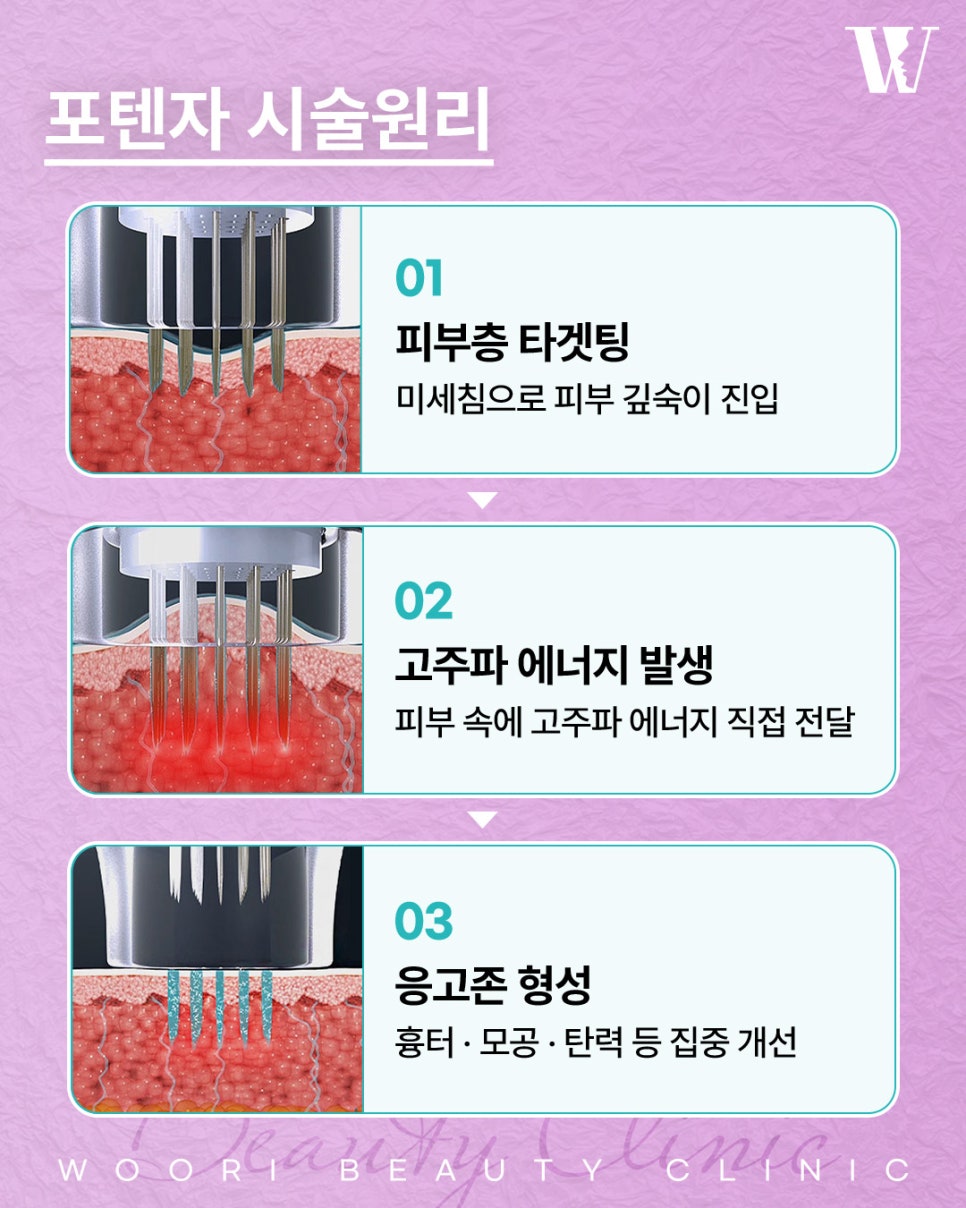
Potenza treatment works by inserting fine needles into the skin and generating radiofrequency energy to deliver to the skin layers. The area receiving stimulation may vary depending on the depth of needle insertion and the energy settings, so the settings need to be adjusted according to the skin condition and the purpose of the treatment.
The radiofrequency energy delivered to the skin stimulates the skin tissue through thermal energy and may affect the skin’s subsequent regenerative processes and collagen production. It can therefore be used to help improve pores, acne scars, skin texture, and elasticity.
However, the changes that appear after Potenza treatment may vary from person to person depending on the skin condition, energy settings, and number of treatments. Even in the same area, the appropriate depth and energy settings may differ according to the skin’s thickness and sensitivity.
Determining the treatment area according to the skin concern
Potenza can be used for various skin concerns, ranging from noticeable unevenness on the skin’s surface, such as pores or scars, to reduced skin elasticity and a rough-feeling skin texture.
In particular, the condition of the skin in areas with concentrated pores or scars may differ from that in areas showing reduced elasticity. Therefore, rather than treating the entire face under identical conditions, the treatment area may be determined after checking the condition of the skin in each area.
When the skin texture is uneven, the goal may be to improve its texture through skin regeneration. When reduced elasticity is a concern, the treatment may be used to manage skin elasticity by delivering energy to the dermal layer. The actual method of applying Potenza treatment and the changes that can be expected may vary depending on the individual’s skin condition.
Checking the difference between needle tips and pumping-mode tips
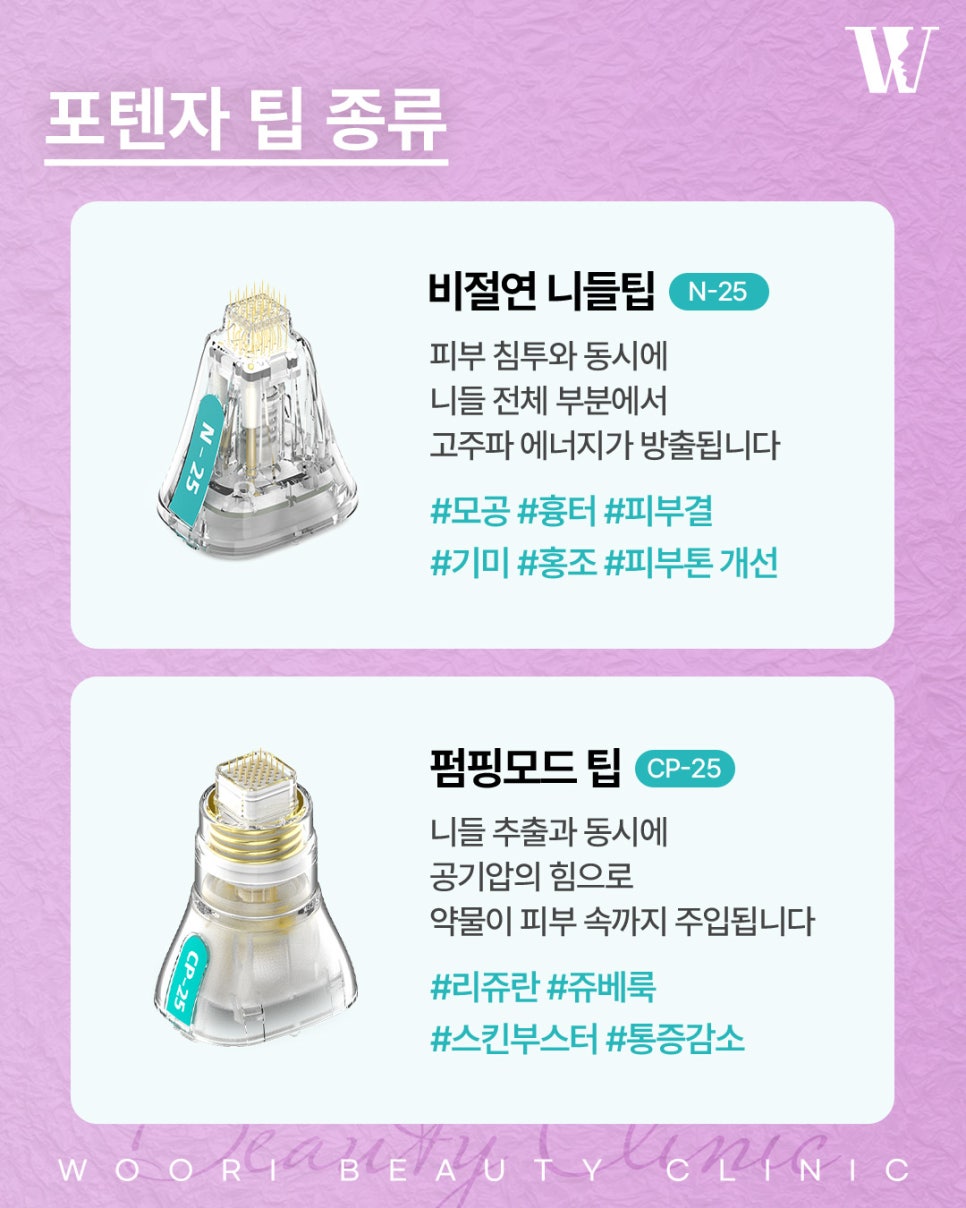
Potenza can use various types of tips depending on the purpose of the treatment. The representative types include needle tips and pumping-mode tips.
Needle tips are used by inserting fine needles into the skin and delivering radiofrequency energy to the desired depth. They may be used when energy needs to be delivered directly to the skin layers for concerns such as pores, scars, or elasticity.
Pumping-mode tips can be used to deliver energy in a pumping manner while applying the tip to the skin. Since the two methods differ in how energy is delivered and in their intended applications, the appropriate tip is selected after checking the skin’s thickness, the area of concern, and the desired treatment approach.
Therefore, when receiving Potenza treatment, it is advisable to check what type of energy delivery is needed for the current skin condition rather than simply comparing the types of tips.
Potenza treatment can be used to help manage pores, scars, skin texture, and elasticity by delivering radiofrequency energy to the skin layers. The depth of energy delivery and type of tip may vary depending on the skin condition.
Since needle tips and pumping-mode tips also differ in how they are applied, it is necessary to determine the appropriate method after thoroughly checking the current skin thickness and elasticity, as well as the condition of the area of concern. Because individual differences may occur in skin changes and the recovery process after treatment, it is advisable to establish a treatment plan based on sufficient consultation and assessment.