Hello, this is Woori Plastic Surgery.
When researching rhinoplasty, the first feature that often catches the eye is the height of the nasal bridge. However, simply making the nose higher does not always result in a natural and harmonious nose. This is because the height of the nasal bridge, the position of the tip, the length of the nose, and the nasolabial angle seen in the side profile are all interconnected.
In particular, even when the nose is raised to the same height, the overall impression may differ depending on the shape of the face and the positions of the forehead and mouth. Therefore, when planning rhinoplasty, we consider the overall structure of the nose and its relationship with the face rather than focusing only on a change in height.
Rhinoplasty That Considers Nasal Height and Structure Together
When determining nasal bridge height in rhinoplasty, we also examine the current starting point of the nasal bridge, the shape of the nasal bones, and the height of the nasal tip. This is because raising only the nasal bridge excessively may make the connection with the tip look unnatural or create disharmony with other facial features.
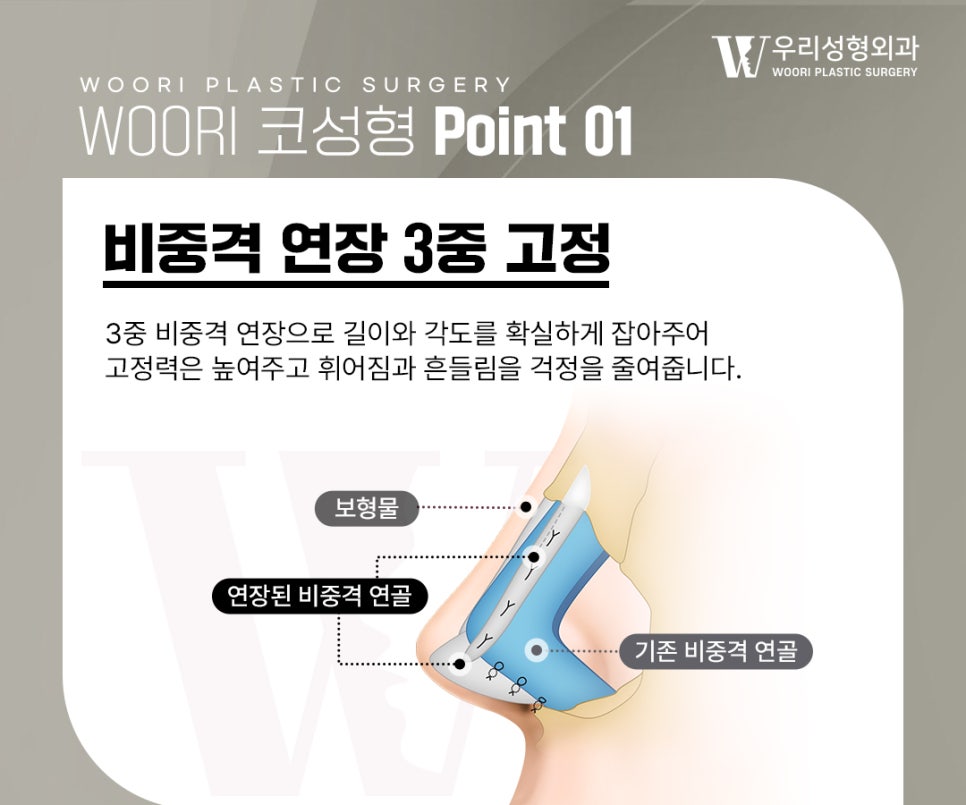
The process of providing stable support to the center of the nose is also important. Three-point fixation for septal extension can be performed by using septal cartilage to establish the length and direction of the nasal tip and then securing it at multiple points. This allows the surgery to maintain the nasal tip stably in the planned position and shape.
Raising the nasal bridge and positioning the nasal tip may appear to be separate processes, but in actual rhinoplasty they are interconnected. The line extending from the nasal bridge to the tip must be formed smoothly for the overall shape of the nose to look natural.
Structuring the Nasal Tip with Two-Layer Fixation
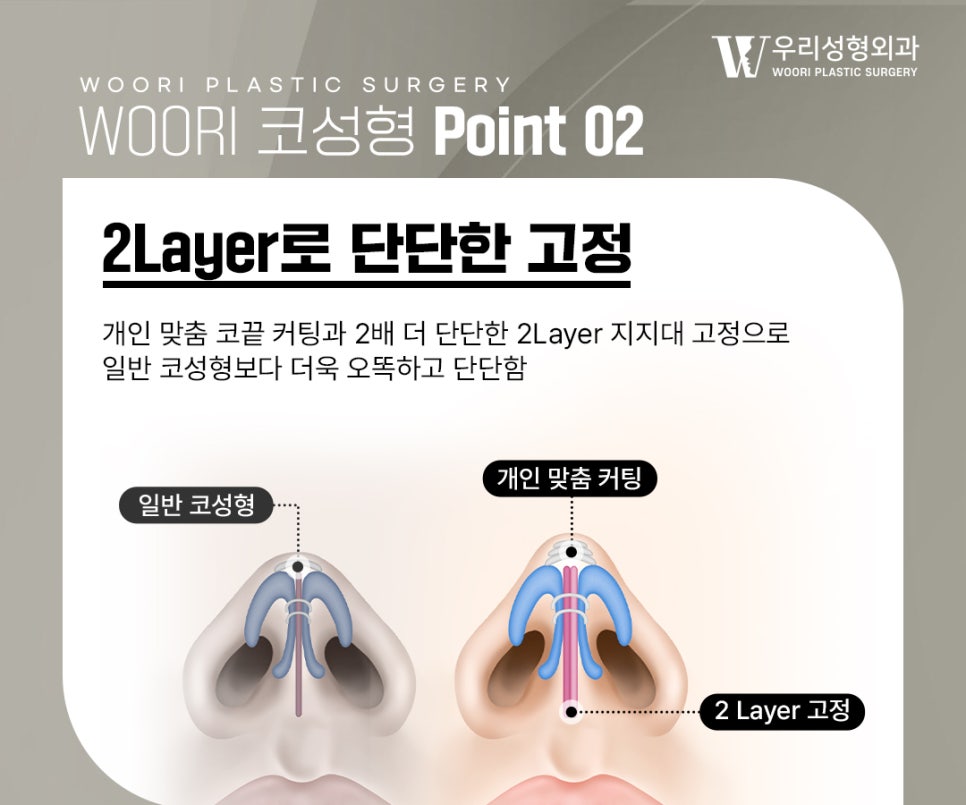
In rhinoplasty, the fixation process is important not only for the appearance immediately after surgery but also for helping the nasal structure remain stable afterward. Two-layer rigid fixation secures the nasal tip in two layers rather than at only one level, with the aim of enhancing structural stability.
Even when three-point fixation for septal extension and two-layer fixation are used together, the same method is not applied to everyone. After examining the condition of the existing cartilage, the shape of the septum, the direction of the nasal tip, and the degree of extension needed, an appropriate fixation method and range are determined.
In particular, when positioning and raising the nasal tip, the overall balance must be checked so that the nose does not become excessively short or long. The nasal bridge height should also be planned according to the proportion between the overall length and height of the nose, rather than being determined separately from the tip.
The Nasolabial Angle That Completes the Side Profile

The nasolabial angle is one aspect that is easy to overlook in rhinoplasty. It is the angle formed by the nose and upper lip, and it can affect the direction of the nasal tip and the shape around the mouth as seen from the side.
If the nasolabial angle is too small or the nasal tip points downward, the nose may appear long and heavy in the side profile. Conversely, if the angle is too large, the tip may appear excessively turned upward. Therefore, rather than applying one ideal nasolabial angle to everyone, it is determined by considering the length of the nose, the position of the tip, the shape of the face, and other factors together.
Ultimately, the connection in the side profile as well as the front view must be examined when determining nasal bridge height. When the height extending from the forehead to the nasal bridge, the position of the tip, and the nasolabial angle connect naturally, a balanced nasal line can be planned for the face as a whole.
Rhinoplasty is difficult to explain as a procedure that simply raises the nasal bridge. A surgical plan may involve determining the length and direction of the nasal tip through three-point fixation for septal extension and, when necessary, enhancing structural stability through two-layer fixation.
In addition, the nasolabial angle between the nasal tip and upper lip and the line extending from the forehead to the nasal bridge must also be considered to plan a nasal shape that connects naturally from both the front and side. Before surgery, it is necessary to thoroughly examine the current nasal structure, the condition of the cartilage, and the overall facial proportions before determining the required height and extent of correction.