Hello, this is Woori Plastic Surgery.
When looking into plastic surgery because of concerns about your facial shape, you may come across both facial contouring surgery and double jaw surgery. Although both procedures can change the shape of the face, they differ in terms of the areas treated and the scope of the approach.
Facial contouring surgery involves cutting or reshaping specific facial bones, such as the square jaw, cheekbones, or chin, to refine the facial contours. Double jaw surgery, on the other hand, adjusts the positions and relationship of the upper and lower jaws together. This requires evaluating not only the position of the jaws but also the alignment of the teeth and the overall skeletal relationships of the face.
Therefore, rather than comparing the two procedures based solely on the fact that the face appears wide, it is necessary to first determine which skeletal structure is causing the current facial shape.
Facial contouring and double jaw surgery address different areas
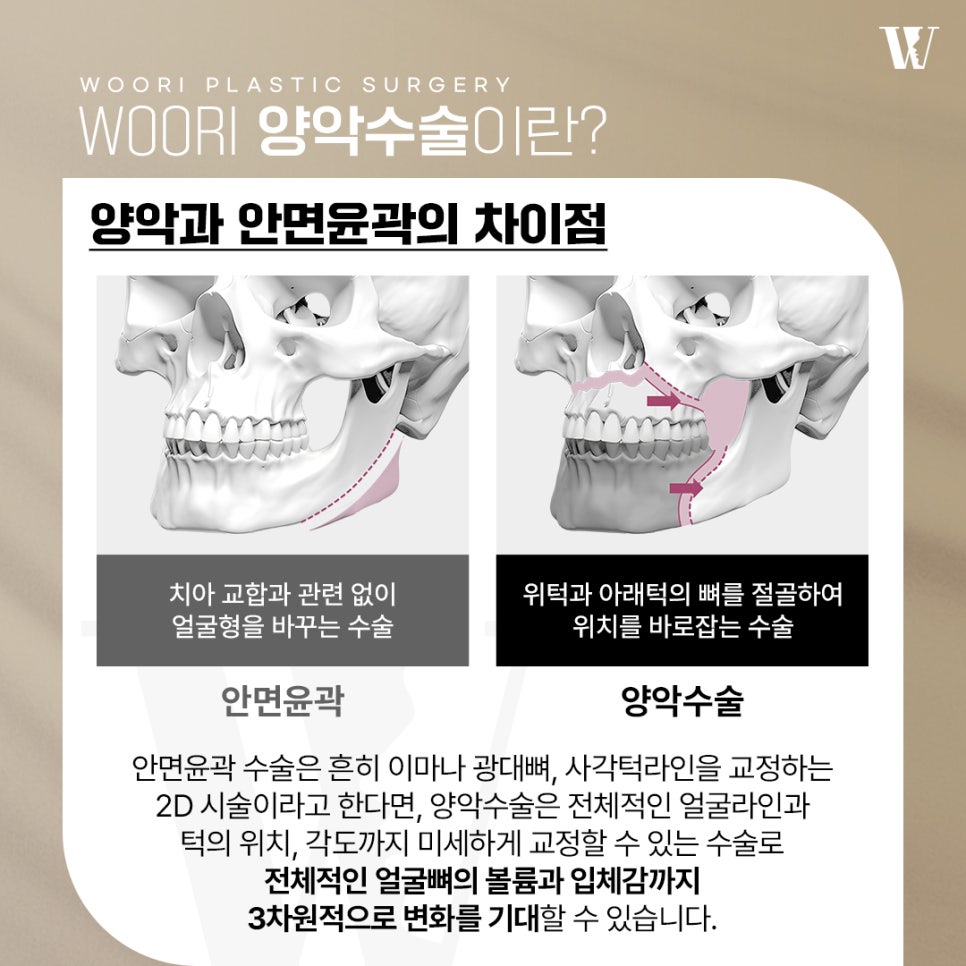
Facial contouring focuses on changing the contours by directly adjusting the bones that form the outer lines of the face. The shape of the outer face can be refined by reducing the width of a square jaw, minimizing prominent cheekbones, or adjusting the length and width of the chin.
Double jaw surgery, on the other hand, moves the upper and lower jaws together to adjust their positions and relationship. In particular, when the jaw protrudes forward, the lower face appears elongated, or malocclusion is present, simply reshaping the bones along the outer contours of the face may not be sufficient.
Because double jaw surgery evaluates the way the teeth fit together, the position of the jaws, and the left-to-right and upper-to-lower proportions of the face, the scope of preoperative diagnosis is also broader.
The relationship between the upper and lower jaws is corrected together
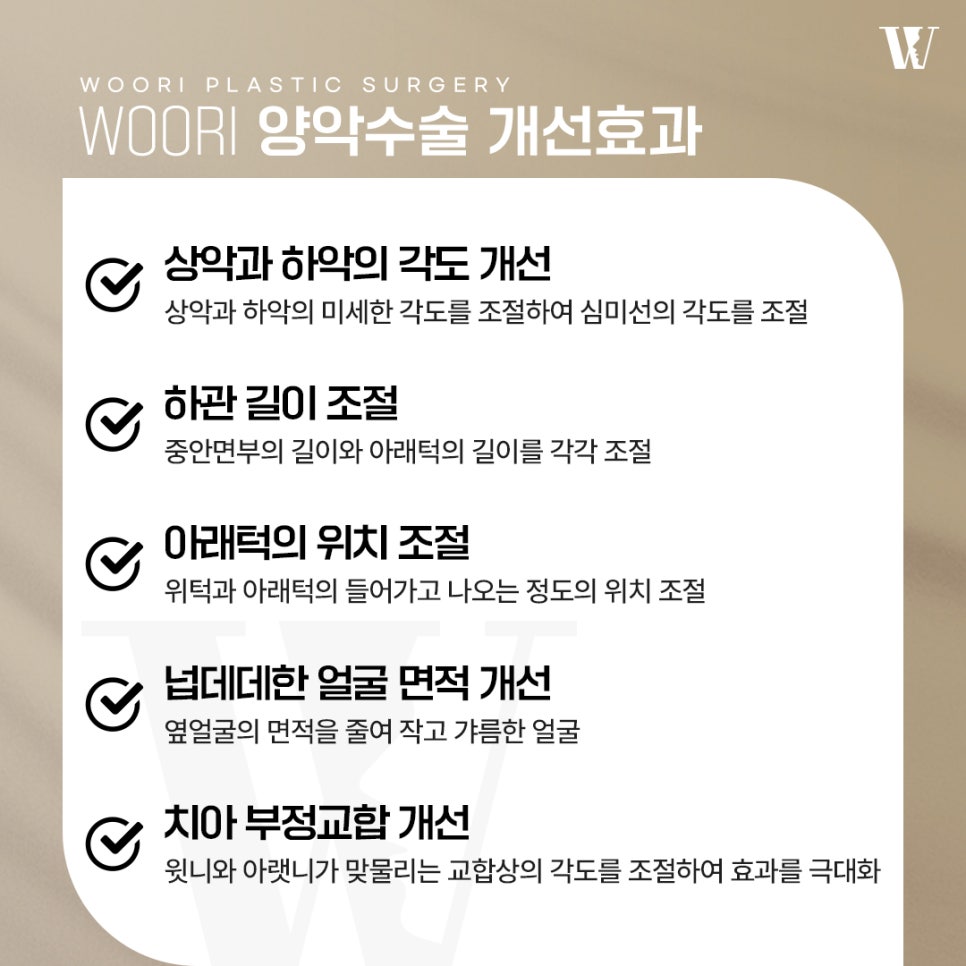
The improvement achieved through double jaw surgery does not simply mean moving the jaw backward. After determining the current positions of the upper and lower jaws, the direction and amount of movement needed are established to adjust the skeletal relationship of the face.
When the lower jaw protrudes forward, creating an underbite-like appearance, or when the lower face appears elongated, it may be necessary to adjust the position of the lower jaw. If the position or angle of the upper jaw also needs to be changed, the upper jaw may be moved at the same time to develop a surgical plan that balances the overall proportions of the face.
The alignment of the teeth is also evaluated during this process. When the upper and lower teeth do not meet properly in their normal positions, it can be difficult to address the issue through cosmetic improvement alone, making a diagnosis that includes the bite relationship necessary.
In addition, as the positions of the upper and lower jaws change, the shape of the lower face and the proportions occupied by each area of the face may also change. However, the extent of facial-shape changes after surgery varies from person to person depending on the existing skeletal structure, the range of movement, and the condition of the soft tissues.
Changes in skeletal position can change the shape of the face
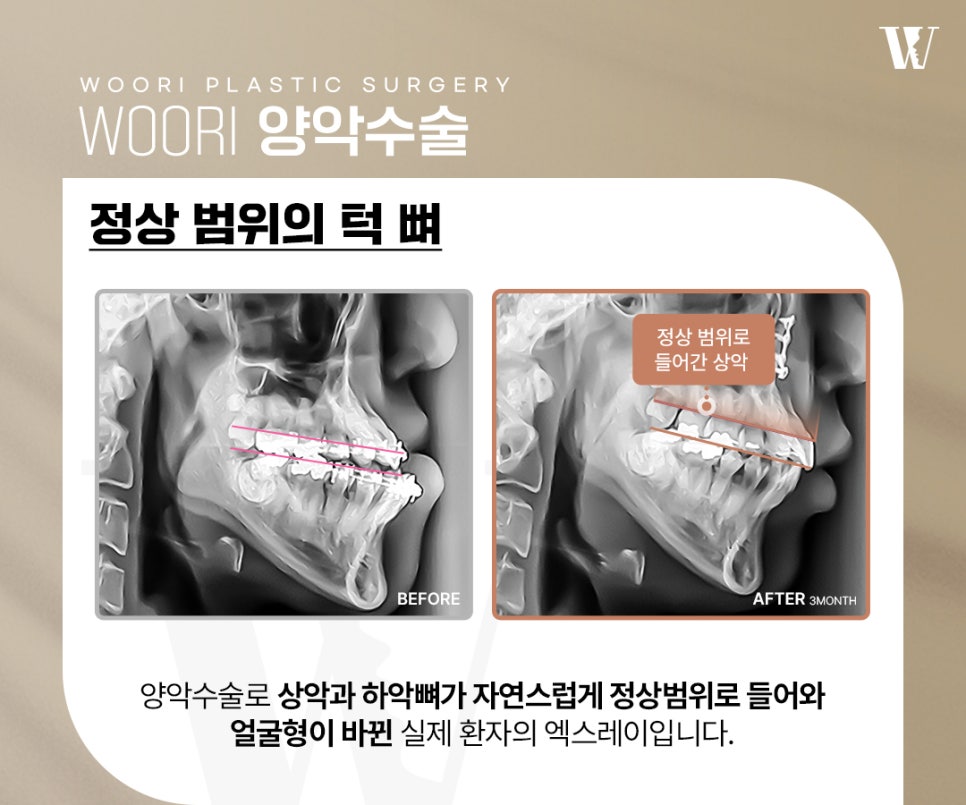
Double jaw surgery is performed by moving the upper and lower jaws into the necessary positions and then securing them in place. Therefore, after surgery, changes may occur not only in the location of the jaws but also in the overall shape of the lower face and the facial proportions seen from the side.
For example, if forward protrusion of the lower jaw was the main concern, the protruding lower face may be reduced as the jaw is moved backward. When the relationship between the upper and lower jaws is adjusted together, the prominence around the mouth, the angle of the jaw, and the upper-to-lower proportions of the face may also change.
However, double jaw surgery is not a procedure whose suitability is determined based only on facial shape. A surgical plan is developed after comprehensively evaluating the skeletal positions, the alignment of the teeth, and the condition of the temporomandibular joints. When necessary, orthodontic treatment may also be included before or after surgery.
Double jaw surgery adjusts the positional relationship between the upper and lower jaws to improve skeletal problems and the bite together. While facial contouring focuses on refining the shape of the outer face, including the cheekbones, square jaw, and chin, double jaw surgery changes the positions of the two jaws and their relationship itself.
After surgery, changes in the positions of the upper and lower jaws may also alter the shape of the lower face and the facial proportions, but the specific changes vary depending on each person’s skeletal structure and surgical plan.
Therefore, when planning double jaw surgery, it is necessary to evaluate not only facial shape but also the current positions of the upper and lower jaws, the angle of the jaw, and the condition of the bite. It is important to establish a surgical plan after sufficient examinations and consultation have assessed both functional aspects and facial shape.