▲ If you’re curious why correction of protruding-jaw symptoms is possible, watch the video :)
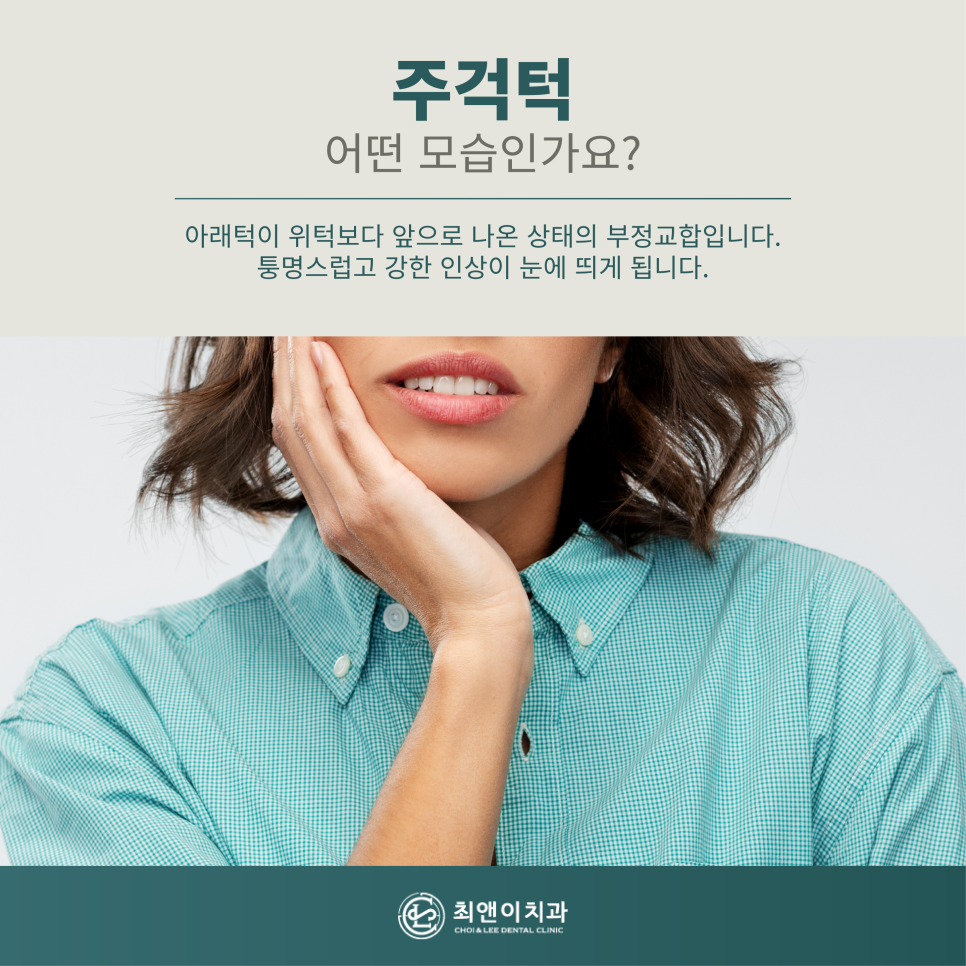
Patients with a protruding jaw, accounting for 15–17% of the domestic population
What is a protruding jaw?
Everyone, are you familiar with the symptom called a protruding jaw? In general, when the lower jaw is larger and projects forward compared to the upper jaw, it is called a protruding jaw. According to statistics surveyed by the Korean Dental Association, 15–17% of the entire domestic population is said to have protruding-jaw symptoms. As such, this is a symptom many people experience. Today, we will take a detailed look at the definition and symptoms of a protruding jaw, which can be a source of appearance-related insecurity and can also cause functional inconvenience, as well as treatment methods.
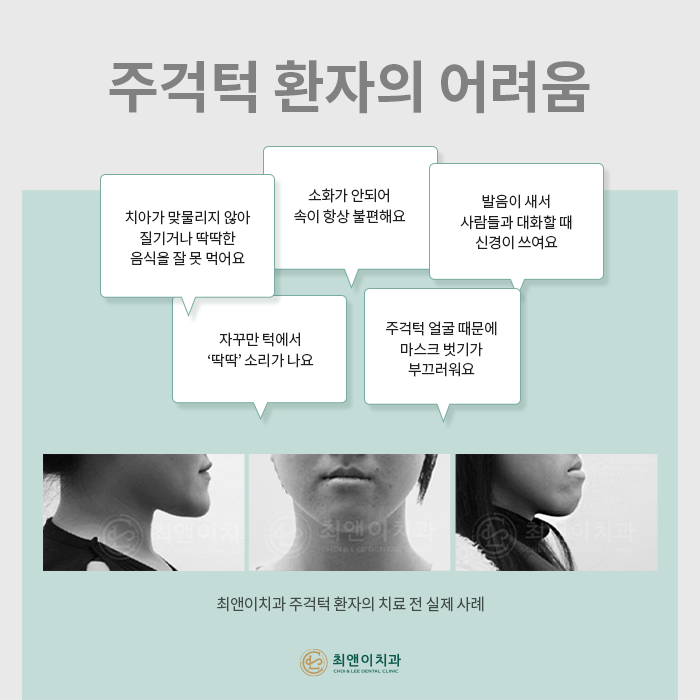
What problems can occur if protruding-jaw symptoms are left untreated for a long time?
A protruding jaw is classified as a malocclusion and can occur when the lower jaw grows excessively or the upper jaw does not grow enough. In such cases, when the teeth bite together, a gap may form between the upper and lower front teeth, causing an imbalance in jaw relationship and abnormal tooth alignment, which makes chewing food uncomfortable. It can not only place a burden on chewing ability and the digestive system, but also cause speech disorders. In addition, if the jaw length is excessively long, it can lead to appearance-related insecurity.
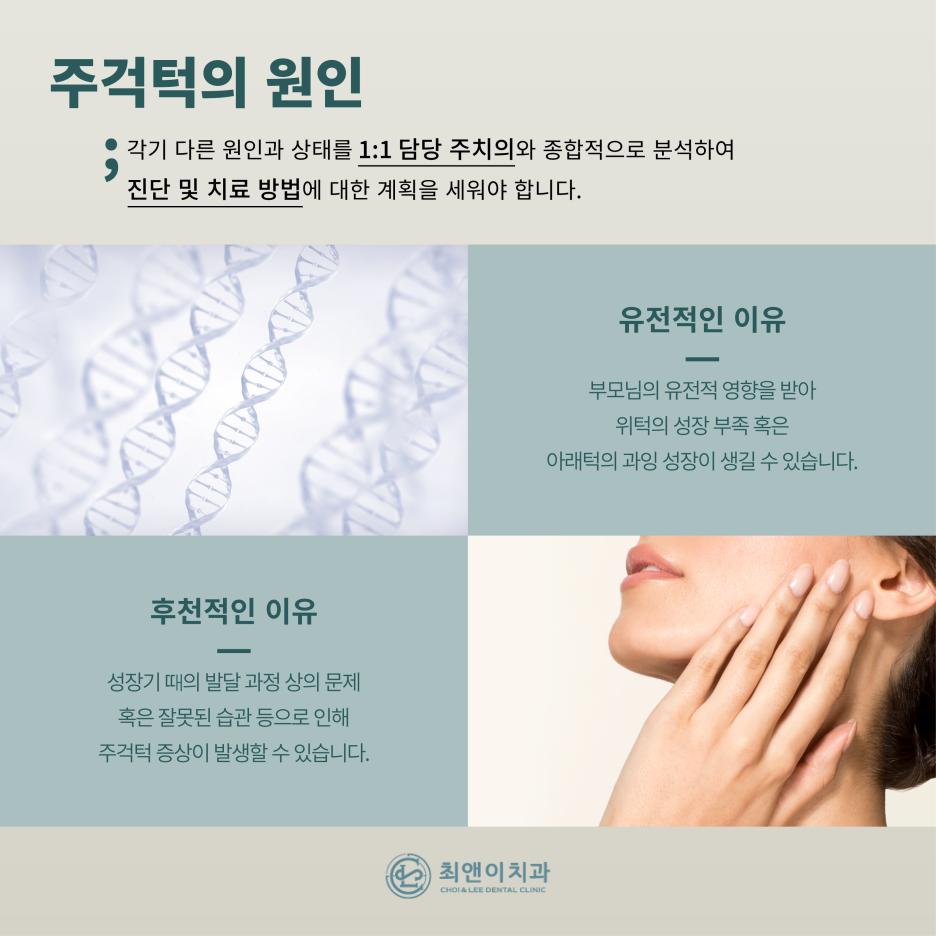
A protruding jaw, which causes aesthetic and functional discomfort in daily life, may show symptoms from childhood due to genetic influence, but it can also arise from acquired factors such as habitually pushing the lower jaw forward or leaving an underbite untreated.
If these symptoms are left uncorrected, they do not resolve naturally and the lower jaw develops further, so improvement is needed as soon as possible. To achieve satisfactory protruding-jaw correction, a treatment plan must be established by comprehensively analyzing the current symptoms and their severity with a one-on-one attending doctor.
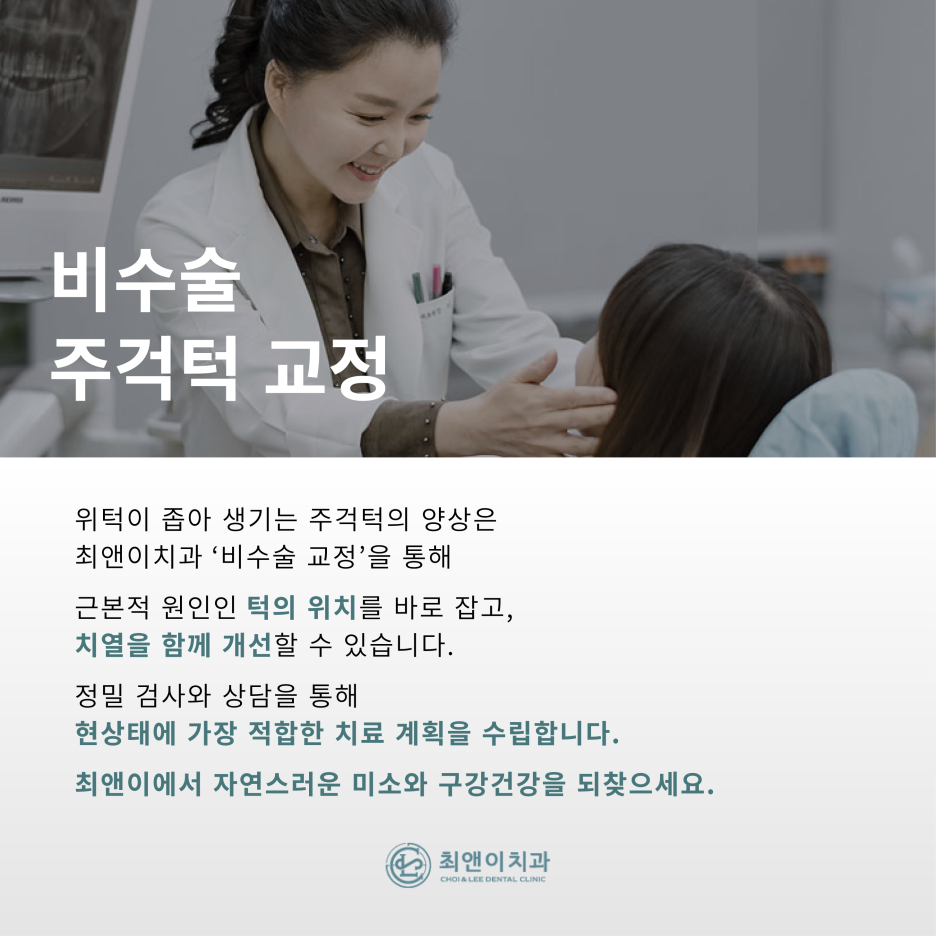
Improving a protruding jaw,
Is non-surgical orthodontic treatment possible?
The appropriate treatment method for a protruding jaw may vary depending on the individual. Many people believe that only surgical methods are possible, but depending on the symptoms, the problem can be resolved with jaw and orthodontic treatment alone. Therefore, it is important to find out which method is truly necessary for you.
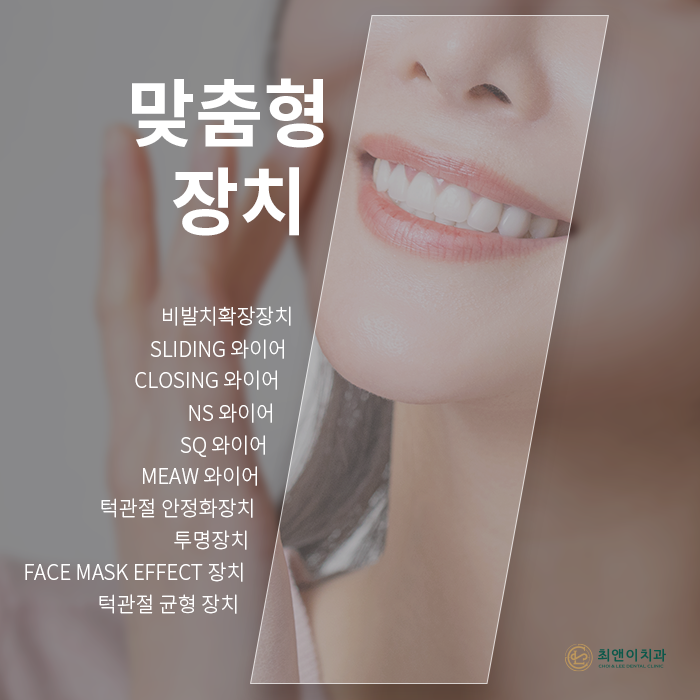
If you are a patient whose protruding jaw can be improved with orthodontic correction, there is one point you must keep in mind. In general, when orthodontic treatment is performed, there is usually a fairly standardized process using orthodontic appliances. However, by themselves, these have limitations when it comes to improving a protruding jaw with non-surgical orthodontics.
Since our body structures are all different, synergy can only be achieved when various necessary devices are used flexibly by comprehensively considering everything from tooth alignment to the degree of the protruding jaw and the overall proportions of the face.
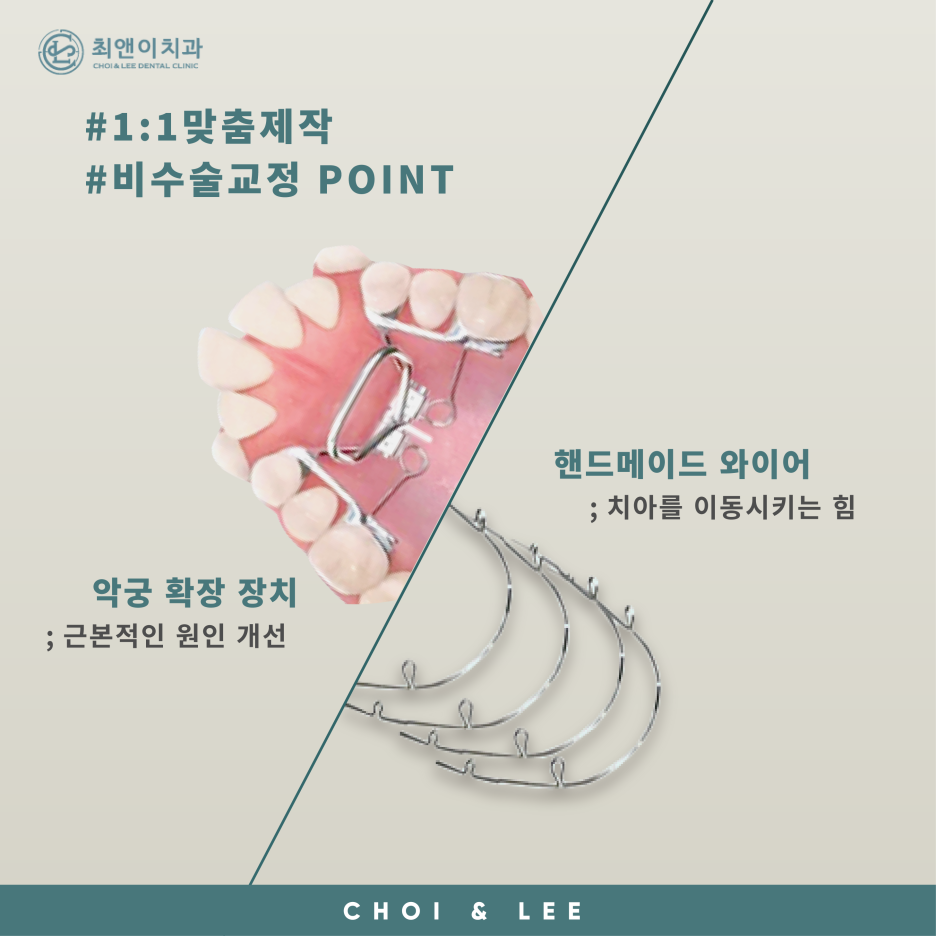
Key points of protruding-jaw correction
The force that moves the teeth depends on the wire in the orthodontic appliance. Therefore, if not only the appliance but also the orthodontic wire used is a handmade custom wire that takes into account the patient’s facial bones, tooth condition, and pattern of malocclusion, even more satisfying results can be expected.
In other words, compared with a patient-selected appliance and off-the-shelf wire, treatment should be carried out more delicately and precisely using a wire handcrafted by the medical staff to fit the individual patient’s condition.
Also, to fundamentally improve the narrow upper jaw, which is the main cause of the protruding jaw mentioned earlier, an expansion device that widens the upper jaw must be used first.
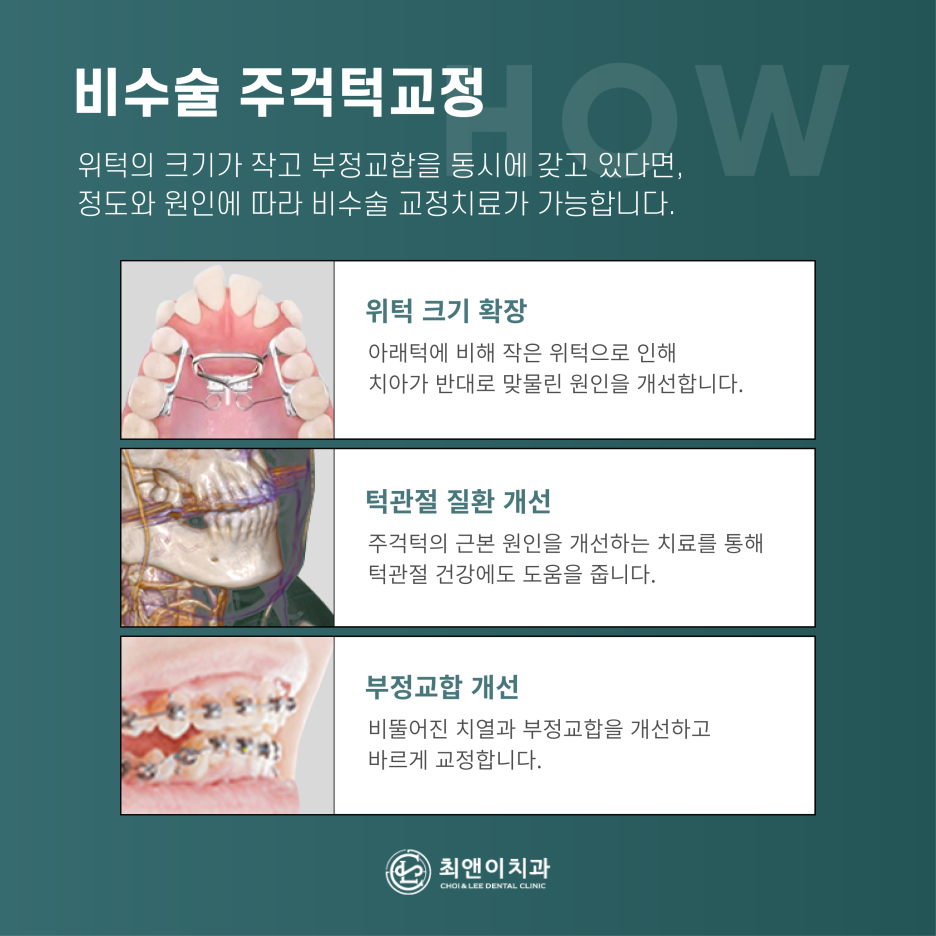
The key is that the underlying cause, the position of the jaw and the alignment of the teeth, must be corrected together
In the case of an upper jaw expansion device, it is key not only for protruding jaws but also for improving various malocclusions caused by a narrow upper jaw, such as protrusion of the mouth, asymmetry, and a recessed chin. Therefore, patients considering orthodontic treatment are advised to receive fundamental treatment through a method with less burden from surgery and a lower chance of recurrence.
Correcting only the tooth alignment does not solve the position of the jaw, and correcting only the jaw position does not solve the bite of the teeth, so the jaw and teeth must be improved simultaneously under the supervision of experienced medical staff.
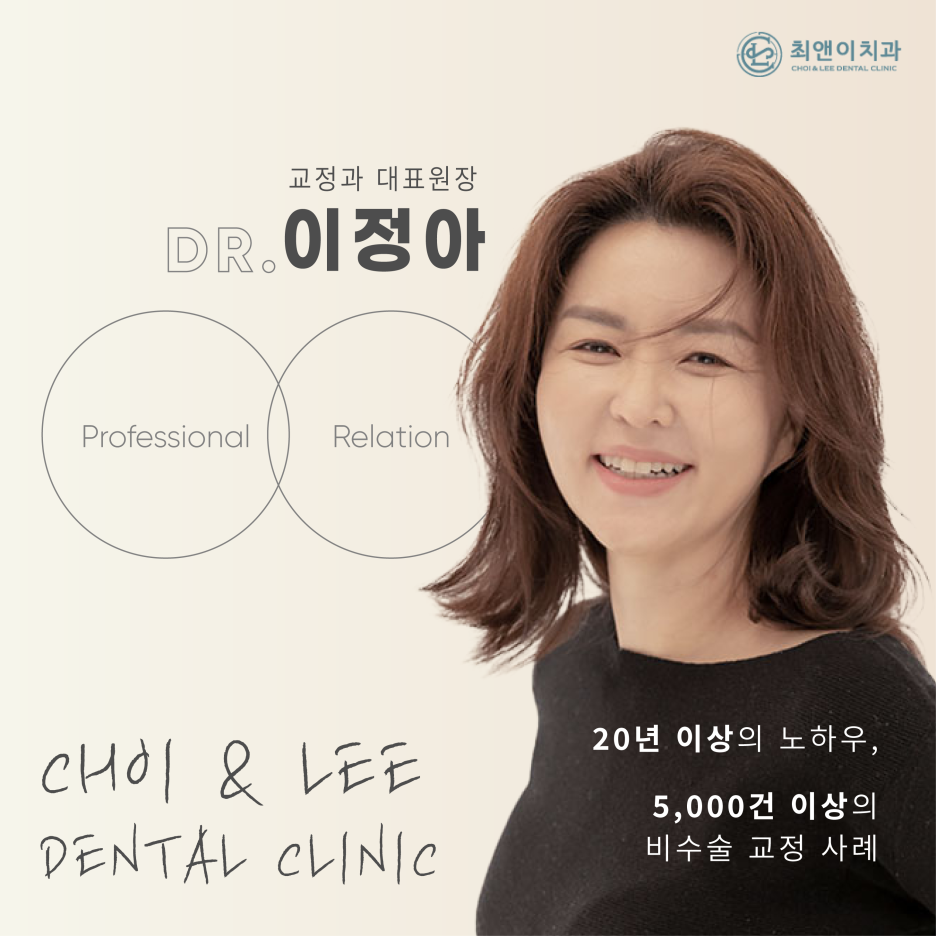
Therefore, it is important to choose medical staff who, based on know-how gained from handling a variety of cases over a long period of time, can respond skillfully in any situation and satisfy the patient’s needs through in-depth consultation and active communication with the patient.
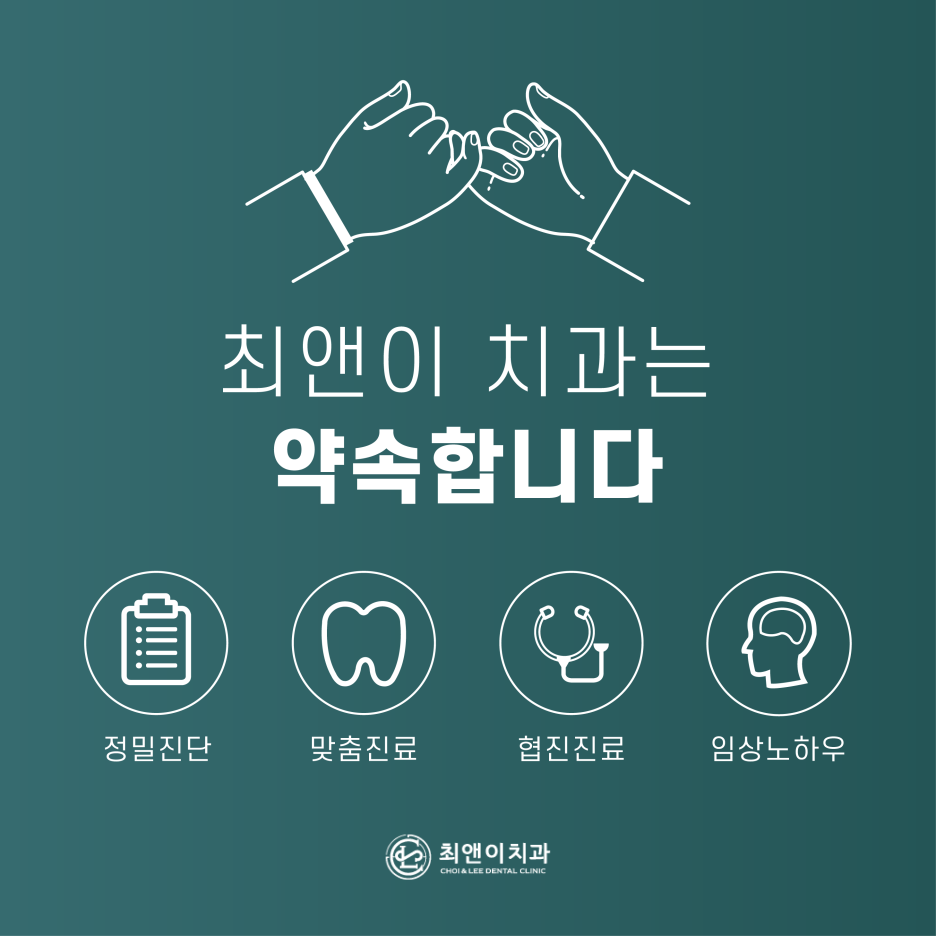
As explained above, because each person’s body structure and oral structure are different, it is necessary to accurately analyze the current condition using precision equipment such as 3D-CT and first determine whether the patient is a candidate for non-surgical orthodontic treatment. Taking responsibility for this conscientious diagnosis, we establish a treatment process tailored to the patient’s condition and strive to achieve satisfying results through collaborative care between prosthodontics and orthodontics.
If you are hesitating to seek treatment despite having a protruding jaw or other malocclusion symptoms, we hope you will begin the process at a place that truly cares for patients through a systematic approach.

▲ Watch the full course from the start to the end of protruding-jaw correction
If you are interested in various dental information and information about non-surgical orthodontics, please check Choi & Lee Dental Clinic’s YouTube and Naver TV.