In your 20s and 30s, your skin condition may have quickly recovered after a good night's sleep. But once you enter your 50s, even the best cosmetics may not restore a sagging jawline or deepening nasolabial folds, leaving you increasingly concerned. When you hear people around you or former classmates talking about what someone had done, you may become curious, yet hesitate because worries come first: “Isn’t it too late at my age?” or “What if losing fat makes me look even older?”
In particular, your 50s are a time when the pace of aging can accelerate significantly. Rather than blindly following procedures that others recommend, it is most important to find a method precisely suited to your own skin condition.
Today, I will clearly summarize whether Ultherapy is truly suitable for skin in your 50s, as well as the key points you must check to achieve the results you want without problems.
-
The key causes of aging in your 50s that cosmetics cannot resolve
-
The principle of rebuilding a collapsed support structure: Why Ultherapy?
-
Concern about hollow cheeks: For those in their 50s, design is crucial
-
Criteria not to overlook when choosing a Cheongdam dermatology clinic
- The key causes of aging in your 50s that cosmetics cannot resolve
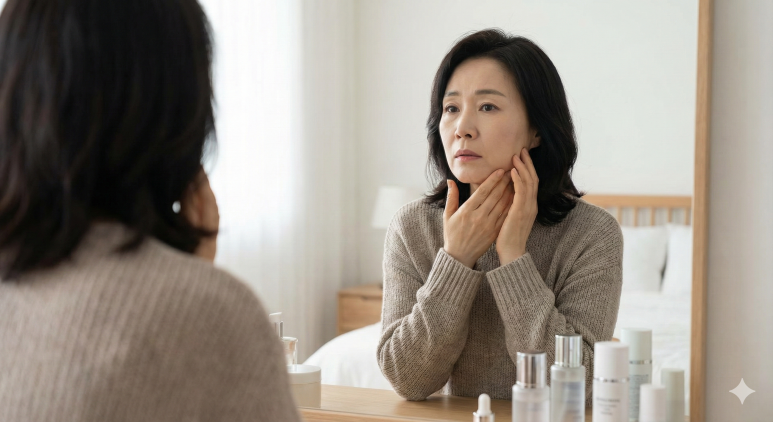
When we build a structure, painting its exterior and reinforcing its internal framework are entirely different kinds of tasks. If aging in your 20s and 30s is an issue with the “paint,” such as fine lines or pigmentation on the skin’s surface, aging in your 50s is more like the “reinforcing columns” that support a building becoming weaker. In the deepest layer of the skin is an area called the superficial musculoaponeurotic system (SMAS). It connects and supports the skin and muscles, but by your 50s, its strength can weaken rapidly along with hormonal changes.
As this support becomes loose, the skin’s fat layer and epidermis resting above it begin to slide downward under the force of gravity. Eventually, the jawline loses definition and jowls appear. This is why it can be difficult to achieve a lifting effect even with expensive functional creams. Cosmetics can provide moisture and nourishment to the epidermis, but they have difficulty reaching the deeper SMAS layer and rebuilding the collapsed support structure.
- The principle of rebuilding a collapsed support structure: Why Ultherapy?
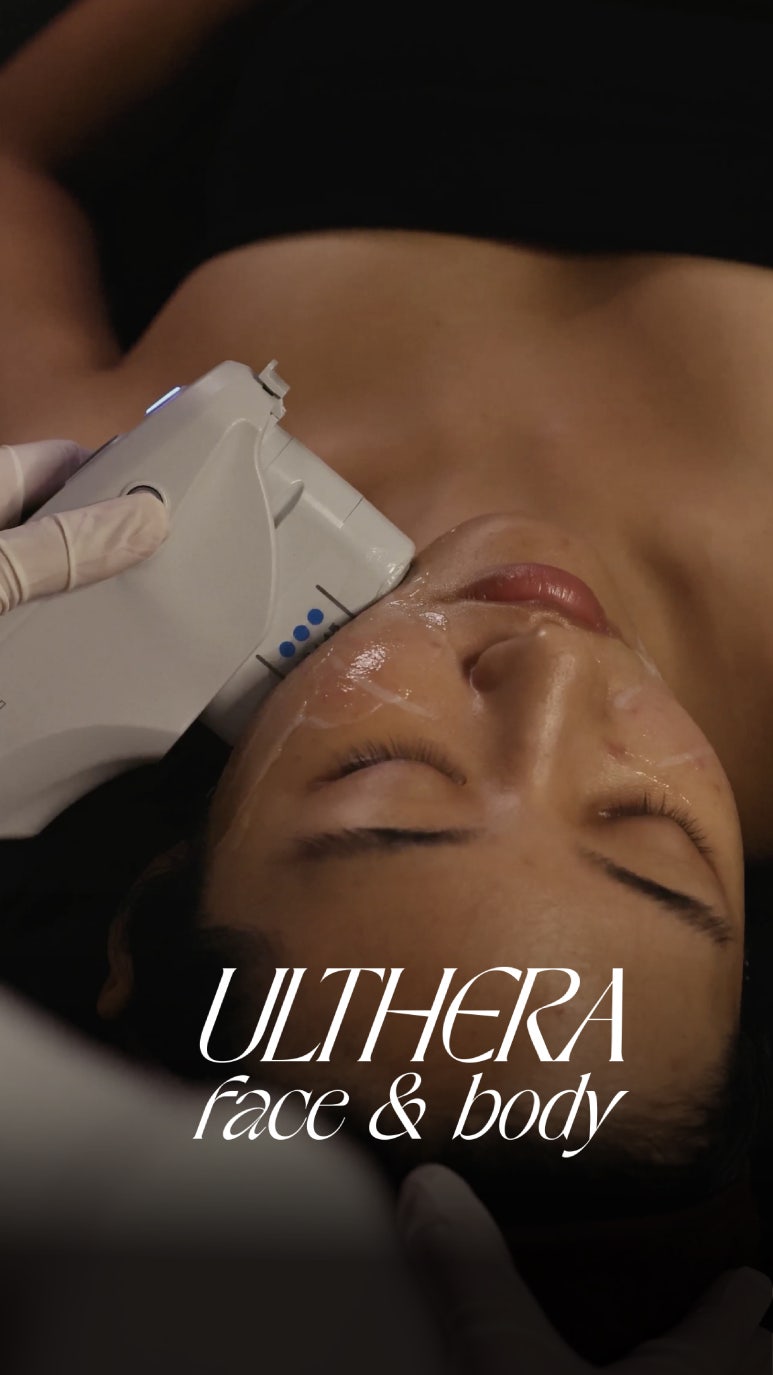
This is where Ultherapy, which uses focused ultrasound (HIFU), may be appropriate. It may be easier to understand if you think of how a magnifying glass concentrates sunlight to burn paper. Without damaging the skin’s surface, powerful ultrasound energy is focused deep within the skin at the SMAS layer to generate heat. This thermal energy contracts the loosened fascia and helps pull it tighter. The effect can be compared to smoothing out loose fabric with a hot iron.
In addition, new collagen begins to form through the body’s natural healing response in areas where thermal coagulation points have been created. In other words, rather than simply pulling the surface tight, it can be viewed as a fundamental remodeling process that refines the face’s contours and improves overall skin density through elasticity that builds from within the skin.
- Concern about hollow cheeks: For those in their 50s, design is crucial
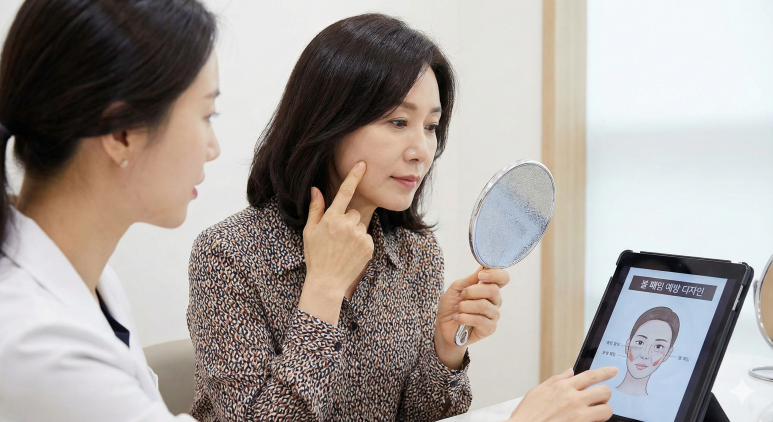
One of the main reasons many people in their 50s hesitate to undergo Ultherapy is concern about “hollow cheeks.” You may have heard someone say, “A friend had it done, and her cheeks became so sunken that she looked like a skeleton.” This can occur when the procedure is performed in a uniform manner without considering the characteristics of skin in your 50s.
Compared with people in their 20s and 30s, those in their 50s often have less subcutaneous fat and thinner skin. If excessive energy is applied to areas with insufficient fat, the fat may atrophy and make the face look more gaunt. Therefore, the key to lifting in your 50s is not applying energy “as strongly and as much as possible,” but distributing it “appropriately where it is needed.” Areas with more fat, such as a double chin or jowls, may be tightened more strongly, while areas where hollowing is a concern, such as the outer cheeks or below the cheekbones, should be avoided or treated with adjusted energy levels. This delicate, customized design is essential.
- Criteria not to overlook when choosing a Cheongdam dermatology clinic
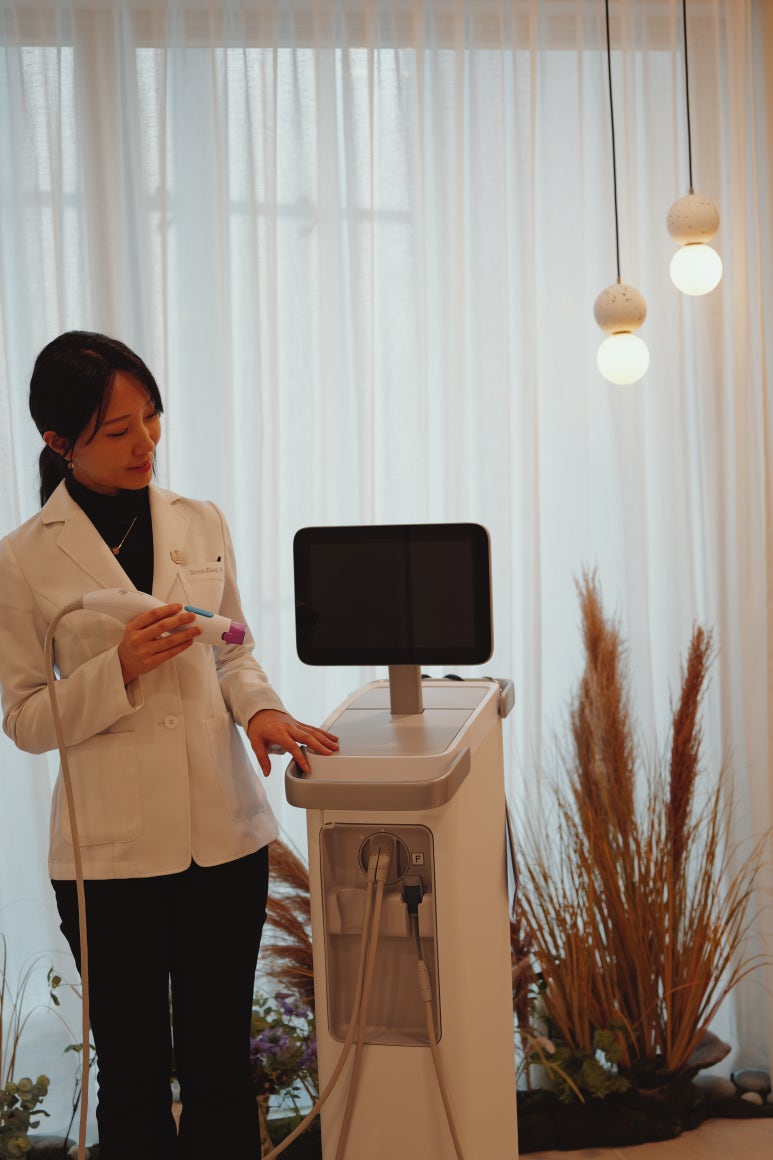
For lifting in your 50s, the practitioner’s experience is just as important as the performance of the equipment. Because each person has a different facial bone structure, fat distribution, and degree of skin sagging, you should find a Cheongdam dermatology clinic that can make a precise assessment and develop a customized plan. Rather than simply comparing the number of shots or the price, we recommend checking whether the clinic examines the thickness and depth of the skin layers directly with ultrasound before the procedure and designs the treatment accordingly.
Ultherapy is equipment that allows the practitioner to view inside the skin in real time on a monitor during the procedure. The difference in results depends on whether this function is properly used to deliver energy accurately to the target layer. Being in your 50s does not mean it is too late. Rather, this may be the time when investing in yourself can make the greatest difference. If a delicate approach that considers thinner skin and reduced fat is used, Ultherapy may be a valuable option for helping restore lost elasticity and confidence in skin in your 50s.
This post was
directly written by 라리안청담의원
for informational purposes,
in compliance with Article 56 of the Medical Service Act
and the Enforcement Decree of the same Act.
All procedures and surgeries may result in
inappropriate reactions,
so please receive treatment
after having a sufficient consultation with a medical professional.
라리안청담의원 Director Kang Ji-yeon