The hardest part when starting a diet is not “What should I eat?” but “Can I keep doing this consistently today too?”
What I realized while successfully losing 10 kg was that small, repeatable habits change your weight more than grand resolutions do.
Today, based on the questions many of you have, I’ll organize the two key habits that can help with management.
-
Why habits determine weight
-
Key Habit 1. Cut out sugars (cut out sugar)
-
Key Habit 2. Do not lie down immediately after eating
-
How to apply it
-
Checkpoints to reduce failure
Why habits determine weight
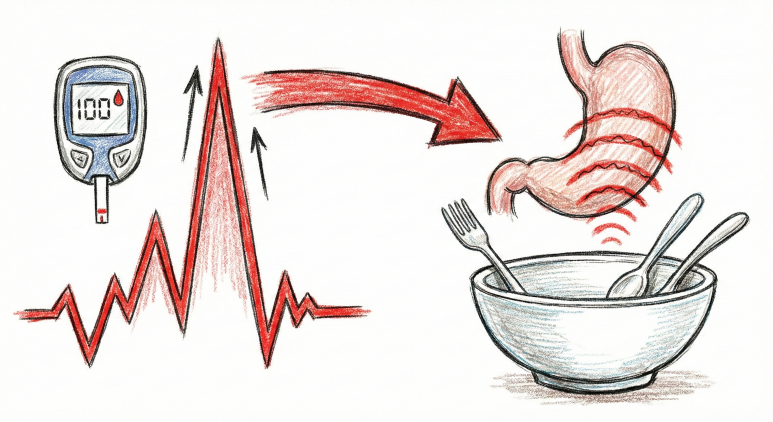
Our body responds more strongly to daily repetition than to a decision made for just one day. In particular, when blood sugar fluctuates, hunger signals become stronger, and the next meal can be harder to control.
So dieting is less a battle of willpower and more a battle of habits that stabilize blood sugar and your daily rhythm.
Key Habit
- Cut out sugar
The first thing you should reduce for weight loss is sweet snacks and drinks that hide sugar.
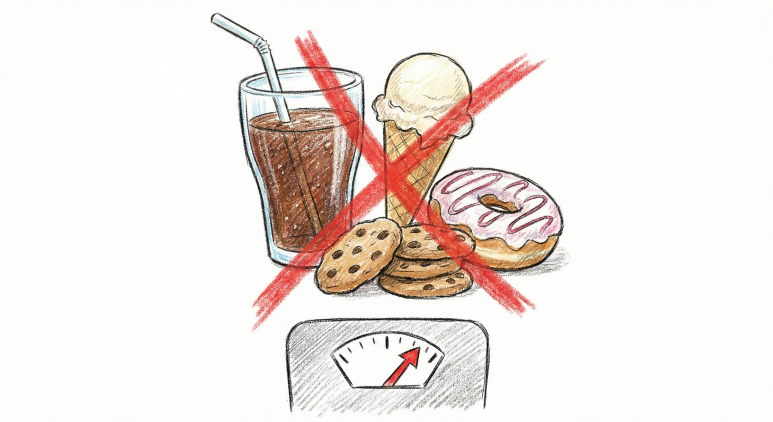
Foods high in sugar, such as sweet drinks, ice cream, snacks, and bread, can easily interfere with the process of losing weight.
Especially when you eat sugar after you have already lost some weight, blood sugar can rise sharply (a blood sugar spike) and then drop suddenly, causing intense hunger all at once, and that hunger can lead to binge eating.
The practical tips are simple!
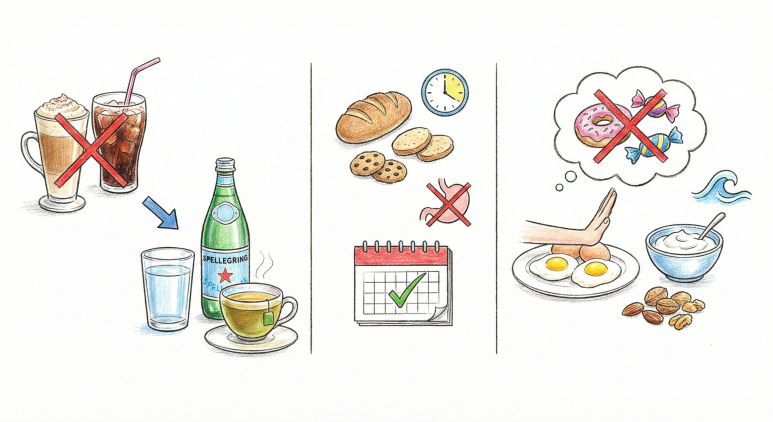
First,
Start by changing your drinks. Instead of sweet coffee or lattes, begin with water, sparkling water, or unsweetened tea to increase your chances of success.
Second,
Rather than banning bread and snacks completely, manage how often and when you eat them. Sweet foods on an empty stomach are especially likely to throw you off.
Third,
When you crave something sweet, try holding out for just 10 minutes with protein (eggs, Greek yogurt, tofu) or nuts. The urge often fades away like a passing wave.
Key Habit
- Do not lie down immediately after eating
It is better to avoid the habit of lying down right after a meal.
After eating, it is recommended to take a light 15- to 30-minute walk.
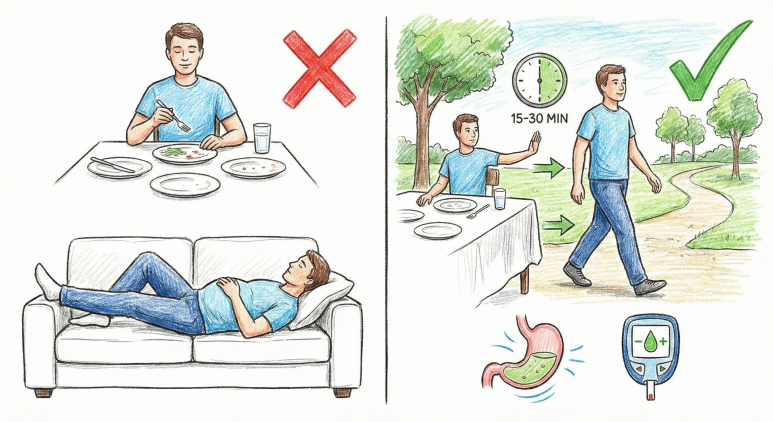
This short movement helps with digestion and also plays a big role in stabilizing post-meal blood sugar.
Try this!
Instead of taking the elevator, go up 2 to 3 floors by stairs; stand while talking on the phone; walk around the house once while putting away dishes—
When you turn it into movement rather than exercise, the burden drops a lot.
How to apply it
Employee A, who often works late nights, had a habit of eating sweet drinks and bread every evening and lying down on the sofa immediately after meals.
In the first week, A only applied the step of cutting out sweet drinks, and starting in the second week, added a 20-minute walk after meals.
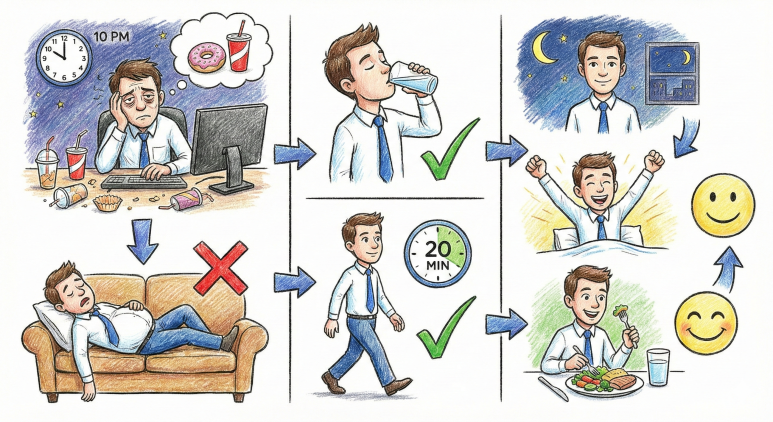
As a result, late-night hunger and unnecessary cravings decreased, and as morning condition improved the next day, choosing meals became easier.
The key is not to change everything at once, but to add habits one by one.
Checkpoints to reduce failure
| Sugar? |
|---|
| If it is hard to cut out, start by putting it out of sight. |
| Walking after meals? |
| It is about time, not speed. Even slowly, 15 to 30 minutes is enough. |
| If you have diabetes, gastroesophageal reflux, or are taking medication? |
| It is necessary to adjust your diet and activity plan to your individual condition. |
Dieting is a process of building habits you can keep up with today, rather than using extreme methods.
Many people feel their body becomes lighter just by reducing sugar and not lying down immediately after meals.
If you need a plan tailored to your body, please feel free to contact the Cheongdam dermatology clinic, where we can review your daily habits together.

This post was written directly by Larian Cheongdam Clinic
in compliance with Article 56 of the Medical Service Act and the Enforcement Decree of the same Act
for the purpose of providing information.
Because all procedures and surgeries may cause adverse reactions,
please receive treatment after sufficient consultation with medical professionals.
Director Kang Ji-yeon, Larian Cheongdam Clinic