I had a procedure to get rid of my nasolabial folds,
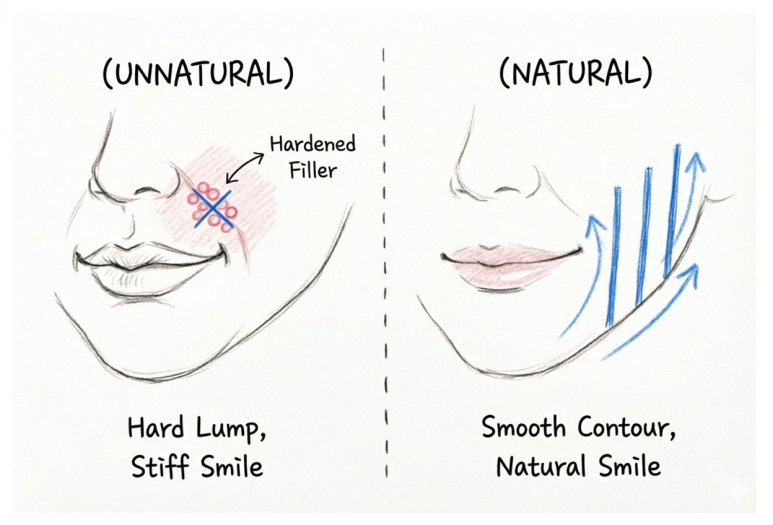
but I can feel something hard near the side of my mouth,
and it feels awkward every time I smile.
I gathered the courage to address the deep wrinkles that had been stressful every time I looked in the mirror, but if an unexpected result appears, the feeling of helplessness can be hard to put into words.
-
Causes of discomfort that can appear after nasolabial fold procedures
-
A precise diagnosis and customized treatment process to reduce concerns about side effects
-
How to maintain healthy skin after the procedure
Causes of discomfort that can appear after nasolabial fold procedures
Foreign-body sensation, nodules, and facial asymmetry
These are the symptoms patients most commonly report after a procedure. Rather than being simply an issue with the product itself, they are more likely to occur when understanding of the skin layers and the anatomical placement is off.
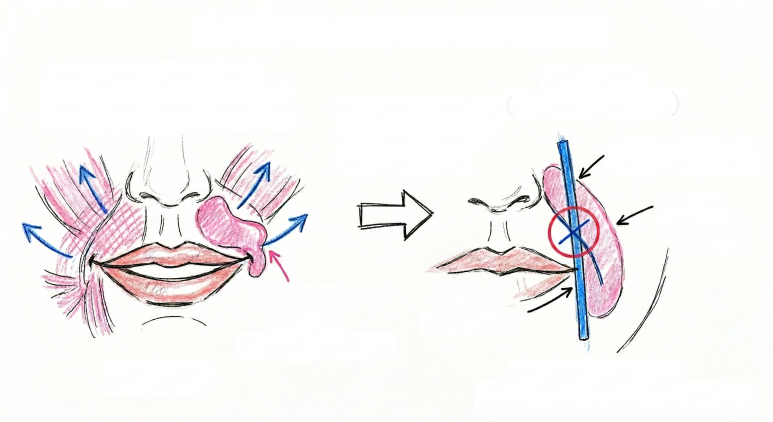
The nasolabial area is a place where the muscles around the mouth move very actively. Because the muscles contract strongly every time you eat or speak, there is a risk that the material used in the procedure may not stay in place and instead shift upward or clump together in one area.
It is similar to building a structure on soft mud: if the ground is not properly prepared, the building can tilt.
Because skin thickness and elasticity differ from person to person, injecting a uniform amount without considering these factors may leave the skin surface uneven or make smiling feel unnatural.
Also, if too much is added out of excessive desire, it can have the opposite effect, making the philtrum look longer or the area around the mouth look thicker. The key with nasolabial folds is not to eliminate them completely, but to adjust the "shadow" so it blends naturally with the surrounding tissue.
A precise diagnosis and customized treatment process to reduce concerns about side effects
Rather than looking only at the depth of the wrinkles, we analyze the overall aging progress of the face and the degree of sagging in the cheekbone area together.
| 3D facial analysis equipment is used to identify the density of tissues beneath the skin and the location of blood vessels that are not visible to the eye. |
This helps block the risk of nerve damage or vascular complications in advance and allows the most appropriate approach to be planned.
| 2. The movement of the muscles is examined in detail. |
By checking how the muscles change both when the face is at rest and when smiling broadly, the appropriate injection layer is determined so that the treated area does not look out of place under any expression.
| 3. Layering technique used by applying small amounts in multiple layers rather than adding a large amount at once |
Even if it takes a little more time, this method helps prevent nodules (clumping) and creates a much smoother result.
How to maintain healthy skin after the procedure
Even if the procedure is completed successfully, careful management is needed for the first 1–2 weeks. This is the golden time when the injected material settles stably between the skin tissues.
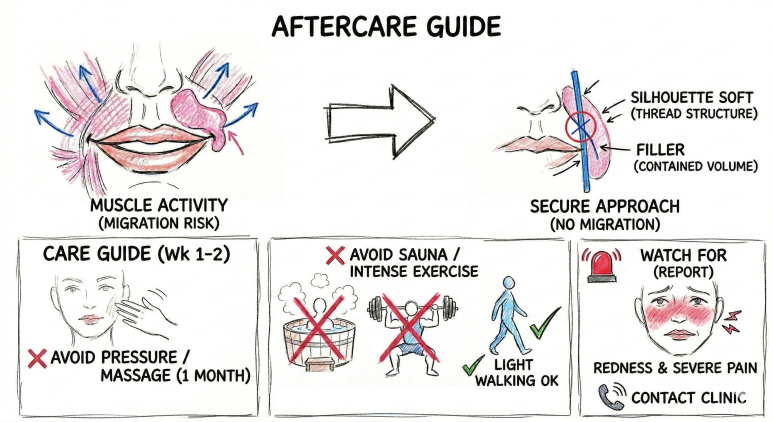
The most important thing to avoid is rubbing the treated area strongly or receiving a meridian massage. Strong external pressure can cause it to shift out of position and distort the shape, so pressure should be avoided for at least one month.
Also, overly hot saunas or intense exercise can suddenly increase blood flow and prolong swelling. A light walk can help, but activities that make sweat pour down like rain are better postponed for a while.
If the treated area suddenly becomes very red or you feel unbearable pain, do not hesitate to contact the clinic and have the condition checked. Prompt action is the way to prevent secondary problems.
An accurate diagnosis is the beginning of beauty. At Cheongdam Dermatology Clinic, our experienced medical staff take each patient's anatomical characteristics into account and aim for honest treatment that minimizes side effects.
This post was
written directly by Larian Cheongdam Clinic
for informational purposes
in compliance with Article 56 of the Medical Service Act and the Enforcement Decree of the same Act.
All procedures and surgeries may cause adverse reactions,
so please receive treatment only after
sufficient consultation with the medical staff.
Director Kang Ji-yeon, Larian Cheongdam Clinic