Are you perhaps looking for reviews of nasolabial fold treatment?
If you search through various reviews, you may see some people saying they saw noticeable results, while others say,
Why didn’t it work for me at all?
and end up feeling dissatisfied. The reason is that the cause of nasolabial folds differs from person to person. In this article, we’ll take a detailed look at why the same procedure or care can lead to different results, the key reasons behind that, and the types of wrinkles.
-
Why do nasolabial folds even form?
-
The 3 types of nasolabial folds
-
Finding the right approach for me
Why do nasolabial folds even form?
The wrinkles we commonly call nasolabial folds are not simply something that appears the same way as we age and lose skin elasticity. Because everyone has different bone structure, skin thickness, and amount of facial fat, the causes of nasolabial folds also differ.
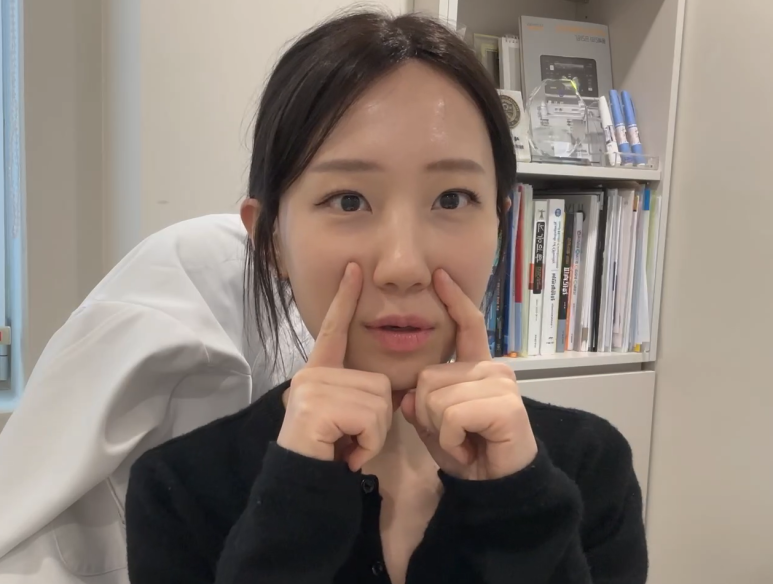
Therefore, rather than blindly following reviews just because others say they are good, it is most important to accurately identify the current condition of your face and the underlying cause of the wrinkles.
The 3 types of nasolabial folds
What causes them?
Nasolabial folds can be broadly divided into three types.
| First |
|---|
| Complete indentation type |
This first type applies to people whose area is truly sunken in. Due to structural issues beneath the skin or a loss of volume, the area beside the nose becomes physically depressed, creating a distinct shadow.
| Second |
|---|
| Fat sagging and excess type |
In this case, the area itself is not originally deeply sunken, but the upper fat sags and moves downward, or it appears in people who naturally have a lot of fat in that area. This type is seen in people whose cheek fat or the fat around the front cheekbone shifts downward, making the nasolabial area look relatively sunken.
| Third |
|---|
| Surface wrinkle type |
This refers to people who have almost no deep indentation in the nasolabial fold area, but have shallow line-like wrinkles along the skin surface. In most cases, the outer skin folds lightly, and thin wrinkles are formed only on the surface.
Finding the right approach for me
Because the causes and forms of wrinkles are broadly divided into these three types, the approach we need to take to solve the problem must be completely different depending on the type.
For example, the method needed for someone with a deep indentation cannot be the same as the method needed for someone whose folds were caused by sagging fat, right? Rather than simply trying to erase the visible line on the surface, you can only achieve truly satisfying results by diagnosing the type of your wrinkle and setting a customized treatment direction accordingly.
If you are stressed because of nasolabial folds or are looking through related treatment reviews and feeling uncertain, first of all, carefully check which of the three types mentioned above you fall into. Correctly identifying the cause is the first step toward a successful result. Cheongdam Dermatology Clinic is always here to help.
This post was
written directly by Larian Cheongdam Clinic
for the purpose of providing information
in compliance with Article 56 of the Medical Service Act and its Enforcement Decree.
All procedures and surgeries may cause adverse reactions,
so please receive treatment
after sufficient consultation with the medical staff.
Director Kang Ji-yeon, Larian Cheongdam Clinic