When your skin elasticity no longer feels the same as before, or you feel that your facial contours have become less defined, many people look for ways to improve the condition without surgery. The procedures often compared at this point are Emface, Ulthera, and Shurink lifting. Because each has a different mechanism of action and different expected changes, it is important to understand the principles and consider the direction that best fits your own condition rather than choosing based on the name alone.
- How are Emface, Ulthera, and Shurink Lifting different?
The biggest difference among the three procedures is
not how they pull the skin,
but the layer they stimulate and the method they use.
To put it simply, if you were repairing the same house, it would be different depending on whether you are changing the wallpaper, reinforcing the pillars, or fixing the electrical wiring.
| Emface | A method that stimulates both the muscles and the skin |
|---|
| Ulthera | A method that uses ultrasound to stimulate deeper layers |
| Shurink lifting | A method that uses ultrasound in a relatively gentle and broad way |
Because of this difference, the changes you may feel and the people for whom each procedure is suitable can also differ.
- The mechanism and features of each procedure
Emface
It is characterized by using radiofrequency and electrical stimulation together to stimulate both the facial muscles and the skin. Since facial muscles are often not used much in everyday life, stimulating these muscles may help build the foundation for elasticity. It can be understood as an approach that targets structural aspects rather than the skin surface.
Ulthera
It uses high-intensity focused ultrasound to deliver energy to the deeper layers of the skin, especially the SMAS layer. It works by stimulating specific points inside the skin like dots, inducing changes in elastic tissue. Because it targets relatively deep layers, it may be considered when sagging is noticeable.
Shurink Lifting
It also uses ultrasound, but its feature is that it disperses energy and stimulates a relatively wide area more gently than Ulthera. For that reason, it is sometimes mentioned as an option for those considering a lifting procedure for the first time or for those who want to minimize the burden.
- In what cases can you consider choosing it?
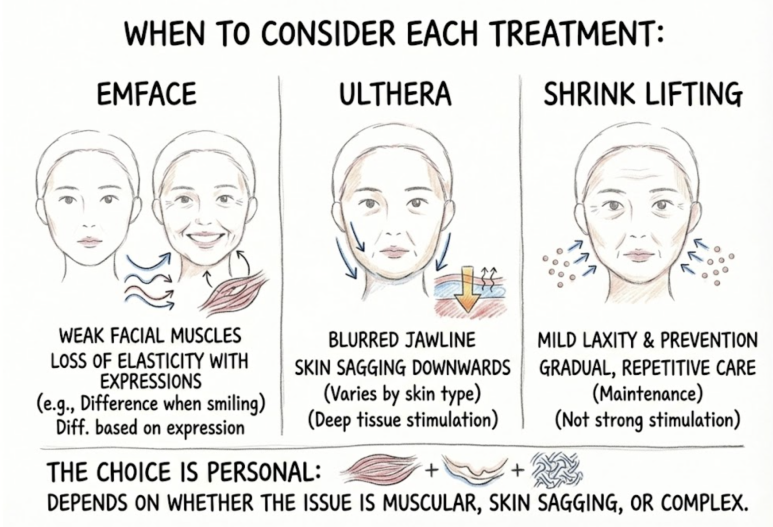
Emface
It can be considered when facial muscle strength appears weak or when there is a feeling of reduced elasticity due to facial expressions. For example, if you feel a large difference in elasticity between when you smile and your face at rest, a muscle-stimulating approach may be helpful.
Ulthera
It is often reviewed when the jawline has become less defined or when the skin feels as if it is being pulled downward. However, the experience can vary depending on factors such as individual skin thickness, degree of sagging, and sensitivity to pain.
Shurink Lifting
It can be approached in cases of relatively mild loss of elasticity, for preventive purposes, or when gradual care is desired. It may be helpful to understand it as a concept closer to repeated management rather than strong stimulation.
In the end, rather than concluding that one procedure is better than another, the direction of choice may differ depending on whether the current condition is mainly a muscle issue, skin sagging, or a combination of both.
- Things to check before the procedure and precautions
When considering a lifting procedure, it is important to first check your own skin condition rather than focusing only on the name of the device. Skin thickness, amount of fat, the location of sagging, and lifestyle habits can all have an effect.
Also, because each procedure has a different stimulation depth and method, the expected discomfort and recovery process can differ as well. If you are sensitive to pain, it is a good idea to check in advance through thorough consultation whether there are adjustable factors.
Rather than expecting major changes from a single procedure, it is helpful to set realistic standards for how much improvement you want from your current condition. This is because the number of sessions needed and any combined care may differ depending on the individual.
- Additional care methods to consider
To maintain or complement the effects of a lifting procedure, daily care is also important. Hydration, sun protection, and regular sleep are basic elements.
In addition, habits such as excessively tensing facial muscles or chewing only on one side can also affect elasticity. In some cases, simply reviewing these lifestyle habits can lead to noticeable changes.
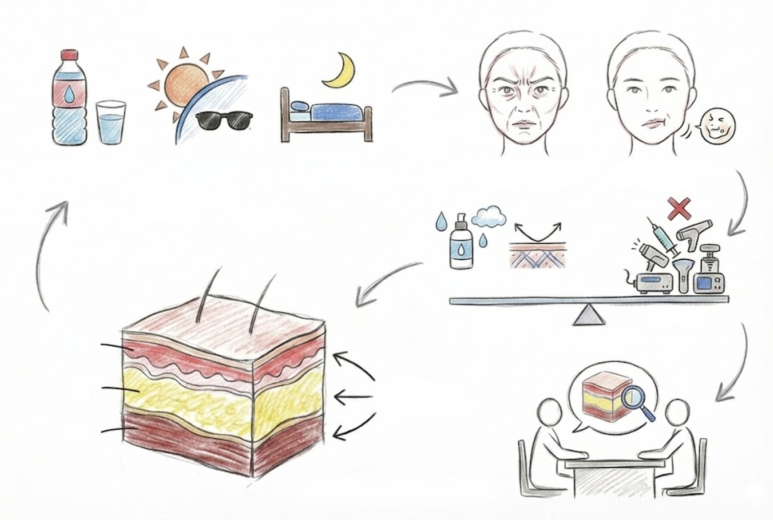
Depending on skin condition, combining moisturizing care or an elasticity-related care program may also be helpful, but rather than overlapping too many procedures, a balanced approach suited to the current condition is important.
When choosing a lifting procedure, it is important to consider not just the name but also the mechanism of action and your own condition. Facial elasticity is the result of the combined effects of skin, fat, and muscle, so it is difficult to judge based on just one factor. If you want to carefully check the cause of the changes you are feeling now, consulting with Cheongdam Dermatology about the direction that suits your condition may also be helpful.
This post was
written directly by Larian Cheongdam Clinic
for informational purposes
in compliance with Article 56 of the Medical Service Act and the Enforcement Decree of the same Act.
Because all procedures and surgeries may cause
adverse reactions,
please receive treatment only after
sufficient consultation with the medical staff.
Director Kang Ji-yeon, Larian Cheongdam Clinic