Hello, this is AB Plastic Surgery.
Today, with Director Ahn Seung-hyun,
we will take a look at the questions people often ask
when having facial contouring surgery.

Because contouring surgery is performed through an incision inside the mouth, the inside of the mouth swells
and the muscles around the mouth become less responsive, so your pronunciation may be unclear after surgery.
To speak normally without discomfort, people who recover quickly usually need about 2 weeks after surgery,
and people with a lot of swelling usually need about 1 month after surgery.

When performing contouring surgery, the area around the nerve that provides facial sensation is dissected.
Dissection means separating the flesh and skin from the bone.
When the tissue is moved to secure the field of view for cutting the bone, the nerves are pulled and stretched,
which can interfere with nerve signal transmission and cause facial sensation to become dull after surgery.
This symptom is normal, and you can think of it as the nerve temporarily going numb.
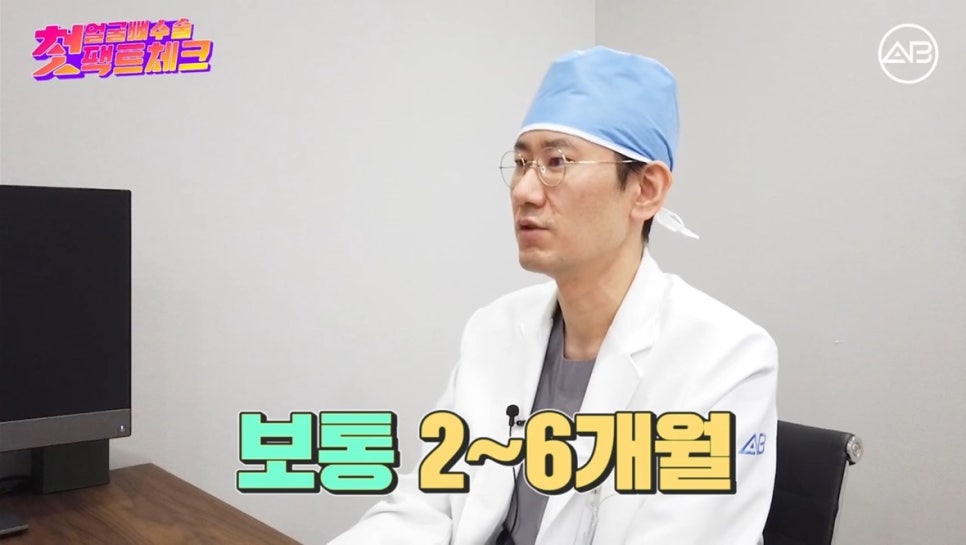
However, nerves recover very slowly.
For facial sensation to return to normal, it usually takes 2 months to 6 months, and in some cases even longer.
If the nerve has not been cut, most cases return to normal, so if your facial
sensation is not normal after surgery, there is no need to worry.

Some people can see a dramatic change and have a smaller face after contouring surgery,
while others do not.

The effects of contouring surgery can be broadly divided into three points.
First, as the horizontal and vertical proportions of the face change, the face looks slimmer.
Second, the facial line becomes softer and smoother.
Third, as the empty spaces in the face are reduced, the face looks smaller.
These are the three main effects, but the 기준 for a smaller face is the shape of the head.
Because the size of the head cannot be reduced, people whose cheekbones and jaw are large compared with the head shape can see the effect of a smaller face,
but people whose face is large and whose head shape is also large may find it difficult to see a major effect from contouring surgery.

Usually, orthodontic treatment is done to bring in a protruding mouth or to align the teeth, but contouring surgery does not affect
the teeth or the mouth.
Conversely, it can also be said that the teeth have almost no effect on the surgical plan or results of contouring surgery.
Therefore, the order of orthodontic treatment and jawbone surgery does not matter.
Whether you have jawbone surgery before orthodontic treatment, after it, or during it, the final result does not change much, so
when deciding on the timing of contouring surgery, you do not need to worry much about orthodontic treatment.

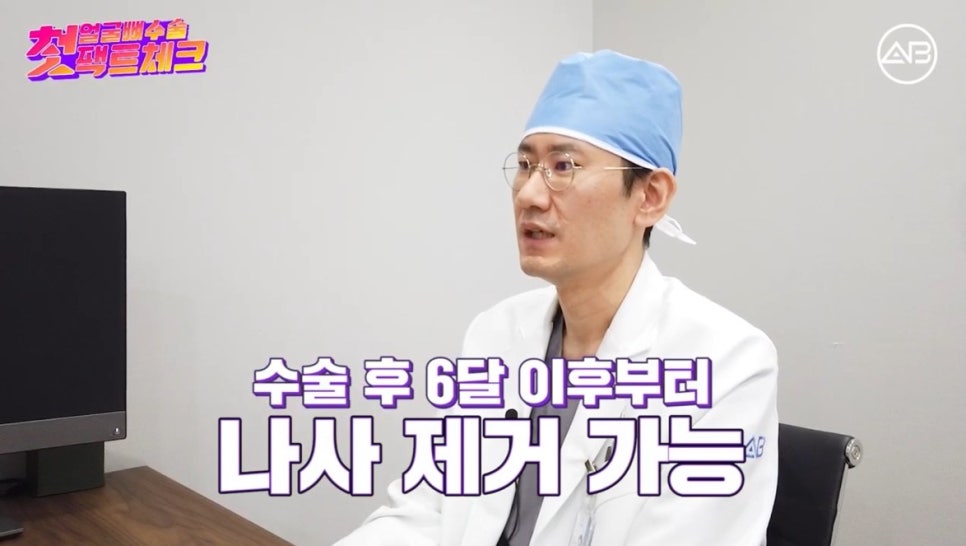
Fixation screws can be kept for life, or they can be removed.
After contouring surgery, once the facial bones have fused, it is fine to remove the fixation screws.
Because the bones remain well fixed as they are, the fixation screws can be removed,
and usually screw removal is possible starting 6 months after surgery.

The reason contouring surgery hurts is not because the bone is cut and it hurts,
but because pain occurs when the mucosa inside the mouth, the muscles, and the periosteum that covers the bone are cut from the mucosa to the bone.
Since bones do not have nerves that feel pain, cutting the bone itself is not what causes pain.
For people with severe pain, it can be controlled with pain relief injections.