Hello, this is AB Plastic Surgery.
Today, together with Director Ahn Seung-hyeon,
we will learn about square jaws.
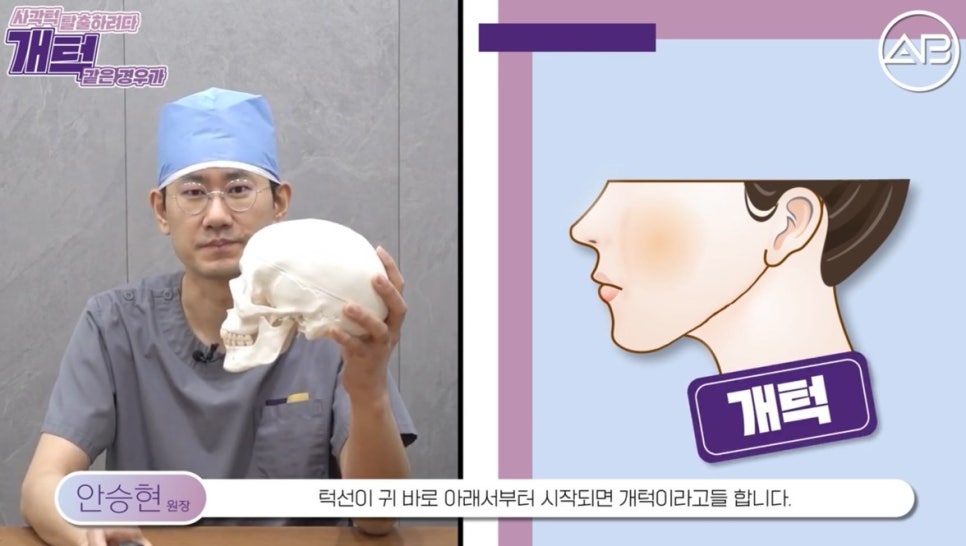
The angular area of the square jaw seen below the ear is called the gonial angle.
When too much of the gonial angle is cut away, the visible gonial angle disappears,
and if the jawline starts right below it, this is called a gaejaw.
If the chin tip is also too pointed at this time, people may say it looks like comb-patterned earthenware.

Among those who come for square-jaw consultations, many think that because their jaw is large, they need to cut away a lot of bone
in order for the face to become smaller and slimmer.
However, cutting more and making the face smaller do not necessarily align with looking prettier.
In plastic surgery, it is important to become more attractive without looking unnatural.
To avoid looking unnatural, it is more natural to leave a little of the gonial angle rather than cutting it away too much and making it look like a gaejaw.
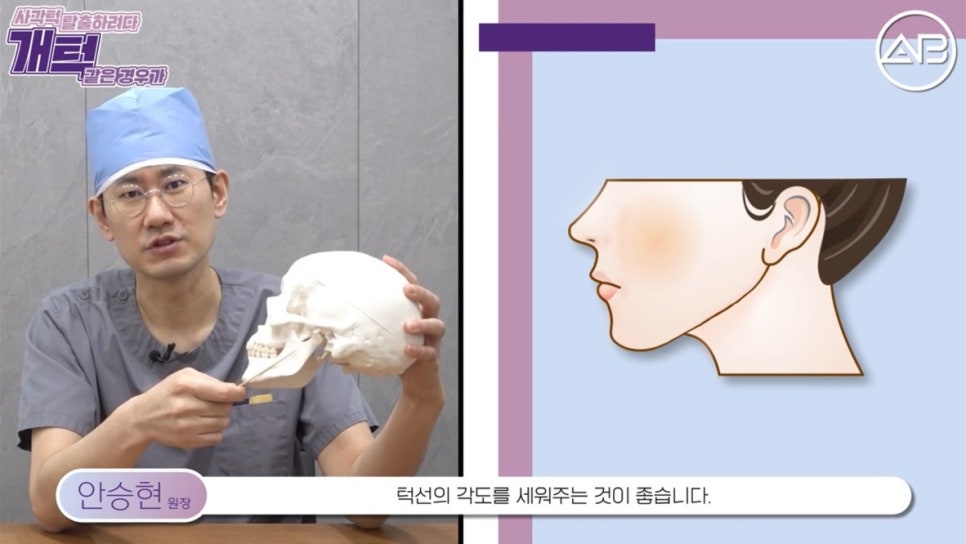
A square jaw seen below the ear should look somewhat natural, and the angle of the jawline that connects from the chin tip to the gonial angle
should be neither too steep nor too shallow for a beautiful jawline.
Another important point is that leaving the gonial angle does not mean the face becomes less slim.
You need to leave the gonial angle in a way that suits your face, and at this time the facial proportions and the angle of the jawline are important.
If the overall face looks long, leave more of the gonial angle and cut mainly the side jaw so that the jawline angle is laid back and the face looks less long.
If the face is short, it is better to leave relatively less of the gonial angle and make the jawline angle more upright.
Of course, the individual preferences of the person undergoing surgery should also be reflected.
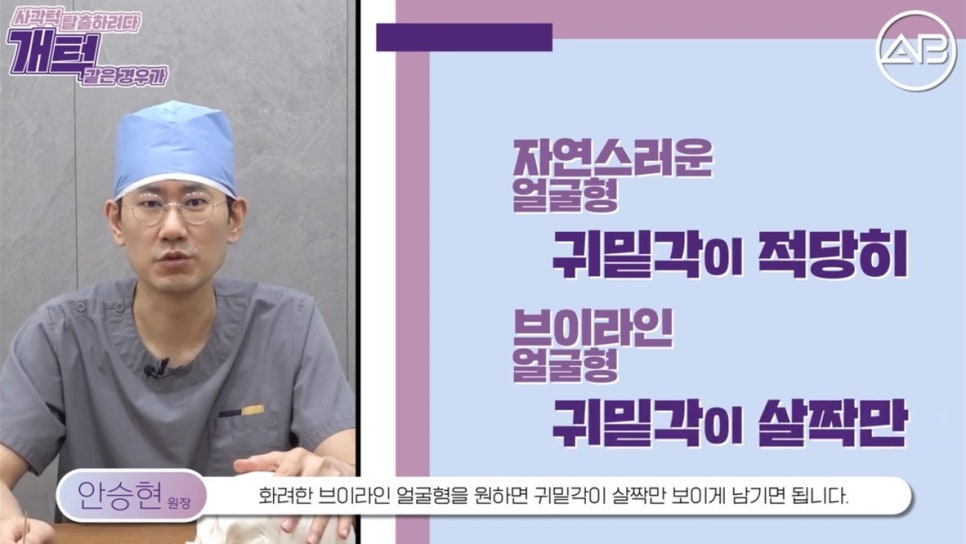
If you want a natural face shape, leave enough of the gonial angle so that it is moderately visible.
If you want a glamorous V-line face shape, leave it so that only a slight part of the gonial angle is visible.
In particular, for men, having the gonial angle visible to some extent helps create a more masculine jawline.
Another important point is the original shape of your jaw.
Some lower jaws are curled inward from the front to the back, while others flare outward.
A jaw that flares outward can show a slimmer effect sufficiently from the front.
However, with an inward-curled jaw, cutting the square jaw may improve the jawline seen from the side,
but the change in width seen from the front is not very large.
With this kind of jaw, for a frontal slimming effect, what matters more than the gonial angle area is slimming the side jaw.
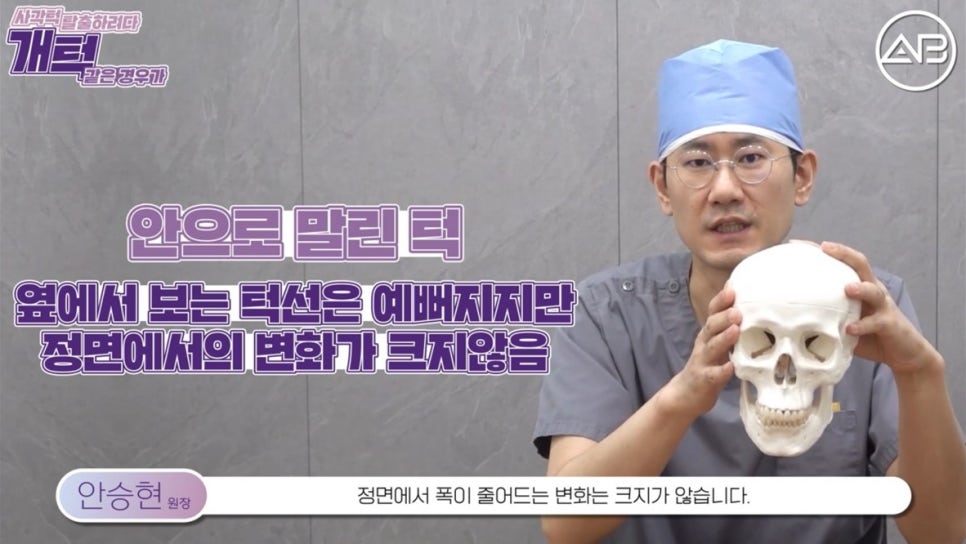
Even when viewed from the side, an inward-curled jaw tends to appear relatively less prominent on the outside compared with an outward-flaring jaw,
even if some of the gonial angle remains.
Because a curled jaw does not necessarily improve just by being cut a lot and only becomes unnatural,
it may be good to consider these points and receive a consultation about your surgical plan.
Today, we looked at over-resection of the square jaw and gaejaw.
Cutting away as much as possible is not always the best; for a balanced face,
it is important to resect appropriately according to your own face.