Hello, this is AB Plastic Surgery.
Today, together with Director Seo Chan-eol,
we will look at the conditions for a nose that could look especially good after nose surgery.
This topic is a subjective opinion from the perspective of consultation and surgery—namely, that even with the same procedure, noses with these conditions may look prettier and produce better results—so I hope you can read it comfortably.
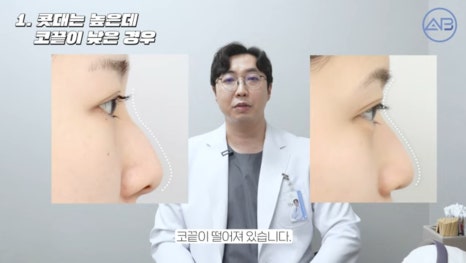
The first is a nose with a high bridge but a low tip.
Many hump noses have a bridge like this, but the tip is dropped.
People like this often feel that the nose is only about 2% lacking because of the drooping tip.
If the tip is lifted and the hump along the bridge is refined, the nose can look much more sophisticated.
The second is when the facial proportions are good.
When the middle third of the face is an appropriate length, surgery can create a nose that feels balanced and three-dimensional.
Our face can be divided into the upper face, middle face, and lower face.
The middle face refers to the area from the eyes to the tip of the nostrils.
In textbook terms, a ratio of 1:1:0.8 or 1:1:1 is considered most appropriate.
If rhinoplasty is performed when the middle third of the face is proportionally long, the face may appear longer overall; if it is short, the nose may develop a sharply curved look.
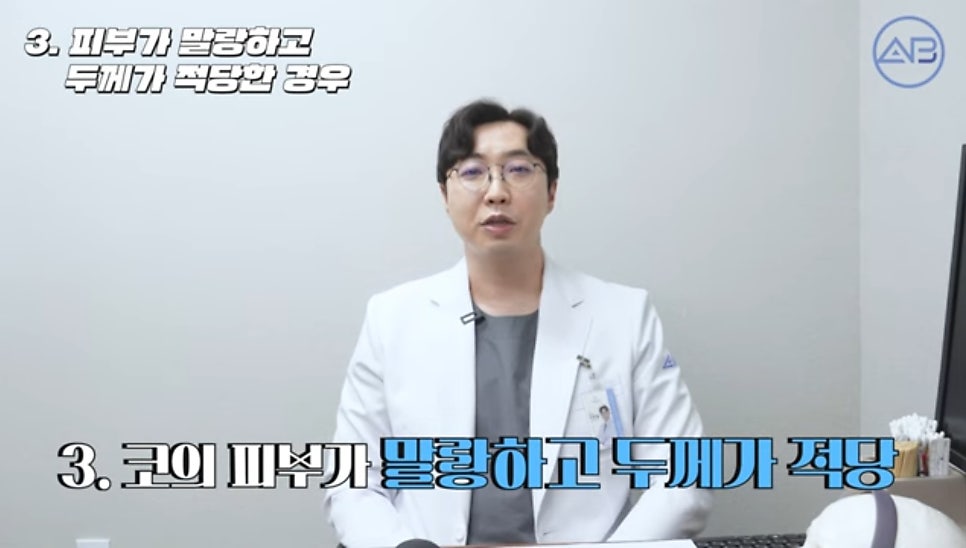
The third is when the nasal skin is soft and of moderate thickness.
Such skin stretches well and has an appropriate thickness, so there is no issue with an implant showing through or the tip feeling overly palpable.
There are no major limitations in choosing an implant or in the height that can be achieved.
In other words, it means the nose can be created in the desired height and line without much restriction.
On the other hand, if the skin is too thick and tough, it does not stretch well, and if it is too thin, the implant at the tip may show through or the firm structures at the tip may be felt.
Because of this, there can be limitations when selecting an implant or raising the tip height.
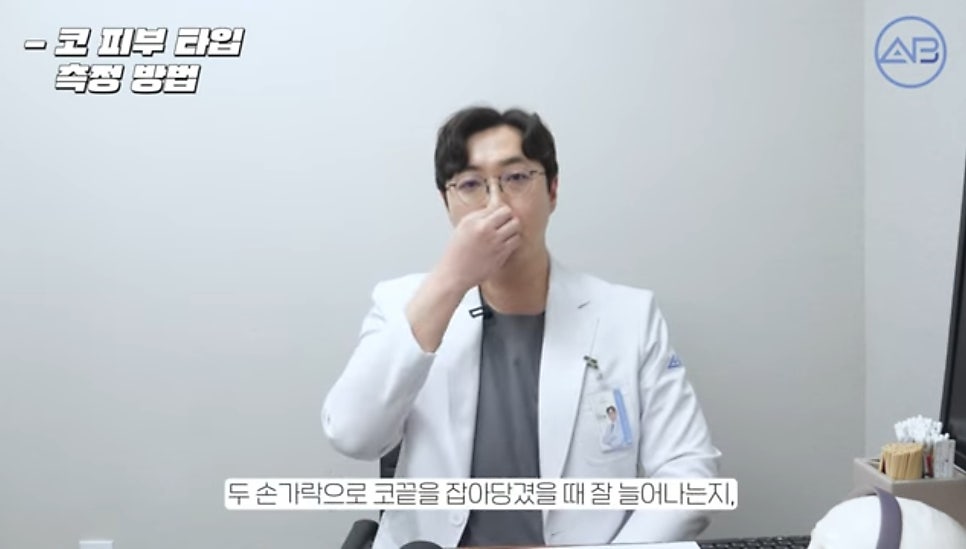
If you pull the tip of your nose with two fingers and check whether it stretches well and moves easily up, down, left, and right, you can tell whether it fits these conditions.
Today, we looked at the conditions that are favorable for nose surgery.
I hope you do not worry too much if you do not fit the conditions I mentioned.
Even within the conditions you have—such as bridge height, nose length based on facial proportions, and skin thickness—there are techniques that can help create a beautiful nose while appropriately addressing those limitations.
What matters most is to consult directly with a specialist, confirm what you want and what is possible, and establish an appropriate surgical plan.