Hello, this is AB Plastic Surgery.
Today, together with Director Seo Chan-eol,
we’ll look at the causes of nostril asymmetry and
see how it can be improved depending on the type.


First, let’s look at the causes.
The first is when the columella in the center of the nose is crooked, creating nostril asymmetry.
The second is when the lower lateral cartilages that form the roof of the nose are asymmetrically positioned.
The third is when the skin thickness that makes up the alar base differs, or when the position or width differs,
which can also cause nostril asymmetry.

It is difficult to achieve perfect symmetry through surgery, but if the cause is identified accurately
and correction is focused on that cause, the difference can be minimized as much as possible.


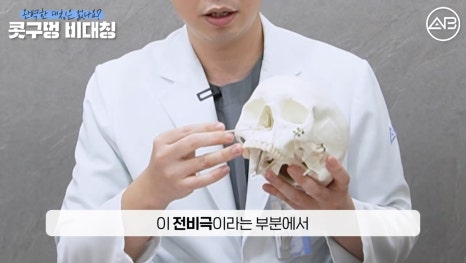
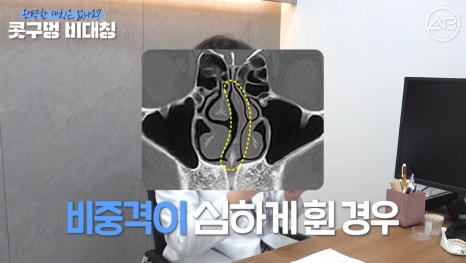
First, let’s talk about cases where the columella is crooked.
In cases where the columella is crooked, the septal cartilage that supports the nasal cartilage should normally be attached to the center of the anterior nasal spine,
but in some cases it is attached asymmetrically instead.
This usually applies to cases where the septum is severely deviated.

In such cases, the incorrectly attached part is removed, the structure is realigned to the center of the anterior nasal spine,
and both sides are fixed symmetrically to improve this asymmetry.

Second, when there is a difference in the size or height of the alar cartilage,
it can be corrected by identifying it and reinforcing it,
or by repositioning it.


First, in cases where the size is different, septal cartilage or ear cartilage can be used
to reinforce the area and reduce the difference.
In cases where there is a height difference, the lower alar cartilage can be lifted to match the other side,
then fixed again to overcome the asymmetry.

Third, differences in the position or width of the alar base are
the most common cause of nostril asymmetry.

Among these, facial asymmetry is the biggest cause.
When the heights of the left and right cheeks differ, the length of the alar rim extending from the tip of the nose to this area can differ,
which creates this discrepancy.
In such cases, asymmetry can be resolved by reducing the alar base differently on each side.



Sometimes this asymmetry appears after surgery as well.
However, rather than symmetry becoming asymmetry, it is much more common for small preexisting differences to become more noticeable as the nose becomes higher.
Also, because this can temporarily occur due to differences in swelling,
it is best to monitor the progress while the swelling goes down.
If a noticeable asymmetry remains even after enough time has passed and the swelling has subsided significantly,
it may be necessary to identify the cause and perform partial correction.
Today, we looked at nostril asymmetry.
In fact, very few people have perfect symmetry. But if you feel that this asymmetry is too noticeable
and it is causing you stress, consulting with experienced specialists can be helpful.