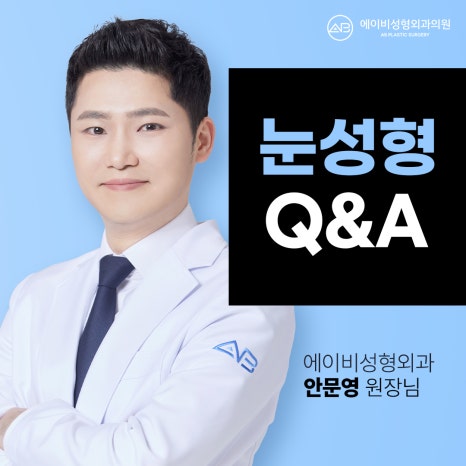

Hello, I’m Director Ahn Min-young of AB Plastic Surgery.
I’ll answer the questions you’ve been curious about.
Q. If it is hard to open the eyes, do you have to have ptosis correction?
A. If it is hard to open the eyes, I recommend ptosis correction if possible.
However, whether ptosis correction is necessary can vary depending on whether the problem is that the eye-opening strength is truly weak, or whether it only appears weak because of sagging skin.
First, ptosis correction may be a familiar term to some people and a very unfamiliar term to others.
In plastic surgery, ptosis correction refers to adjusting how much the eyelid skin covers the pupil.
The more the pupil is covered by the eyelid, the sleepier and more closed-off the eyes look,
and if the eyelid covers the pupil only to an appropriate degree, the eyes can look clearer.
That is why many people commonly know it as a procedure done to improve sleepy-looking eyes.
It is also an effective method for cases such as asymmetry in the strength of opening both eyes, weakened eye-opening muscles due to aging, or when a double eyelid has been created but
the crease is faint. After surgery, the eyes can
look more defined, helping improve the image to one with clearer, brighter eyes.
The challenging part of ptosis correction is that the strength of the eye-opening muscles can differ from person to person, or asymmetry can be caused by differences in the use of the forehead muscles on both sides. In very severe cases, the strength of opening the eyes can differ greatly between the two sides, so even as correction is performed, asymmetry may become even more pronounced. That is why this is a difficult field.
Therefore, it is very important to make an accurate assessment of the current eye-opening condition
and then determine the need for ptosis correction and adjust the extent of correction accordingly.
I hope this answer was helpful.
If you have any other questions, please leave them in the comments and I’ll answer them.
Thank you.