Hello. This is AB Plastic Surgery.
One of the aspects that many people considering rhinoplasty think about most deeply during their consultation is the “choice of implant.”
While autologous cartilage may be the most ideal material, depending on the purpose of the surgery, the patient’s anatomical characteristics, and the desired shape, using a silicone implant is often unavoidable or can produce better results.
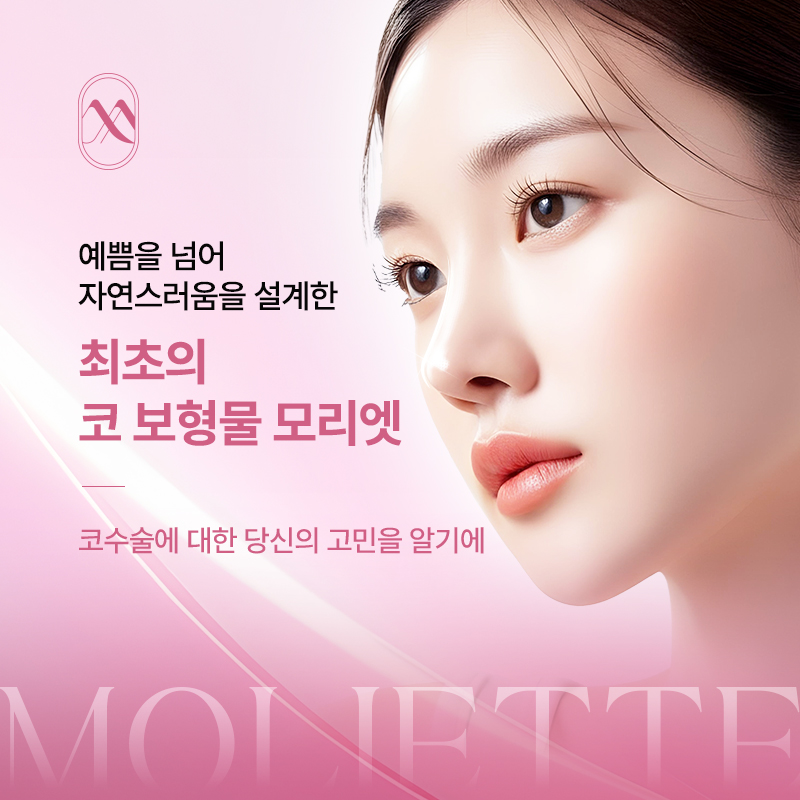
Until recently, 3D customized implants have attracted considerable attention in the rhinoplasty market.
However, the waiting period required for custom production has been a drawback for both patients and hospitals.
To overcome these limitations and maximize the advantages of ready-made implants, the next-generation premium silicone implant “Moriet” was officially launched in April 2026.
Today, from the perspective of a plastic surgery specialist, I would like to discuss Moriet’s technical characteristics as experienced firsthand in clinical practice, as well as their clinical significance in actual surgical outcomes.
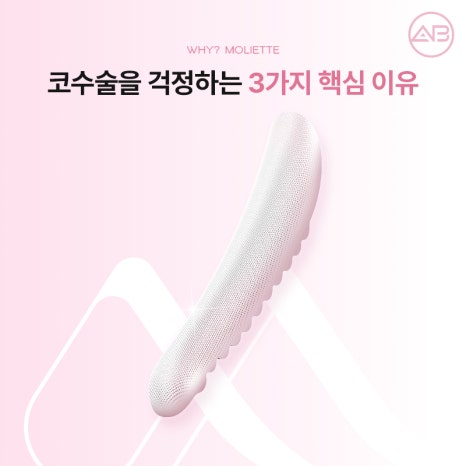
- Micro-texture Technology That Maximizes Tissue Adhesion
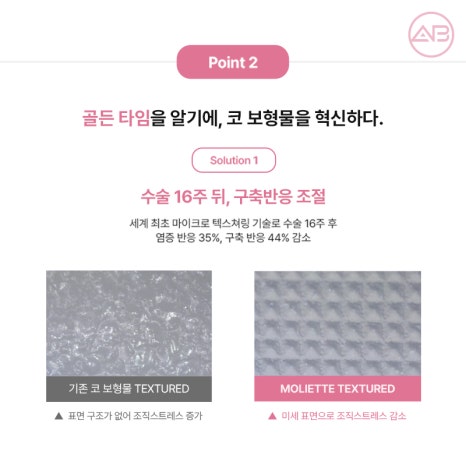
One of the side effects that patients are most concerned about after implant insertion is implant displacement or visibility through the skin. Moriet applies precision micro-texture technology to the implant surface to stably promote adhesion with the surrounding tissue. This plays a key role in ensuring that the implant does not shift within the inserted pocket but instead settles firmly, helping the design achieved immediately after surgery remain unchanged over the long term.
- Structural Design to Prevent Capsular Contracture and Bending
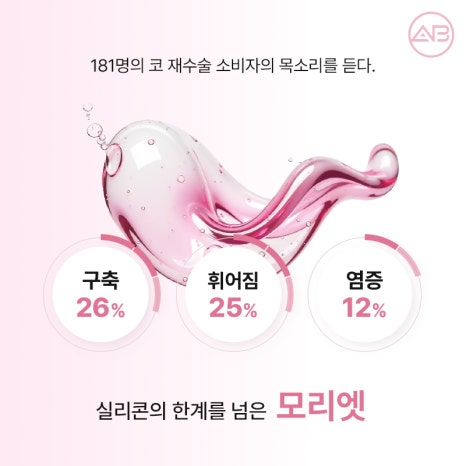
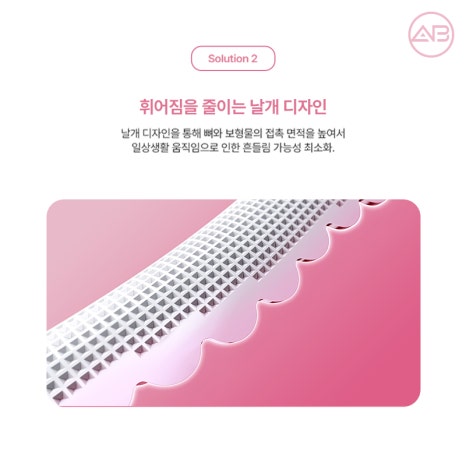
When a foreign material is inserted into the body, the body naturally forms a capsule around it. When this capsule contracts excessively and abnormally, causing deformation of the nose, the condition is known as “capsular contracture.” Moriet increases the structural stability of the implant itself through an ergonomic, three-dimensional base design.
This not only helps prevent upward rotation of the nasal tip and asymmetry caused by capsular contracture, but also fits precisely against the anatomical contours of the nasal bones and cartilage, effectively suppressing the complication of the implant bending over time.
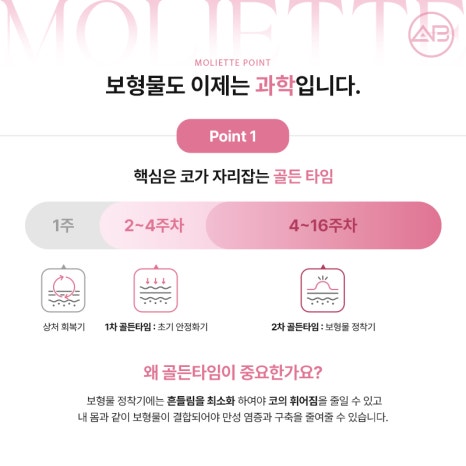
- A “Micro-texture” Hybrid Solution Delivering the Fixation of 3D Customized Implants
One of the major reasons for reduced satisfaction after rhinoplasty is the implant slipping or moving from side to side because it has not settled securely on the periosteum.
Until recently, “3D customized implants” were primarily used to prevent this by precisely matching the structure to the contours of the patient’s own bone and controlling movement. However, this inevitably involves a long production wait and high costs.
Rather than individually matching the structure, Moriet implants address this issue through an entirely different mechanism: “adhesion with the tissue.”
Moriet’s proprietary micro-textured surface quickly and strongly bonds with the surrounding tissue, providing firm, stable fixation comparable to that of a 3D implant despite being a ready-made implant.
As a result, patients can undergo surgery immediately at their desired time without having to wait a long time for a customized implant, while still obtaining stable results without concerns about implant displacement or dislodgement. From the surgeon’s perspective, it is also an excellent alternative that allows established surgical protocols to be applied as they are, maximizing predictability and surgical quality.
- Cases in Which We Recommend Moriet Implants
In clinical practice, after meeting and operating on a wide range of patients, there are cases in which a particular material or implant is anatomically more suitable.
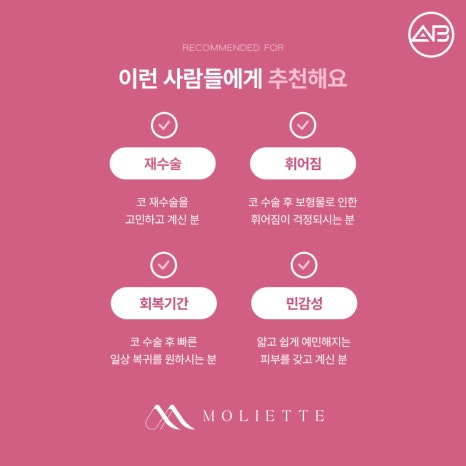
I recommend that patients who visit us with the following concerns actively consider Moriet, a next-generation implant.
-
Patients planning revision surgery who have significant concerns about “capsular contracture” and “implant displacement”
-
Patients undergoing their first surgery who have significant concerns about “capsular contracture” or “inflammation”
For patients whose nasal tips have become elevated or whose nasal shape has changed due to capsular contracture around a previously inserted implant, as well as those who have experienced the complication of an implant moving because it was not securely fixed, structural stability is the top priority during revision surgery. Moriet’s micro-textured surface and three-dimensional base design promote stable adhesion with the tissue, making it advantageous for significantly reducing the risk of capsular contracture and implant displacement, which are major reasons for revision surgery.