Hello. We are Chang Dermatology, your beauty partner, opening the window to confidence through dermatology.
As the cold wave returns, more people are becoming concerned about their skin health in the cold, dry weather.
Our skin is affected by the weather, temperature, humidity, and lifestyle habits, but it is also significantly influenced by the aging process that comes with getting older.
As changes gradually begin to appear in the skin with age, the passage of time may feel increasingly noticeable, causing concerns to build up.
A Lifting Procedure to Improve Sagging Skin and Fine Lines
As interest in skin care continues to grow, procedures designed to improve signs of aging are also continuing to emerge.
It is encouraging that skin concerns can be addressed with such precision, but some people may instead feel confused because there are so many types of procedures available.
For those in this situation, the procedure we will explain today is Apgujeong thread lifting.
Apgujeong thread lifting is a method that combines various types of threads according to the purpose of the procedure and the individual characteristics of the skin, allowing for a customized treatment.
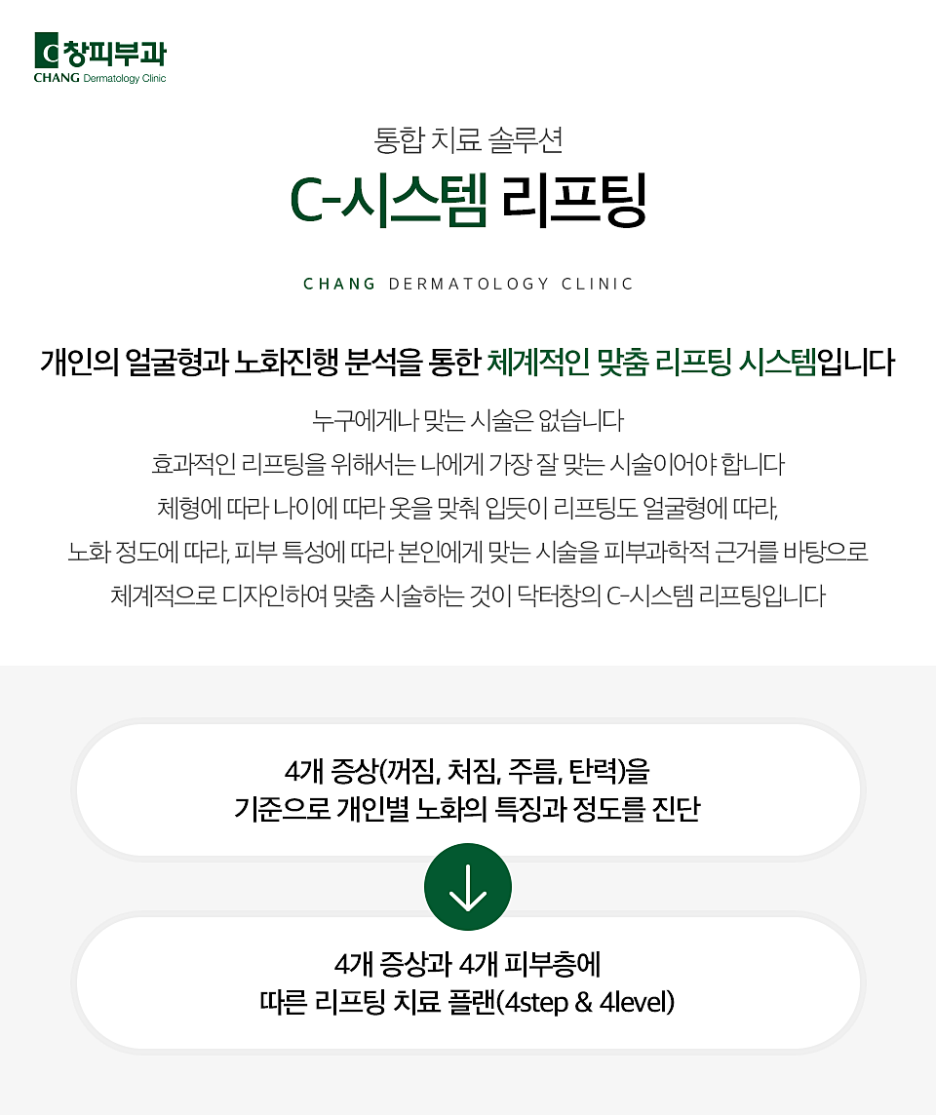
What Is C-System Lifting?
Before Apgujeong thread lifting, our clinic conducts a C-System diagnostic process and determines the appropriate type, placement, and direction of the threads for each individual.
Because the treatment approach is established based on comprehensive diagnostic results, you can expect more natural and attractive changes while regaining confidence through youthful, firm skin and beauty that lasts for a long time.
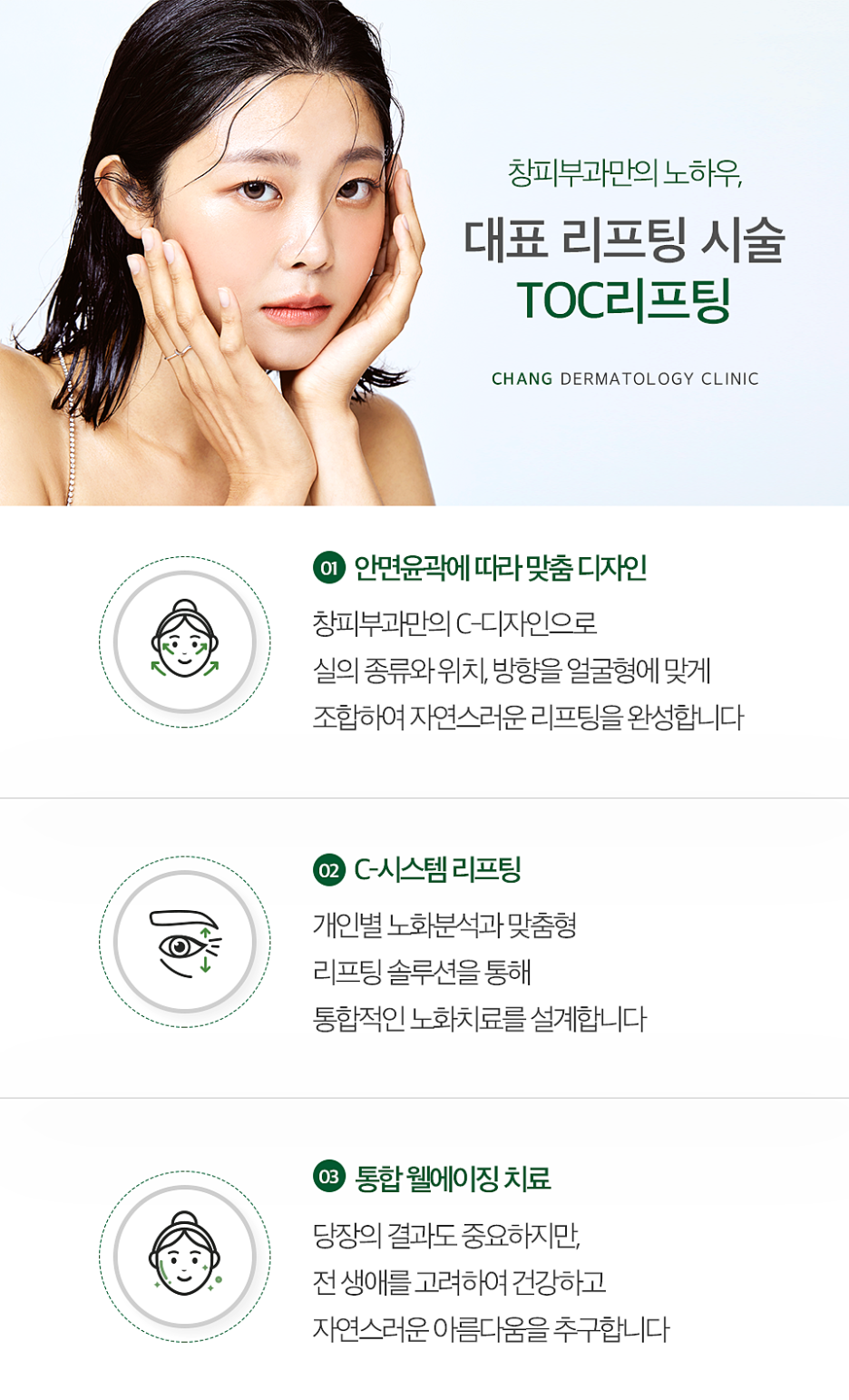
What Is Apgujeong TOC Thread Lifting?
Then what exactly is Apgujeong TOC thread lifting?
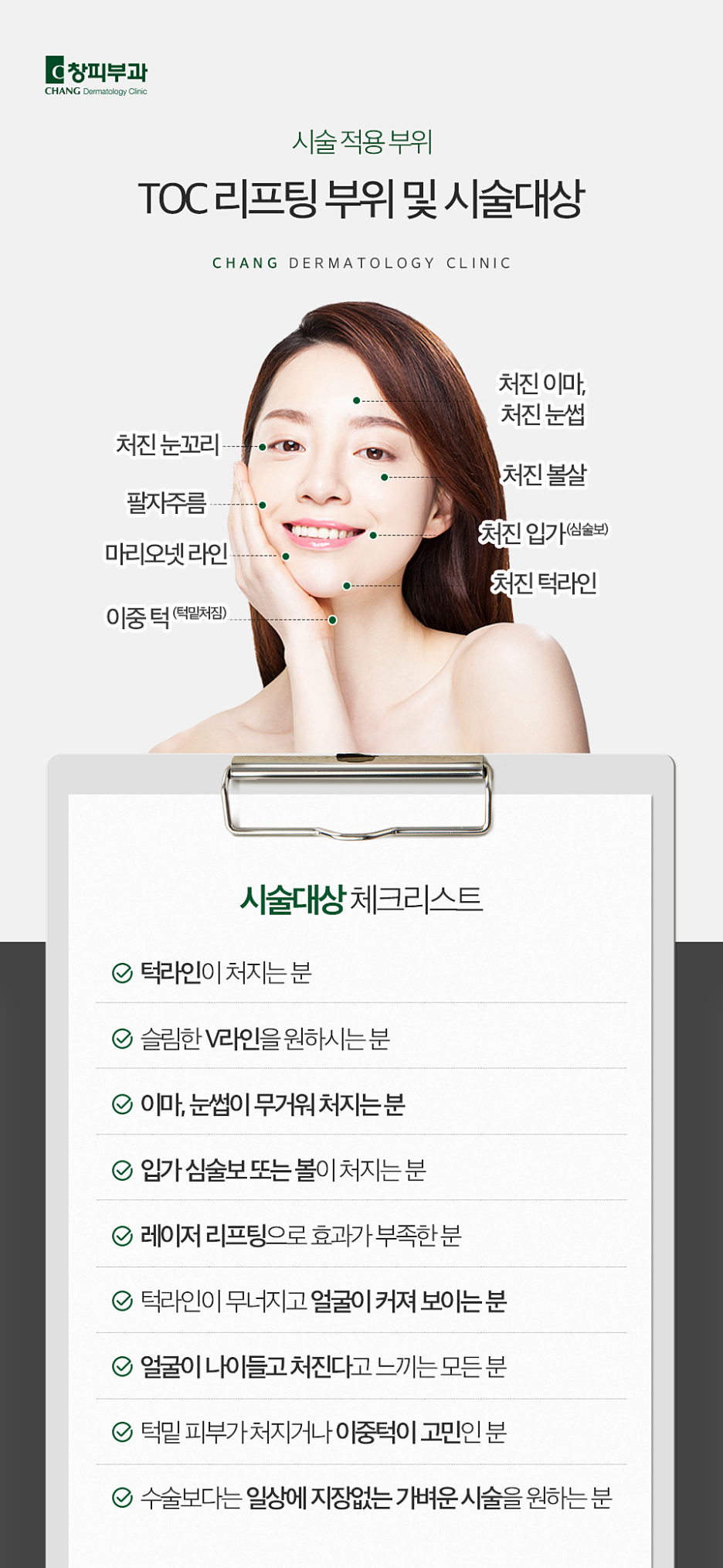
It is a method that optimally combines several types of threads to lift sagging areas and create an attractive facial line.
People concerned about a sagging jawline, drooping corners of the mouth, or sagging cheeks, as well as those who want a slim V-shaped face line, may achieve a high level of satisfaction with this procedure.
It can also be an appropriate option for those who feel that laser lifting alone is insufficient or who want natural changes through a less intensive procedure.
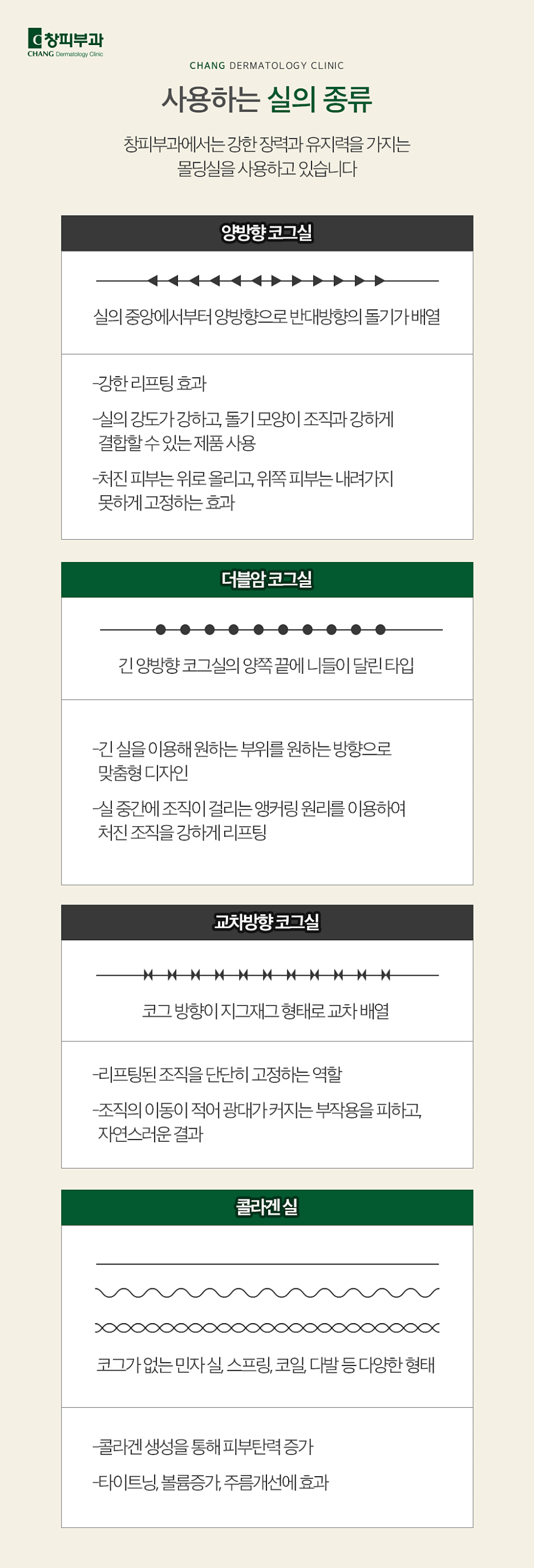
What Types of Threads Are Used?
The threads used in Apgujeong thread lifting can be classified as bidirectional cog threads, double-arm cog threads, cross-directional cog threads, and collagen threads.
It is important to combine the threads that are appropriate for each individual according to their types and characteristics.
Bidirectional cog threads are strong, while double-arm cog threads are longer, allowing the desired areas to be designed precisely in the desired direction.
Cross-directional cog threads help firmly secure the tissue, and because there is less tissue movement, they may reduce the risk of side effects.
Collagen threads are designed to increase skin elasticity and improve wrinkles by promoting collagen production.
The Key to Thread Lifting Is ‘This’
With thread lifting, it is very important to find the optimal solution by combining several types of threads and designing the treatment precisely.
Therefore, expertise is needed to understand not only the types of threads but also the strengths and characteristics of each thread, while comprehensively considering the individual characteristics of the person receiving the procedure.
At our clinic, the procedure is intended to achieve combined effects rather than simply lifting sagging skin—for example, filling hollow areas and reducing excess tissue.
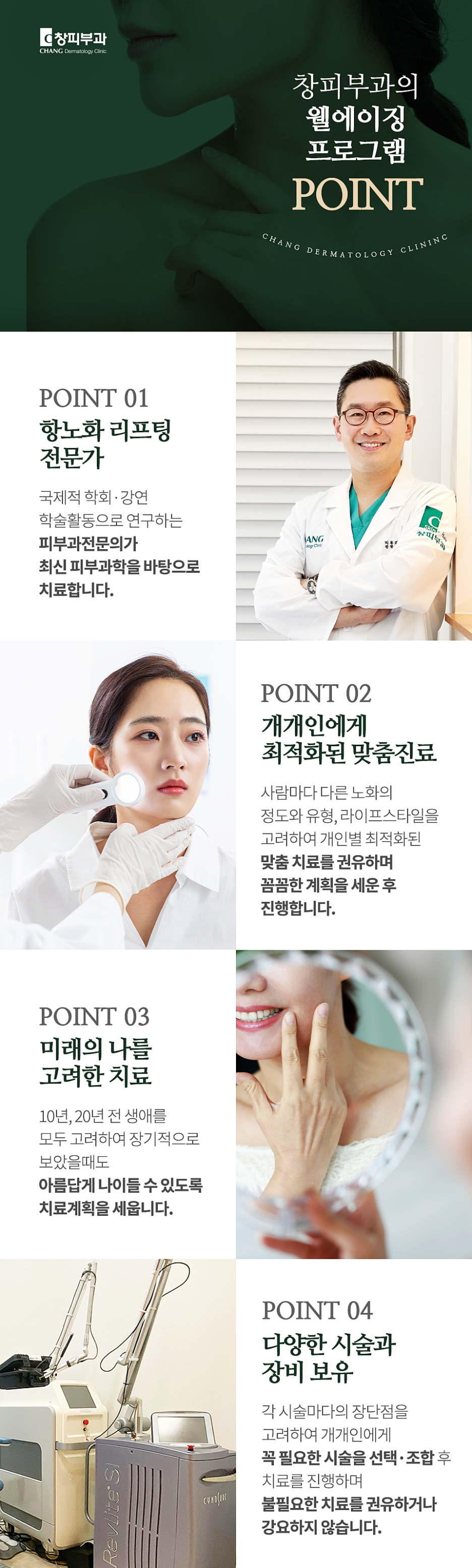
To increase satisfaction with Apgujeong thread lifting, we use various approaches, including applying C-Design and conducting systematic diagnostic assessments.
Because side effects such as enlarged cheekbones or a wider-looking face may occur after thread lifting, we developed C-Design, which uses a clockwise design approach to help avoid them.
Aging is not something that must simply be accepted as unavoidable.
Many people say that signs of aging are inevitable as we get older.
However, as we go through life, we often meet people who are the same age as us yet have noticeably different skin texture and elasticity.
We hope that this article helps you choose a procedure that suits you and the care that you need.