
Hello. I’m Dr. Chang, a board-certified dermatologist.
The biggest concern many people have about Ulthera treatment is cheek hollowing.
When Ulthera treatment is discussed, the issue of Ulthera-related cheek hollowing often comes up.
If you are concerned about cheek hollowing after Ulthera, please read today’s post carefully.
Why has Ulthera-related cheek hollowing become so well known?
It is because of how Ulthera works.
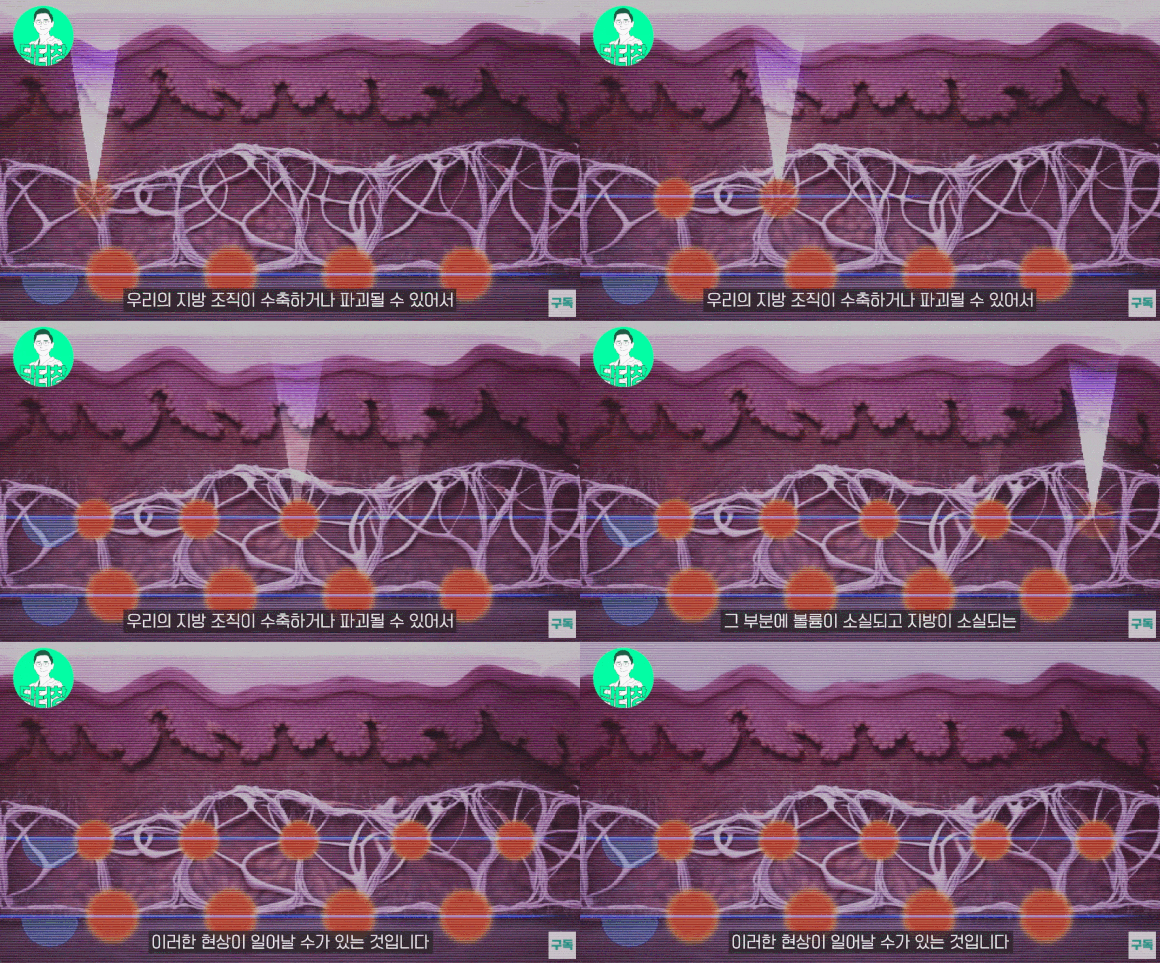
Ulthera delivers intense thermal energy deep into the skin. The focused heat causes the tissue in that area to contract and stimulates collagen regeneration.
Because such intense heat is delivered, fat tissue may contract or be damaged, which can lead to a loss of volume and fat in that area.

When heat is applied while cooking meat, the meat shrinks, right?
Similarly, when thermal energy enters the skin, the tissue in that area contracts in the same way.
Of course, comparing it to cooking meat is an exaggerated explanation, but a similar response can occur within our skin.
When this response becomes excessive, the area can become indented, resulting in cheek hollowing.

However, these days, I tell patients that they do not need to be overly concerned about Ulthera-related cheek hollowing.
I will now explain why I believe Ulthera-related cheek hollowing is generally not a major concern.

When Ulthera was first introduced more than 10 years ago, treatments were often performed at a very high intensity. Since treatment methods had not yet been extensively developed, applying strong treatment across the entire face could inevitably result in this type of effect.
As a result, Ulthera-related cheek hollowing occurred relatively often in the early days.
However, as Ulthera has continued to be used for more than 10 years, treatment techniques and expertise have been widely shared around the world.
These advances in treatment methods have made it possible to significantly reduce the occurrence of cheek hollowing.

I recently attended an Ulthera seminar, where there was also an event celebrating the completion of more than 3 million treatments worldwide.
Because it is a treatment used so extensively around the world, the techniques for performing it have advanced considerably, and they continue to develop. Practitioners’ expertise in using it has also grown.

With this in mind, you should be able to undergo treatment with confidence while taking steps to prevent cheek hollowing.
In particular, if you have little facial fat or already have areas of indentation, use today’s post as a reference. Consider which aspects you can feel reassured about and which points you should examine carefully.
Today, we discussed Ulthera-related cheek hollowing. In the next post, I will continue with information about precautions for Ulthera treatment. Thank you.