Hello. We are Chang Dermatology, your beauty partner dedicated to helping you maintain young and healthy skin.
Many people explore Jamsil thread lifting to create a smooth, slim facial contour.
With conventional methods, however, side effects such as making the cheekbones appear larger or the face look wider sometimes occurred.
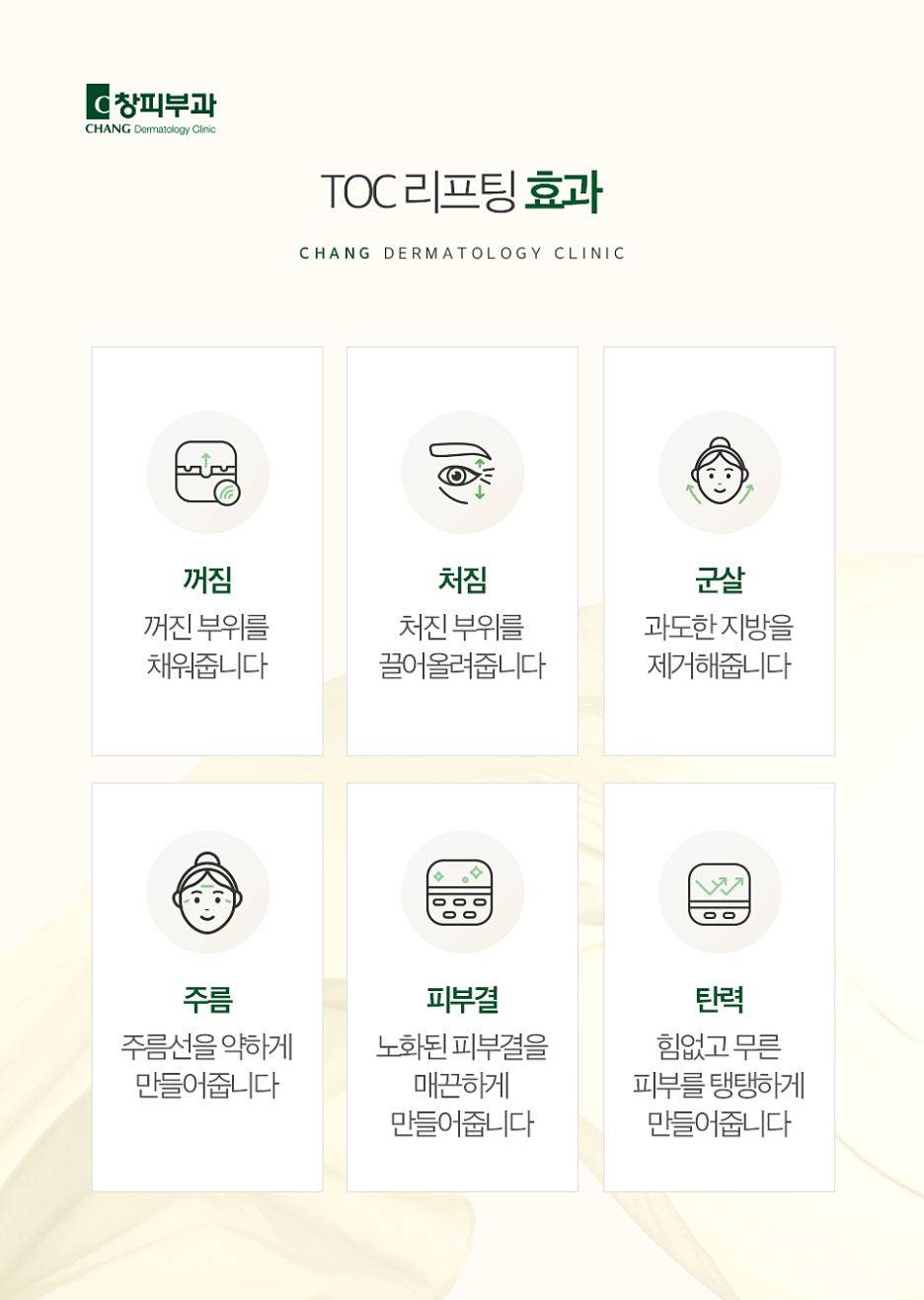
Today, we will discuss the features of TOC lifting, who it may be suitable for, and what should be considered, while addressing these issues and effectively lifting sagging areas.
What kind of procedure is TOC lifting?
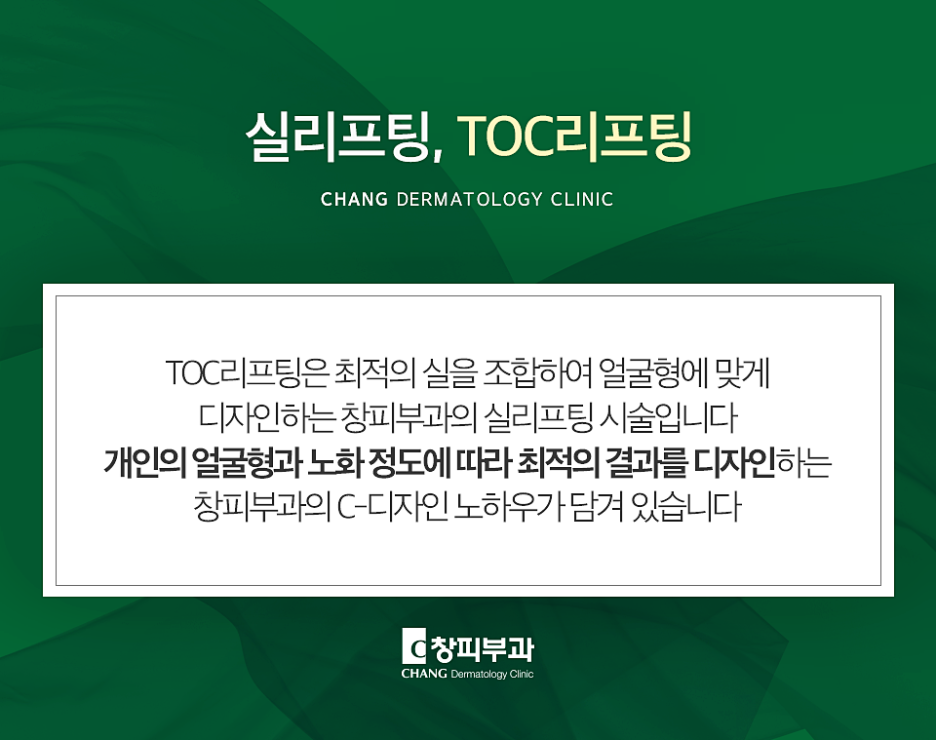
TOC lifting is a Jamsil thread-lifting procedure in which threads are combined and designed according to each individual’s facial shape.
TOC lifting incorporates C-design expertise. C-design is a clockwise design that sets the lifting direction while taking the facial shape and degree of aging into account.
Because each person receives a different design, a more natural-looking lifting result can be achieved.
What type of threads are used?
The results of Jamsil thread lifting may vary depending on the type of thread used.
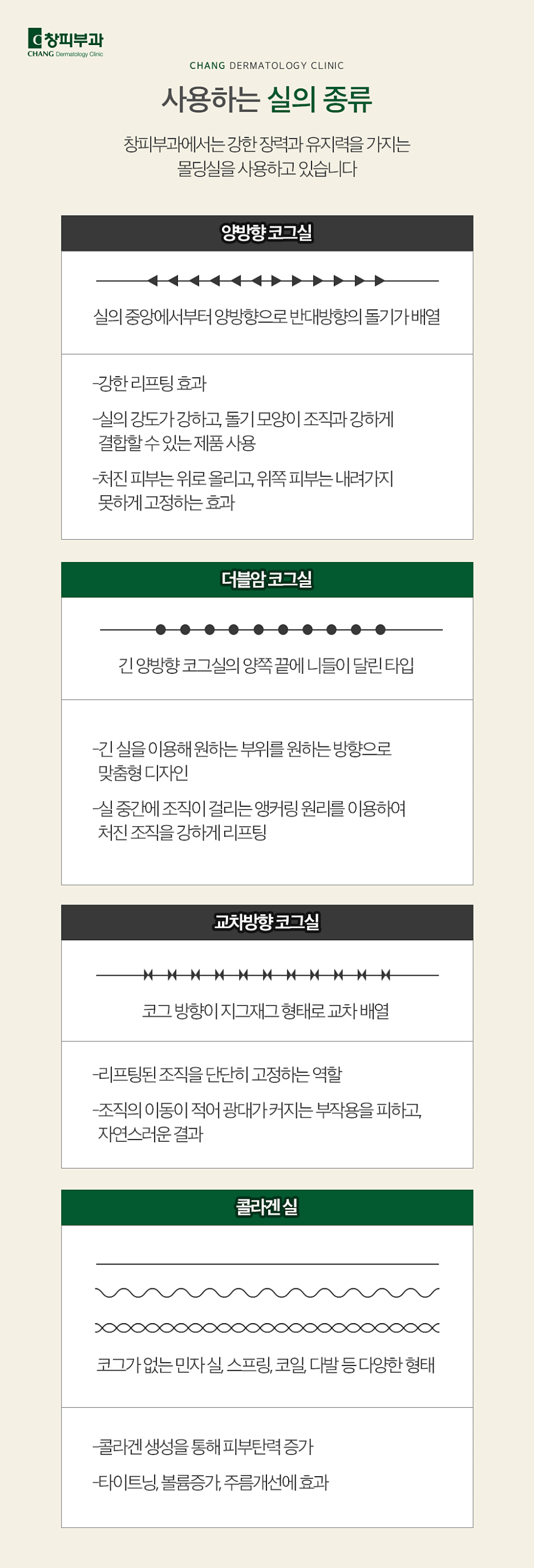
Bidirectional cog threads have barbs arranged in opposite directions from the center of the thread.
These threads are strong, and their barb shape can bind firmly to the tissue, allowing for a pronounced effect.
Double-arm cog threads, which have needles attached to both ends of a bidirectional cog thread, achieve lifting through an anchoring principle in which the tissue catches in the middle of the thread.
Next, cross-direction cog threads have barbs arranged in a zigzag pattern. Because there is less movement of the tissue, they may help prevent the side effect of making the cheekbones appear larger.
How long do the results last after the procedure?
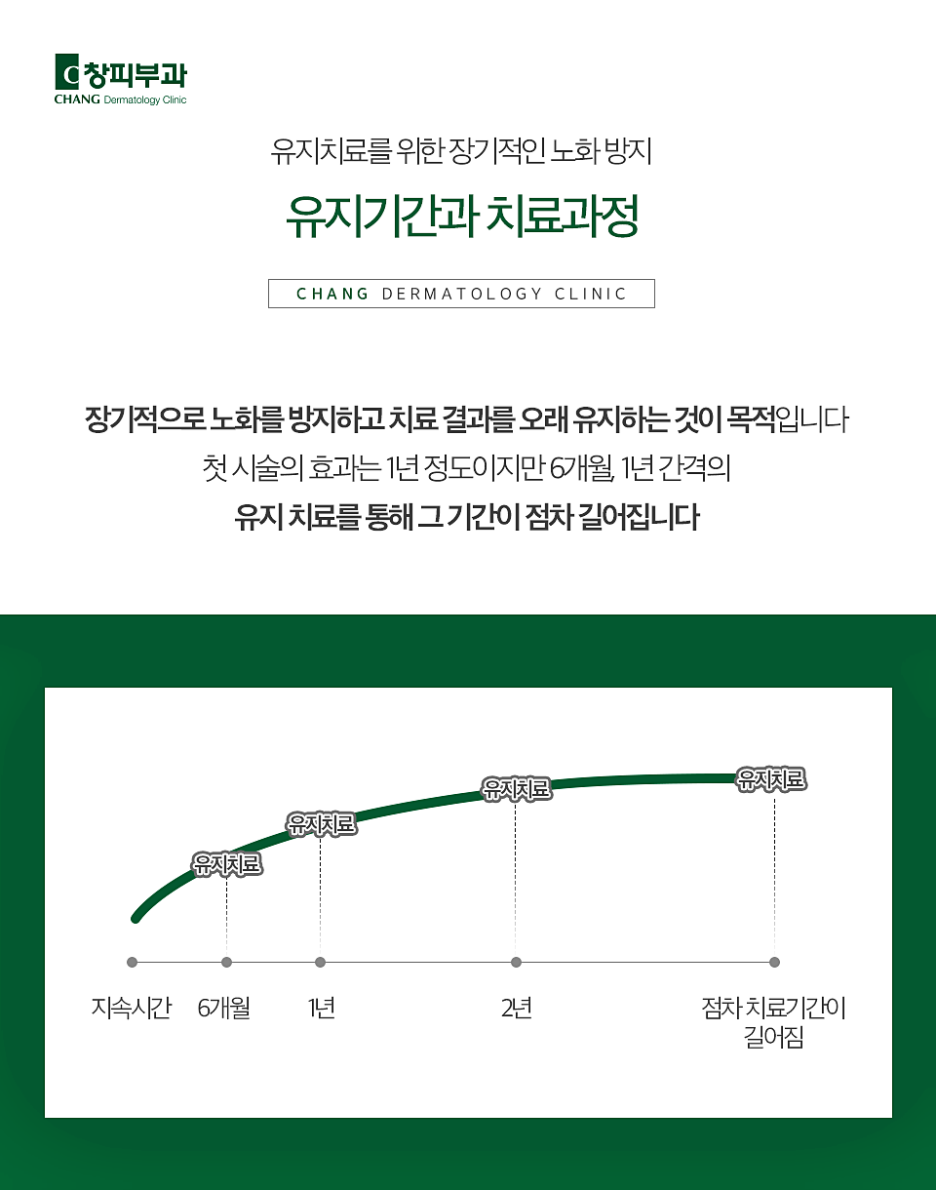
The goal of Jamsil thread lifting is to help prevent aging over the long term and maintain the treatment results for an extended period.
When the procedure is performed for the first time, its effects last for approximately one year.
The duration may gradually increase with maintenance treatments at six-month or one-year intervals.
However, the specific duration varies according to each person’s skin type and lifestyle.
Who may be a suitable candidate?
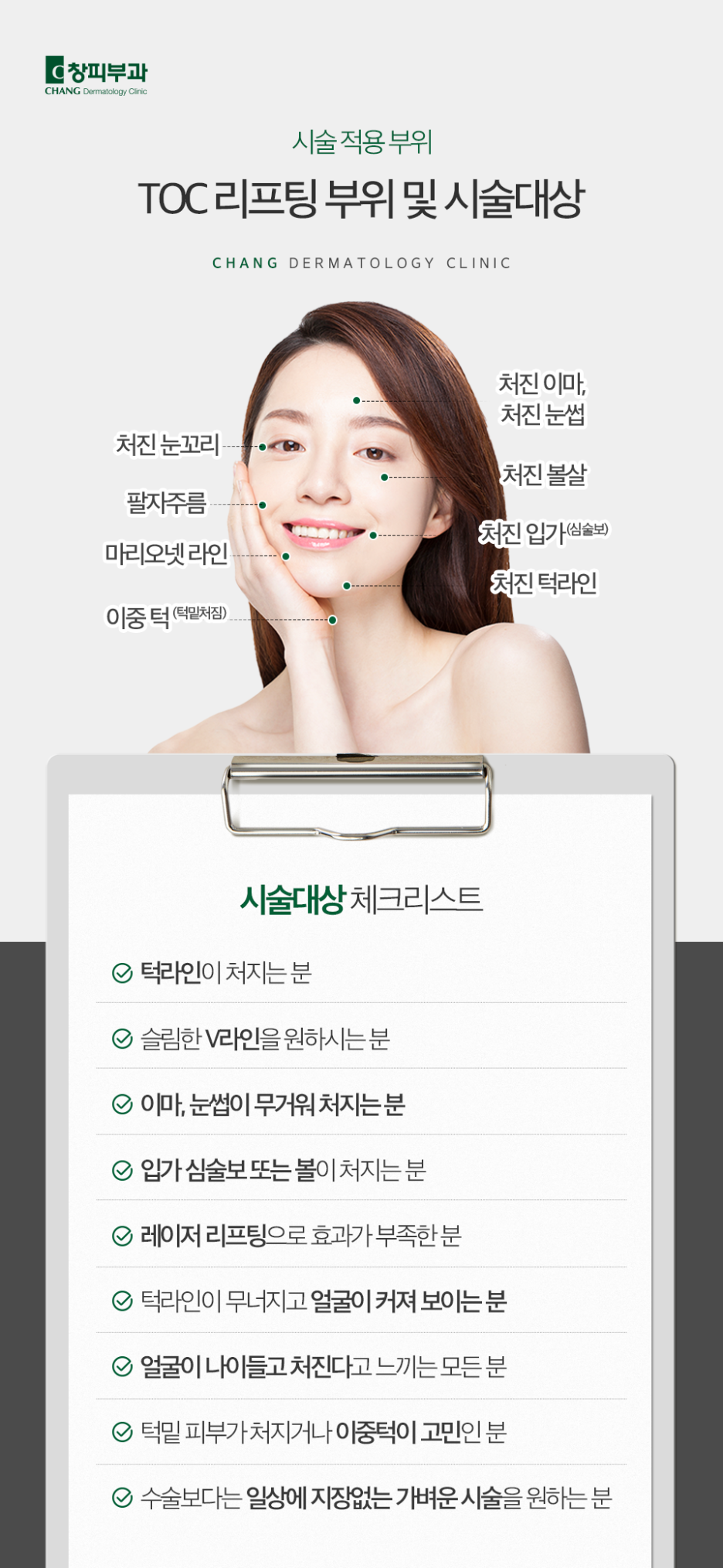
This procedure may be recommended for people who want to create a smooth, slim V-shaped facial contour.
In other words, it may be suitable when the jawline or corners of the mouth have sagged, or when sagging cheeks make the face appear larger.
It may also be recommended for people whose forehead or eyebrows feel heavy and have sagged, making them look older.
In addition, some people may feel that they are not fully satisfied with conventional laser-lifting methods.
How much swelling should be expected?
Swelling after thread lifting may last for approximately one week.
Due to the effects of anesthesia, swelling is usually most pronounced on the day of the procedure and gradually subsides over time.
People with wider facial shapes may experience swelling for somewhat longer than those with slimmer facial shapes.
If you want to shorten the recovery period, it is important to adjust the lifting intensity appropriately.
This is because the more tightly the threads are pulled, the greater the force placed on them, which may also lead to more swelling.

Are there any side effects from the procedure?
Side effects can occur with any procedure, but the most common side effect of thread lifting is dimpling.
This refers to a depression that forms when the end of a thread catches and pulls on the skin.
In most cases, it can be improved with simple treatment immediately after the procedure.
Other possible situations include the thread being visibly noticeable as it passes beneath the skin, or the end of the thread rising toward the skin and causing that area to appear raised.
These cases can also be treated with appropriate care at the clinic.

Are there any precautions to follow after the procedure?
There are several precautions to follow after Jamsil thread lifting.
First, avoid excessively rubbing the treated area or engaging in activities that may irritate it.
It is also advisable to avoid chewing hard foods or opening your mouth widely.
For a smooth recovery, we also recommend avoiding alcohol, smoking, saunas, and jjimjilbangs.
In addition, for approximately three days after the procedure, it is preferable to sleep on your back rather than on your side.