
Hello. This is Chang Dermatology, opening a window to confidence through skin science.
In modern society, where people are remaining socially active for longer, the natural signs of aging that accompany getting older can inevitably become a source of concern.
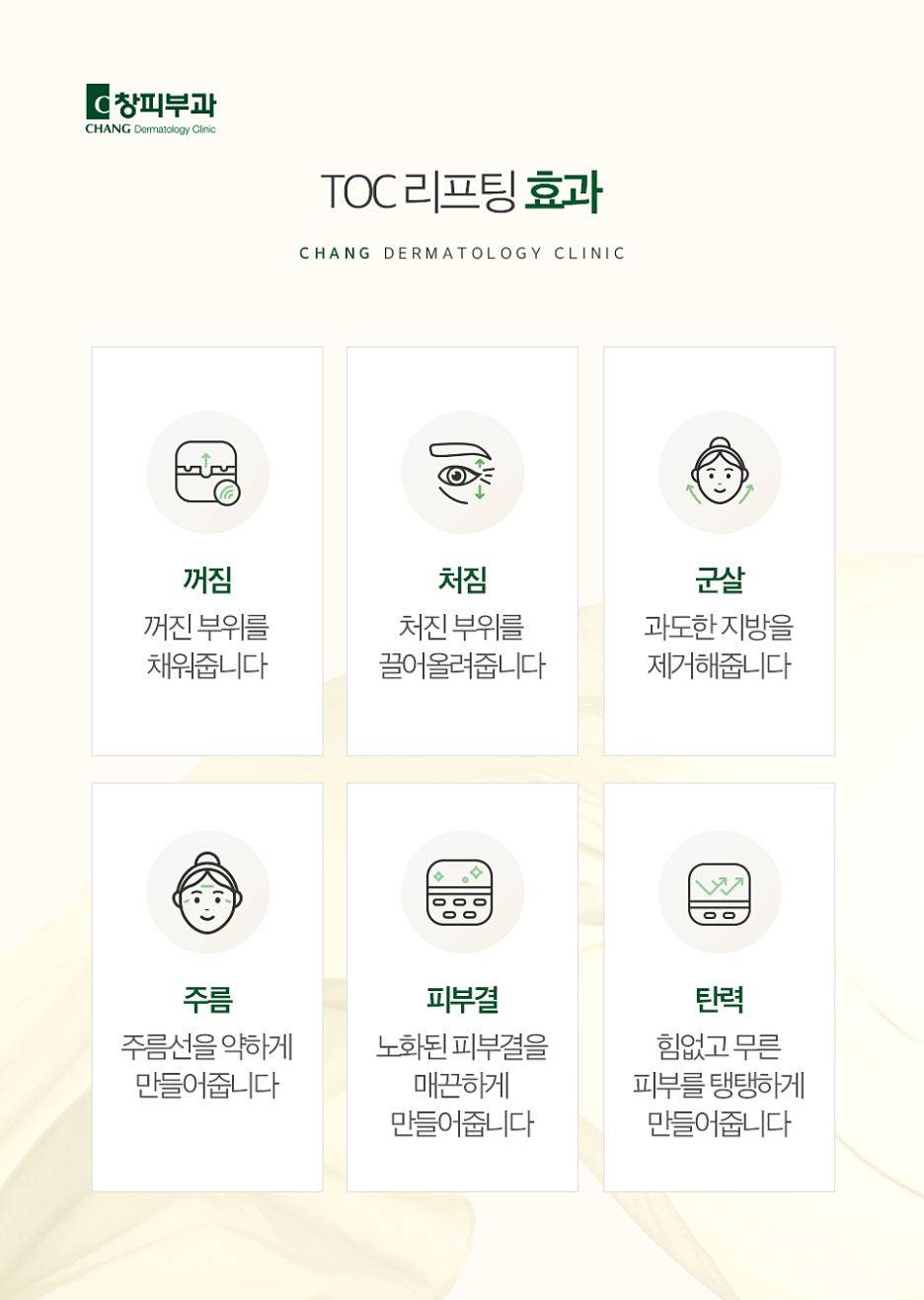
For this reason, more people have recently been using thread lifting to improve wrinkles and sagging skin.
Thread lifting is, quite literally, a technique that uses threads to artificially lift sagging skin and improve signs of aging.
Although it is now used in many settings because of its versatility, many people still feel anxious because they have limited information about it.
Today, for those who have become interested in lifting, we would like to share information about the different types of thread-lifting threads.
Do the types matter?
If you are interested in knitting, you probably know that even threads that look identical may differ in suitability for knitting a sweater, making a hair accessory, or making a scrubber.
Since the roles they can perform differ according to their material and shape, they naturally have different uses.
The reason the types of thread-lifting threads matter is no different.
To achieve the proper effect, different threads with their own individual strengths need to be combined and used appropriately.
What types are there?
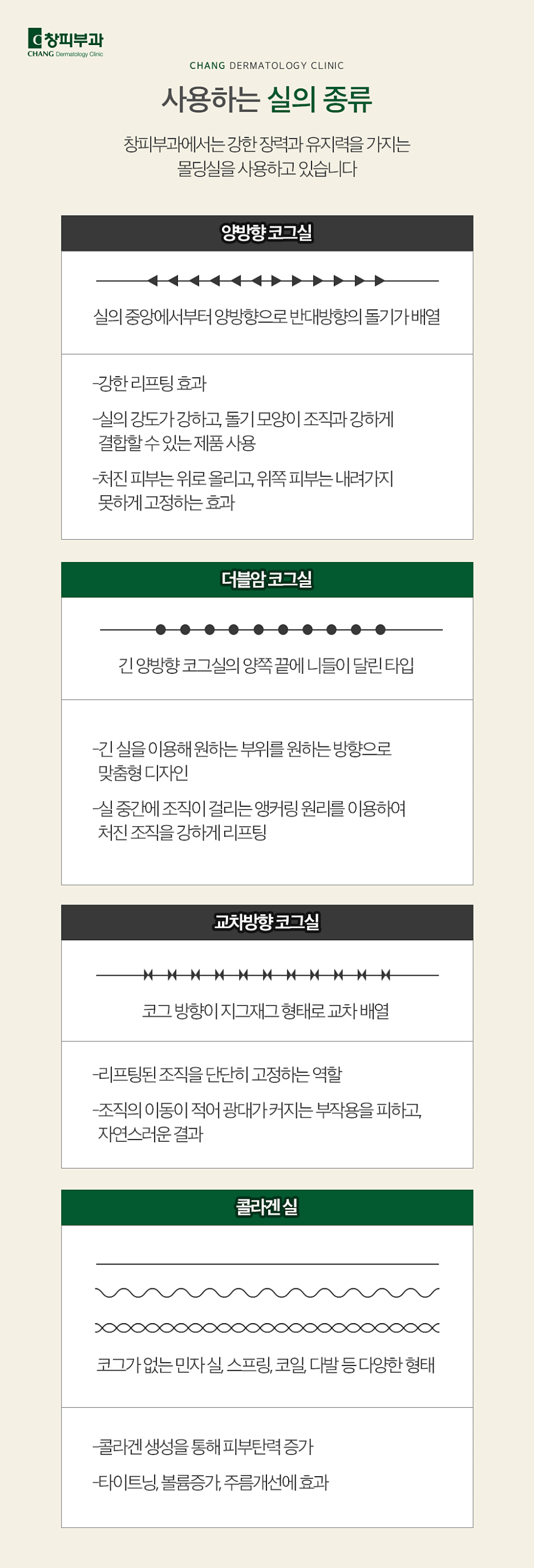
Lifting threads are broadly divided into those with cogs and those without.
A cog is a type of serration. You can think of it as having spike-like projections in specific shapes at intervals, which help the thread perform its function.
Threads without cogs are called collagen threads and are often used to promote collagen production, improve elasticity, or reduce wrinkles.
Now, let us briefly look at the types and functions of cog threads.
We use bidirectional and double-arm threads, which are useful for lifting and fixation.
First, let us look at bidirectional cog threads. These are characterized by projections arranged in opposite directions from a central point.
Since the thread itself is extremely strong, it can produce good results when used for lifting, and it also provides relatively strong fixation.
Double-arm cog threads are long and have a needle attached to each end. Because the tissue catches along the middle of the long thread, they are useful for lifting sagging tissue.
Another key feature is that their length allows for customized designs suited to each individual’s characteristics.
What can be done when you want a natural look?
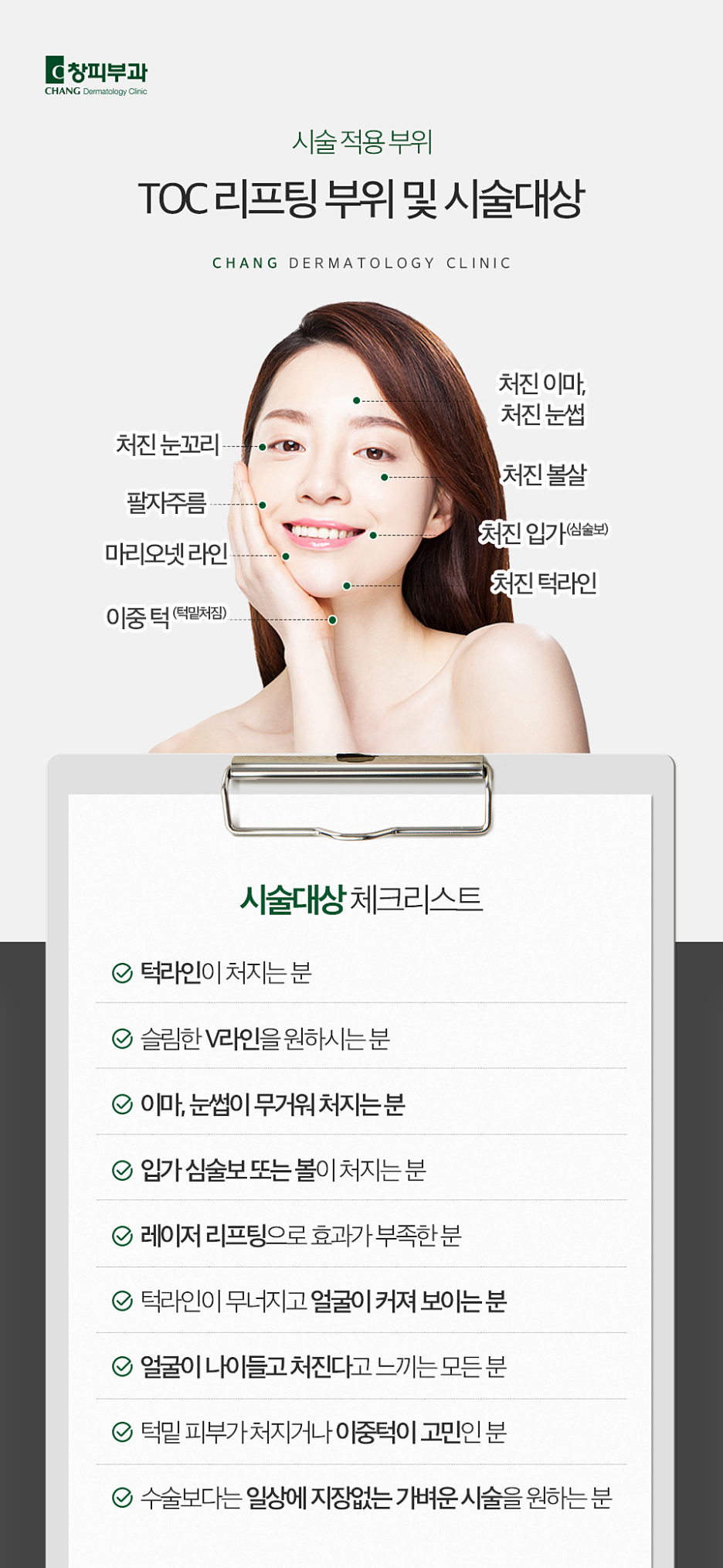
The type of thread-lifting thread used when a natural look is desired is the cross-directional cog thread.
Its cogs are arranged in a zigzag pattern, and it can mainly be used to fix tissue after lifting has been completed.
One advantage is that using cross-directional cog threads for fixation can produce a natural result.
As there are many different types available for use, it is important to understand these characteristics well and apply them appropriately during the actual procedure.
We combine multiple threads to create beautiful results.
At our clinic, we combine and use various types of thread-lifting threads according to each person’s condition and goals.
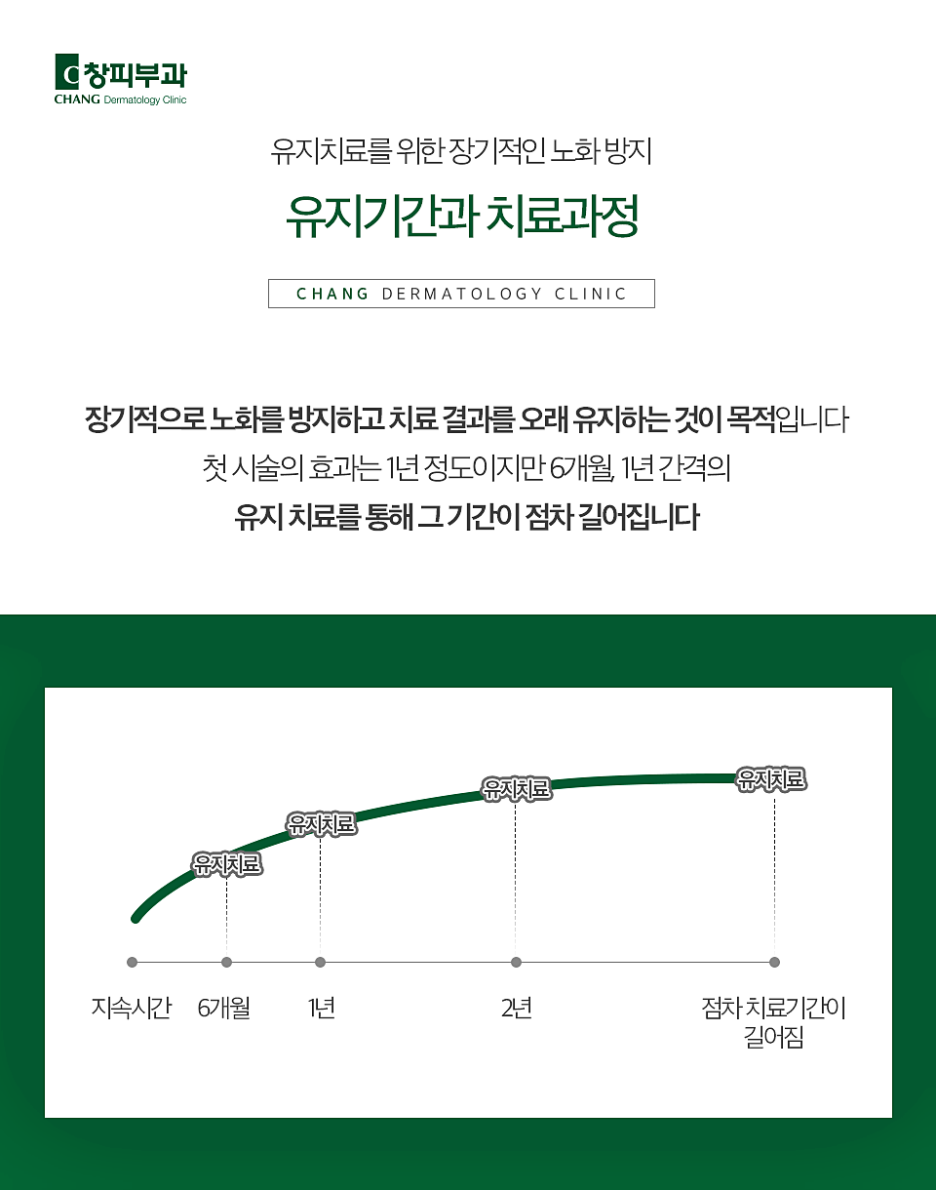
The procedure itself takes only about 30 minutes, but by taking a systematic approach to the procedure and following it with maintenance treatment, it is possible to extend the duration of the anti-aging effects.
For middle-aged and older adults who still need to remain socially active for many years, this approach can help them maintain a neat and polished image for longer.