
Hello, this is Chang Dermatology, your beauty partner dedicated to protecting youthful and healthy skin.
When you become interested in managing skin elasticity, you naturally come across a treatment called Thermage.
However, when you look up information, you often see the name “Thermage FLX” as well, which leads many people to wonder how the two differ.
Today, we will summarize the differences between Thermage FLX and Thermage, focusing on the features of each generation and points to consider when choosing.
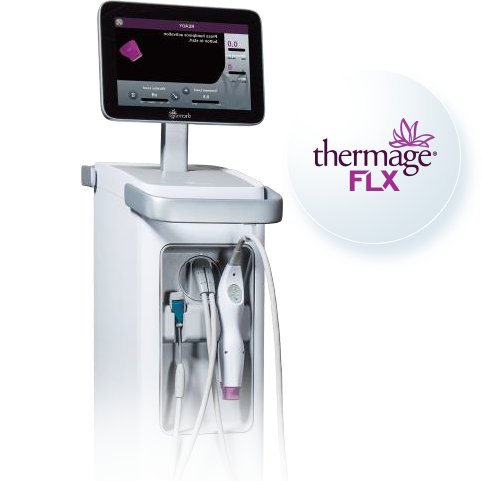
What is the difference between Thermage FLX and Thermage?
The difference between Thermage FLX and Thermage basically starts with the difference in device generation.
Thermage is a treatment that uses radiofrequency (RF) energy to deliver heat to the dermis layer of the skin, inducing collagen changes.
Among these, Thermage FLX is the latest upgraded generation from the previous device, and its features include more precise energy delivery and improved convenience for users.
In other words, the basic principle is the same, but there are differences in the operating method and system.

Is there a difference in how energy is delivered?
One important point when comparing Thermage FLX and Thermage is the energy delivery method.
While the previous Thermage delivered energy in a set pattern, Thermage FLX has enhanced functionality that automatically detects skin condition and adjusts the energy.
This was designed to allow more even energy delivery across different areas, and it can help provide a more detailed approach suited to each person’s skin condition.
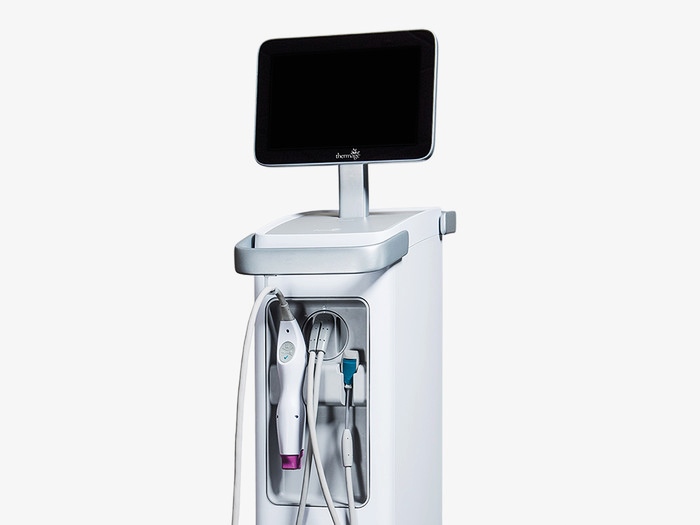
How are pain and perceived sensation different?
The difference between Thermage FLX and Thermage is also mentioned in terms of perceived pain.
With the previous device, the sudden heat sensation could sometimes feel strong, but Thermage FLX has been improved with cooling and vibration systems applied together to disperse stimulation.
As a result, some people feel that the burden experienced during the treatment is relatively reduced, even though the treatment is based on the same principle.
However, differences may occur depending on an individual’s skin condition and sensitivity to pain.
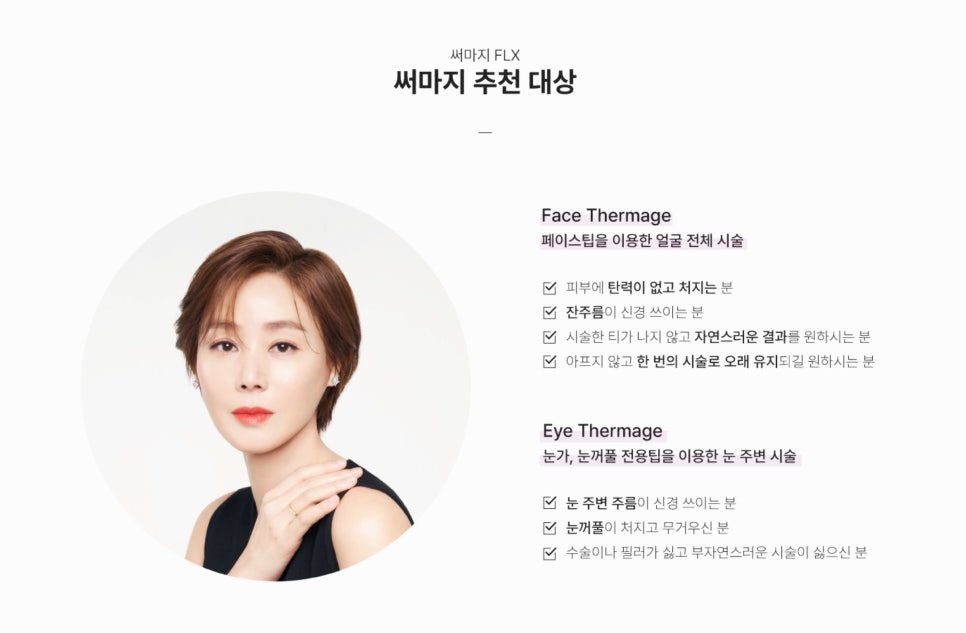
Has the treatment time or efficiency changed too?
Another feature of the difference between Thermage FLX and Thermage is the treatment time.
As the Thermage FLX tip area has become larger, the range that can be covered at once has increased, tending to shorten the overall treatment time.
In addition, with enhanced automation features in the device, the treatment process can be carried out more efficiently, which is another characteristic.
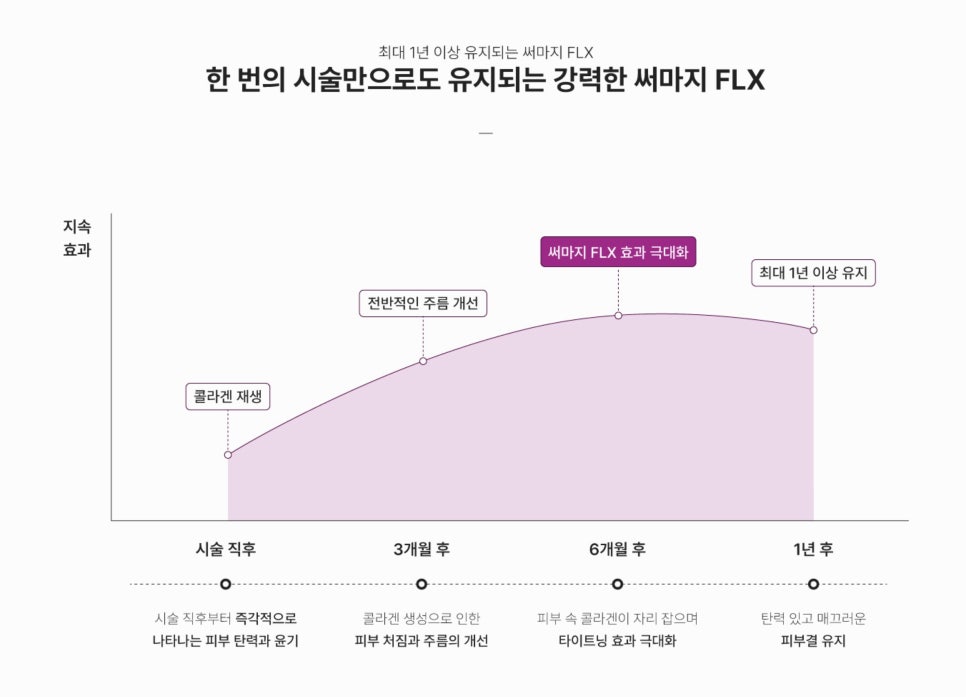
Is there also a difference in results and duration?
When considering the difference between Thermage FLX and Thermage, results and duration are also common concerns.
Since the basic mechanism is the same, the overall effect is similar in a broad sense, but the perceived results may differ depending on the uniformity and precision of energy delivery.
The duration varies depending on the individual’s skin condition, but in general, changes often continue for about 6 months to 1 year.
Rather than saying that the device difference alone greatly changes the duration, it is important to consider the overall treatment method and skin condition together.

What criteria should be used when choosing?
Rather than judging the difference between Thermage FLX and Thermage simply by whether the device is the latest model, it is important to approach the decision based on your current skin condition and the direction of change you want.
For example, the appropriate method may differ depending on the degree of skin elasticity loss, sensitivity, and treatment experience.
It is also helpful to consider the treatment environment and how the procedure is carried out.

How should this be understood in summary?
The difference between Thermage FLX and Thermage can be understood as a “difference in generation, with the same basic principle but improved technology and convenience.”
It is important to understand the features of each and establish selection criteria based on your own skin condition and goals.
Rather than simply comparing device names, looking at the overall treatment structure and the flow of changes can help with a more realistic judgment.