
The philtrum is the area located in the center of the face, just below the tip of the nose and above the middle of the upper lip when viewed from the front. It is not a functional area like the facial features, but because it sits at the center of the face, it plays an important overall role in mood and appearance. Since it is a centrally located area, the length of this part can change the overall facial length and proportions. Also, because its length is not originally long to begin with, even a philtrum reduction review showing a difference of just 1 or 2 mm can make a striking change in impression, so it is worth improving by referring to A Top Plastic Surgery reviews.
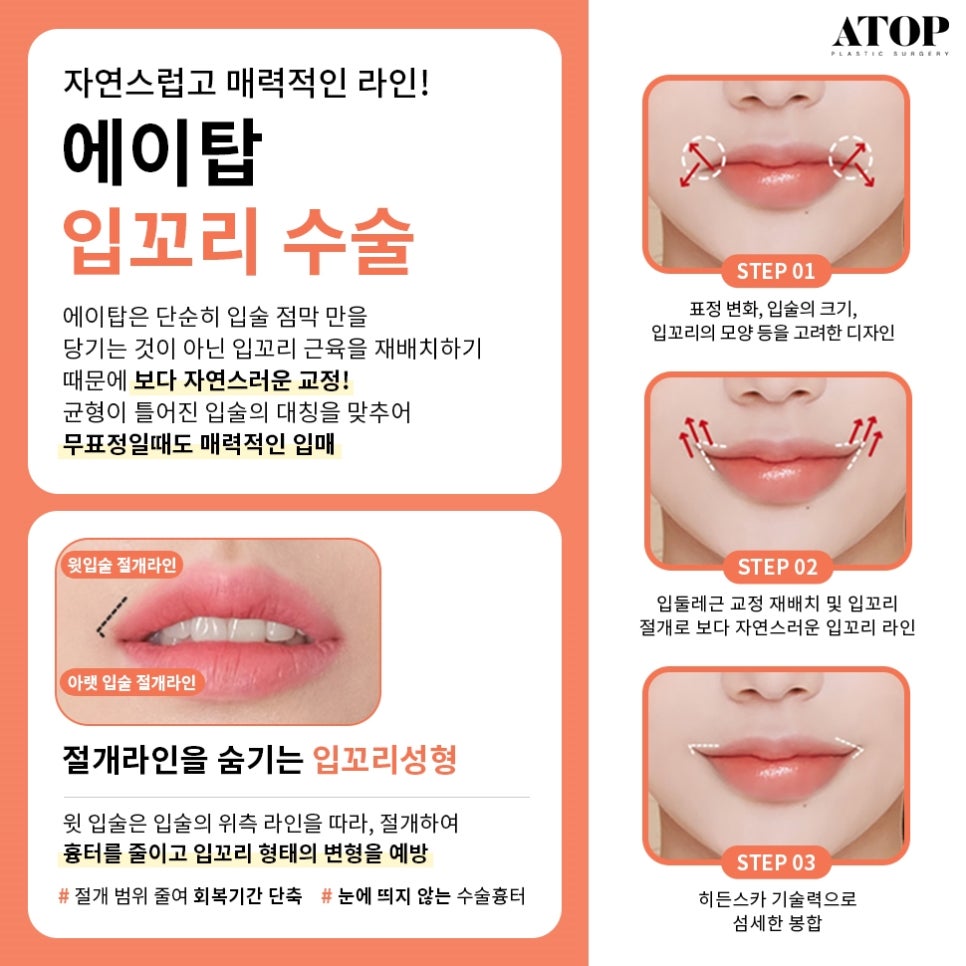
Causes of a Long Philtrum
The philtrum may be longer than average due to congenital or acquired reasons. Congenitally, this means the philtrum has been relatively long since birth, and if you look at philtrum reduction reviews, many people consider surgery because the philtrum gradually becomes longer over time due to acquired reasons, creating a complex about their appearance.
First of all, aging has the biggest impact. As people get older, skin elasticity decreases and tissue gradually sags downward, and the thin skin around the lips also ages. The philtrum is likewise a thin-skinned area and a place with frequent lip movement, so sagging can occur and it can become loose. As a result, its length naturally increases.
There are also many philtrum reduction review cases from people who previously had orthodontic treatment or underwent jaw surgery. After orthodontics or surgery, the mouth may look more attractive, but after protruding teeth or jaws move inward, the skin may loosen, and as aging progresses, the length of this area can also increase. By analyzing these causes and referring to before-and-after photos in A Top Plastic Surgery reviews, if the length is reduced to the ideal proportion it had originally, the desired result can be expected.

Ideal Philtrum Proportions
When reducing the philtrum, the proportions and shape of the lips must be considered. If this area is long in proportion to the face, not only does the face look longer, but it can also make a person look older. Therefore, for a successful philtrum reduction review result, the length should be reduced in line with facial harmony and proportions to create a natural, youthful appearance.
The philtrum is located between the base of the nose and the upper lip. Therefore, the proportion of this area should be adjusted to 1:3 between the area below the nose and the lip peak, and between the lips and the chin tip for a natural look. Ideally, the length should be corrected to a 1:2 ratio. During the process of reducing the length, tissue is incised and lifted, but if the upper lip rises too much, not only can its shape be distorted, but the overall length and proportions can also be disrupted. Therefore, it is important to set it to a C-shaped line so that the lips do not lift unnaturally.
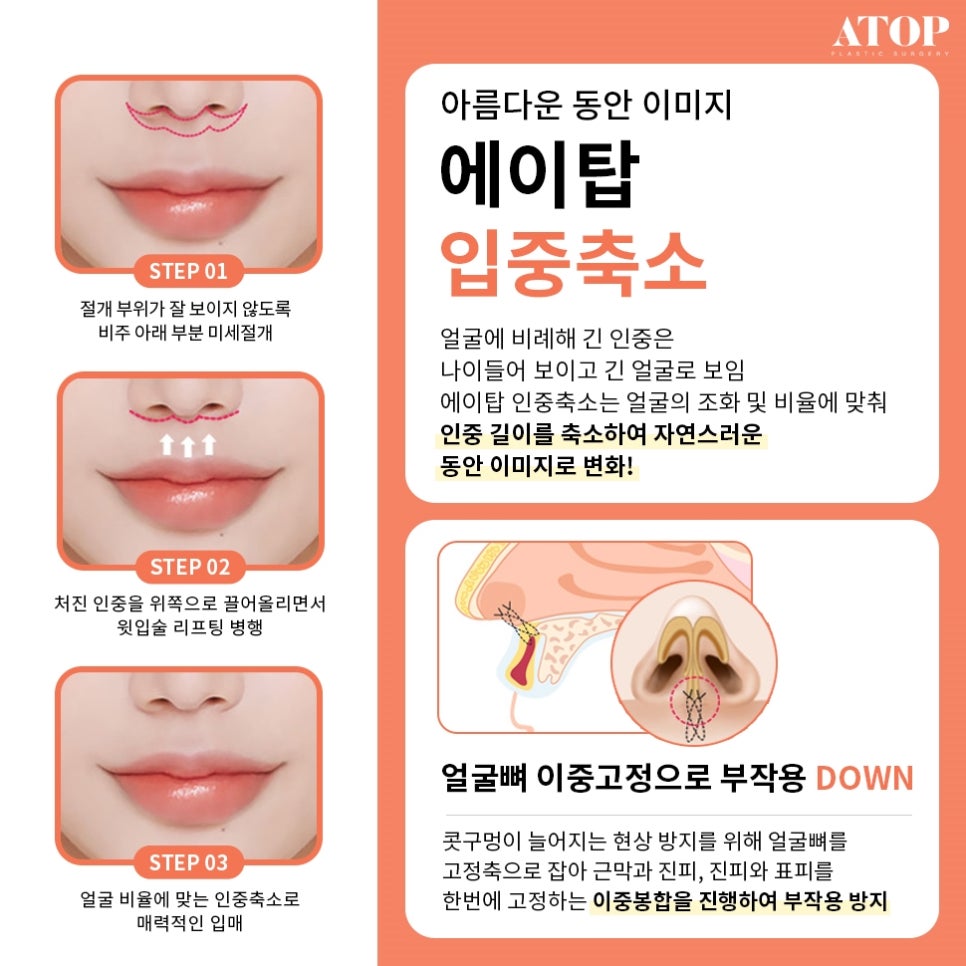
To Avoid Lip Curl, Upturned Nose Tip, and Changes in Nostril Shape
The philtrum is visible from the front, but the side profile also needs attention. Depending on the curl of the lips, the length and proportions can appear different. Therefore, while reducing the philtrum, it is important to lift the lips as well so that the curl remains defined, giving a fuller appearance and making the lip peak and overall line look more attractive.
Some philtrum reduction reviews mention cases where, after some time, the nostrils appear to droop. To prevent such symptoms, strong fixation should be achieved with double sutures so that the facial bone acts as a fixed anchor and the fascia and dermis, as well as the dermis and epidermis, can be fixed at once. Doing so can help prevent postoperative upturned nasal tip, drooping nostrils, and separation of the incision line. This allows natural improvement without deforming the nose, philtrum, or lips, leading to high satisfaction.
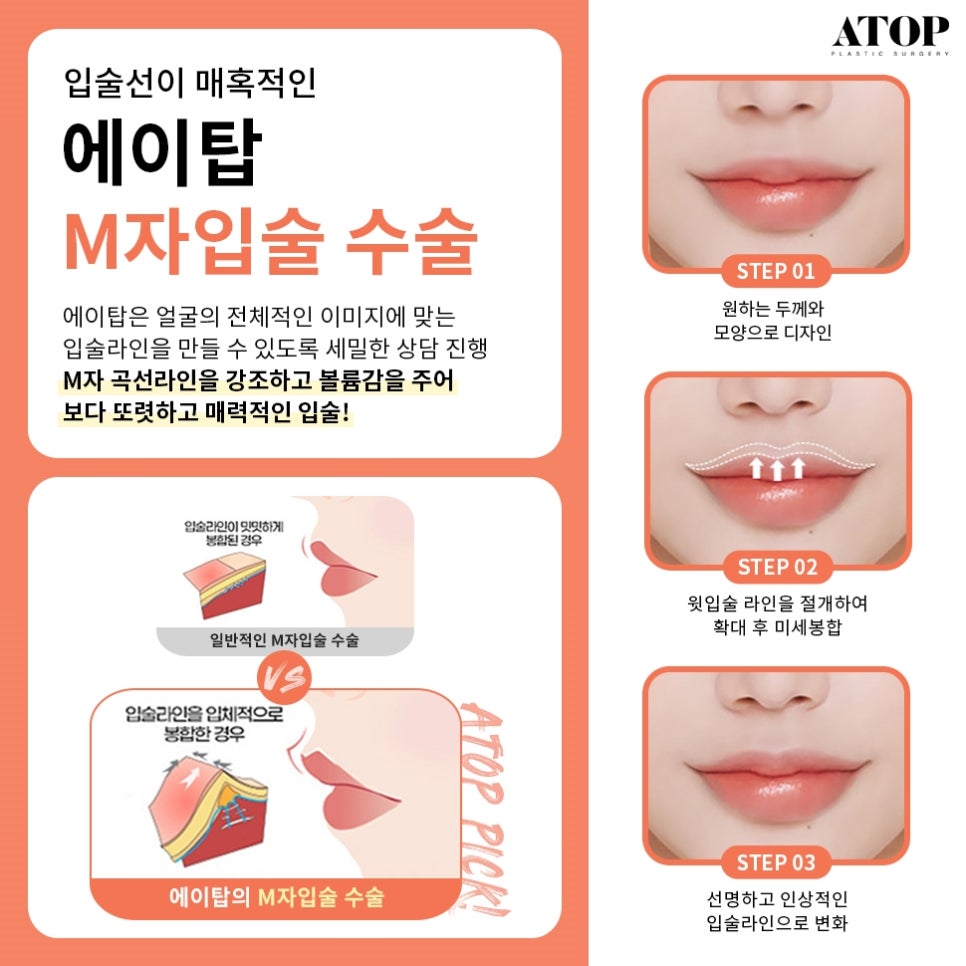
Side Effects of Philtrum Reduction Surgery: Facial Characteristics Must Be Considered
When performing surgery, at least 10 to 10.5 mm of philtrum length should remain for a natural appearance. Along with this length, the surgical plan must take into account each individual's facial characteristics and proportions. Even if the length is the same, there is a length that suits each person depending on facial proportions, so the cause-analysis stage must be thorough.
If surgery is performed without considering these factors, various side effects seen in philtrum reduction reviews may follow. The upper lip may become overly thick, or the lip peak may become triangular like a mountain shape, making the corners of the mouth look drooped. If it is reduced too much, the teeth may become overly exposed, and the balance between the philtrum and chin length may be disrupted. Therefore, I hope you can carefully plan surgery by considering the philtrum length that must be left before surgery and the overall proportion that harmonizes with the face.

Philtrum Reduction Surgery Method That Does Not Leave Visible Scars
To reduce the philtrum, an incision is made along the lower line of the nose. Since scars from this area should not be visible from the front, it is important to make the incision very finely and delicately. Along this incision line, the sagging and lengthened philtrum is pulled upward, and the upper lip is lifted as well. In this process, the lip shape should not be distorted or lifted unnaturally, so the natural curl when viewed from the side must also be checked.
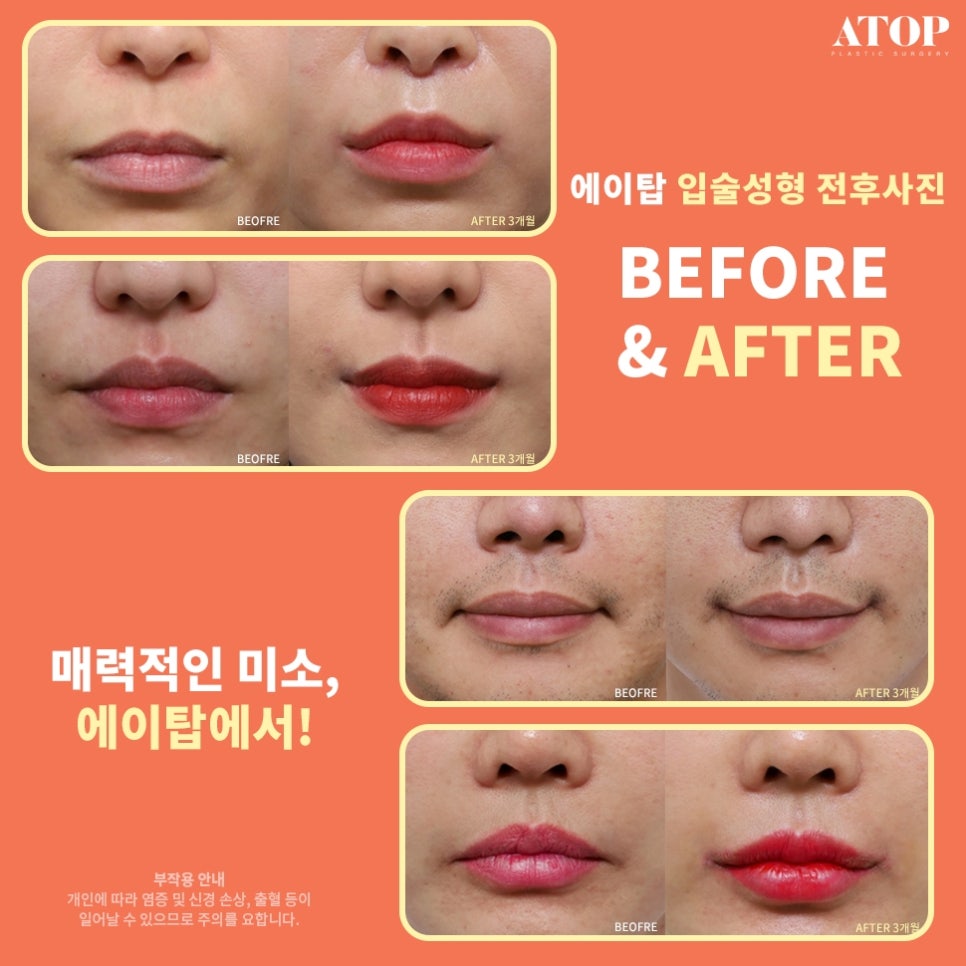
If the surgery is performed this way, the philtrum can be reduced to an ideal length that matches the proportions of the face, allowing for a more attractive mouth shape. I hope the surgical plan is made with the most ideal proportions and length in mind so that the philtrum reduction review can result in no deformation of the nasal tip or nostrils, and that the outcome remains natural with no visible scars.











Previous image
Next image










Previous image
Next image